Deep Cleaning in Korea: Sorting Comes Before Cleaning
⚠️ Heads up. This article shows photographs of real homes in a bad state — floors you cannot see, an uncleaned fridge, scale on a bathroom fitting. The worst of them is deliberately pixelated. Nothing here is graphic, but if it is not what you want on screen right now, the text stands on its own.

It happens gradually and then all at once. A deadline, an illness, a bad few months, a flat that is too small for the amount of stuff in it — and one day there is no floor.

Pixelated on purpose. The floor is under there · ⓒ @BalliBalliSeoul
If you are looking at something like this and searching for “deep clean Seoul”, the useful thing to know first is that you are looking at two jobs, and Korean companies sell them separately. Booking the wrong one wastes a day and a deposit.
Korea has six of these, and they are not interchangeable
Everything below gets translated into English as “cleaning”. They are separate products with separate crews and separate prices, and the first question every company asks is which one you want.
The dividing line is whether the flat is empty.
| Korean | What it is | Flat is |
|---|---|---|
| 준공청소 (jungong) | Post-construction clean of a new building, ordered by the builder | Empty |
| 입주청소 (ipju) | Move-in clean. Strictly, removing construction dust from a new or newly renovated home | Empty |
| 이사청소 (isa) | Move-out clean. Removing the previous occupant’s accumulated grime | Empty |
| 거주청소 (geoju) | Deep clean of a home you are living in, worked around your furniture | Occupied |
| 부분청소 (bubun) | Partial — one bathroom, one kitchen, one room | Occupied |
| 특수청소 (teuksu) | Clearance plus deep cleaning of a home past ordinary cleaning | Occupied, heavily |
Plus one that is not cleaning at all: 정리수납 (jeongni-sunap), professional organising. They sort and store; they do not scrub.
Three things to take from that table.
입주청소 and 이사청소 are advertised together and are technically different. Companies bundle them because the crew and the kit are the same, but 입주 is construction dust in a new build and 이사 is years of somebody’s cooking. If your flat is a handover between tenants rather than a new build, the second word is the accurate one — and it is worth saying, because the two jobs are dirty in different ways. Each has its own guide: move-in cleaning for the flat you are about to live in, and move-out cleaning for the one you are handing back — the second being the one that touches your deposit.
입주청소 is the phrase everyone searches first, and for an occupied flat it is the wrong one. It is the largest advertised category in Korea, so it dominates the results — and every one of those quotes assumes an empty room. Furniture in the room changes the price, the method and sometimes whether they will take the job.
If you are living there, your two options are 거주청소 and 부분청소. This is the gap most English-language advice leaves open. You do not have to choose between “tidy it yourself” and “call the extreme-cleaning people” — an ordinary deep clean of an occupied home is a normal, bookable, moderately priced service here.
Two more jobs sit outside that table entirely, because they are priced per item rather than per flat: air conditioner cleaning and sofa and mattress cleaning. Both are done at your flat, both are ordinary bookable services, and neither is in a whole-flat quote unless you ask for it.
What no cleaner will do
None of them will throw your things away. That is not squeamishness; it is liability. Nobody wants to be the person who binned a passport, a lease or a hard drive. The decision about what is rubbish has to come from you, and every quote you get assumes that.
Do the only part nobody can do for you
Before any company can price the job, someone has to separate three piles: keep, bin, and undecided. You can pay a professional to stand beside you while you do it, and 정리수납 firms are genuinely good at that. You cannot pay someone to do it instead of you.
Two things make it easier than it looks.
Work in bags, not in decisions. Fill one bin bag with things that are obviously rubbish — packaging, receipts, empty bottles, single socks. Do not sort anything yet. The floor appearing changes the problem from overwhelming to finite, and it usually takes under an hour.
Put “undecided” in a box, not back on the floor. One box, taped, with today’s date on it. If you have not opened it in six months you have your answer. This is the standard trick professionals use, and it works because the hard part was never the object — it was deciding in the moment.
The bottleneck is disposal, not cleaning
This is the part that surprises people who have done this elsewhere. In Korea you cannot simply put it all out on the kerb.
- Household waste goes in the paid bag — 종량제봉투, bought at any convenience store, and the correct one for your district. The wrong district’s bag will be left where it is.
- Recycling is separated, and in a villa or one-room the collection day is fixed by the building rather than by you.
- Anything large — a mattress, a chair, a bookcase — needs a paid disposal sticker (대형폐기물) arranged with the district office beforehand. Putting furniture out without one is the single most common way foreign residents get fined here.
The whole system is in how to throw away rubbish in Korea, and it is worth ten minutes before you start rather than after you have forty bags and nowhere to put them.
Two practical consequences. Volume drives the price of a clearance job far more than floor area does, so an hour of your own sorting is the cheapest money you will ever save. And the disposal is often the part you are actually paying a company for — the labour of carrying it down and the fees for getting rid of it legally.
What is left is genuine cleaning
Once the volume is gone, what remains is surface work, and it is the part a cleaning team is actually built for.
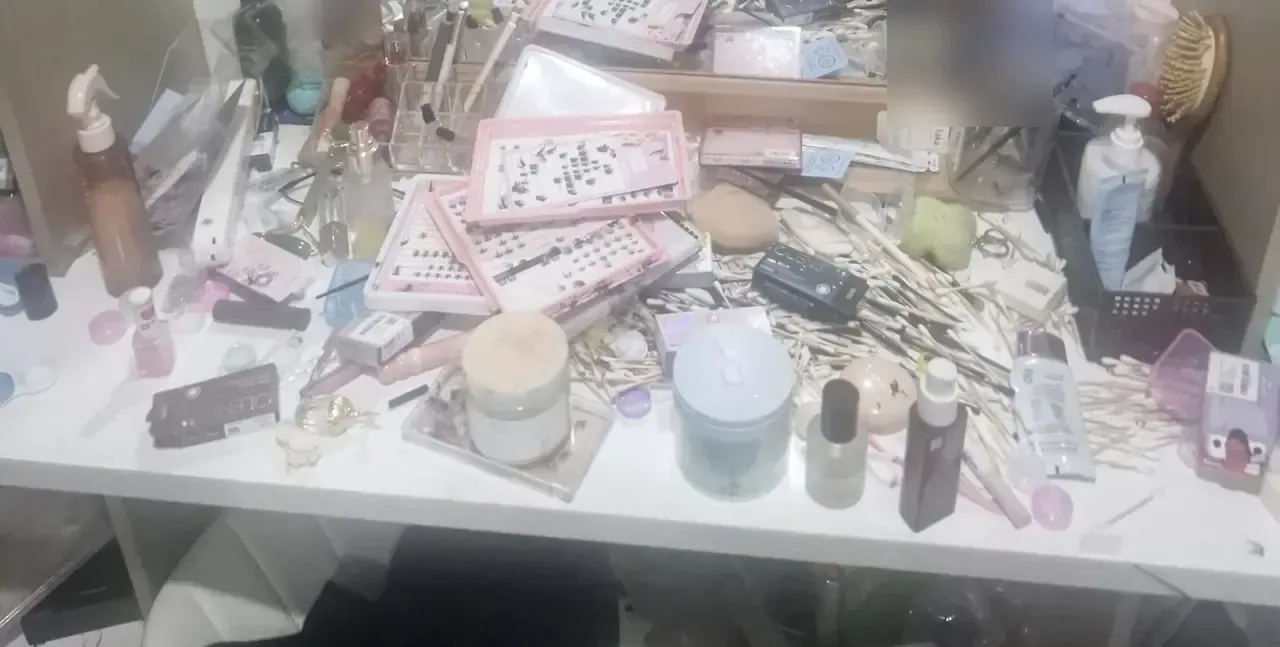
Nothing here is dirty. There is simply no surface left · ⓒ @BalliBalliSeoul
That table is the whole distinction in one photograph. It is not a cleaning problem. Clear it and it is a five-minute wipe. Leave it and no cleaner in Korea will touch it, because every item on it is a decision they are not allowed to make.
The things that genuinely need a professional are the ones that have been building up underneath.
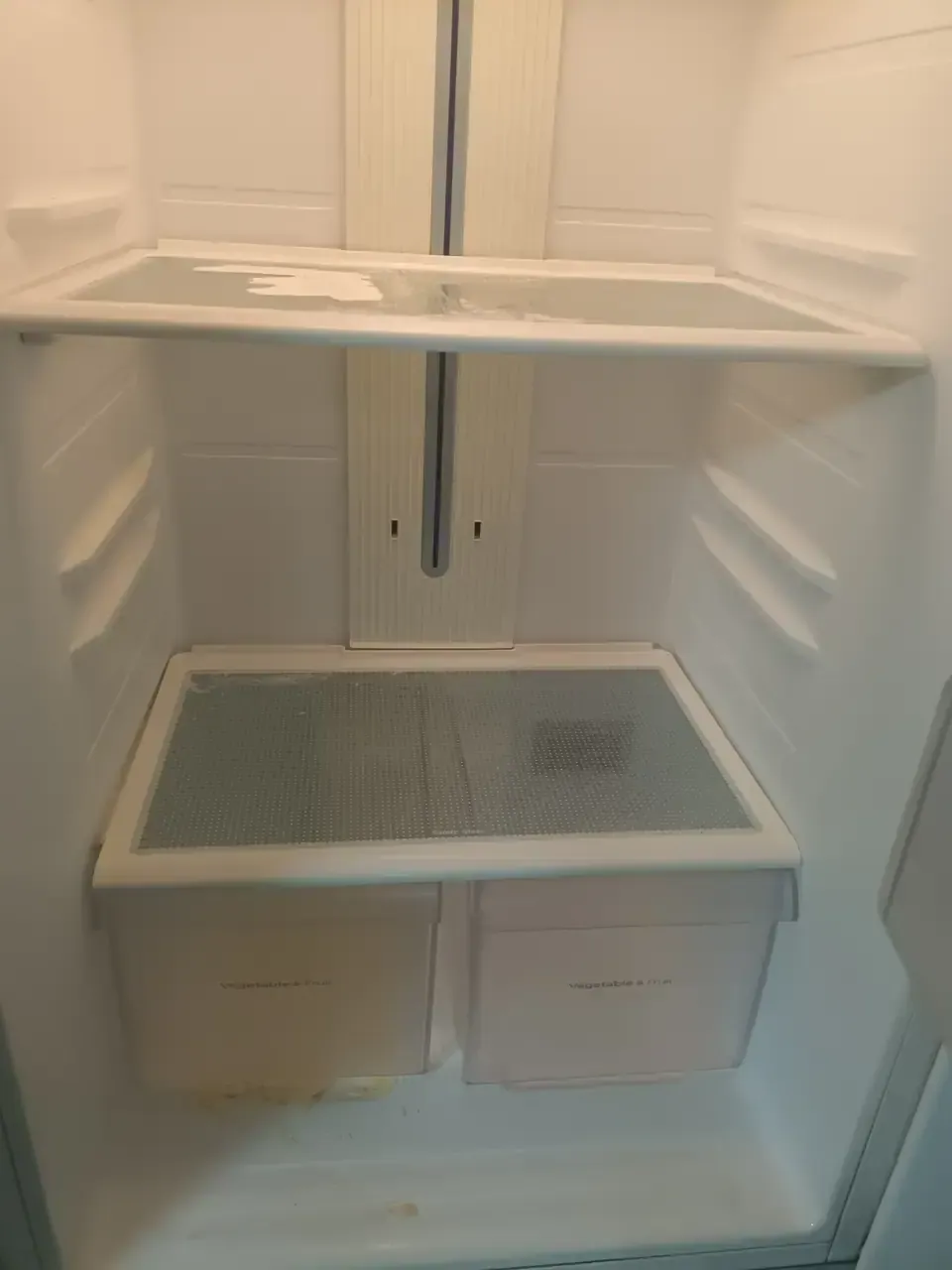
Emptied, not yet cleaned — and this is where smell lives · ⓒ @BalliBalliSeoul
Appliance interiors. A fridge that has been emptied is not a fridge that has been cleaned. Dried spills under the crisper drawers are the usual source of a smell people blame on the drain.
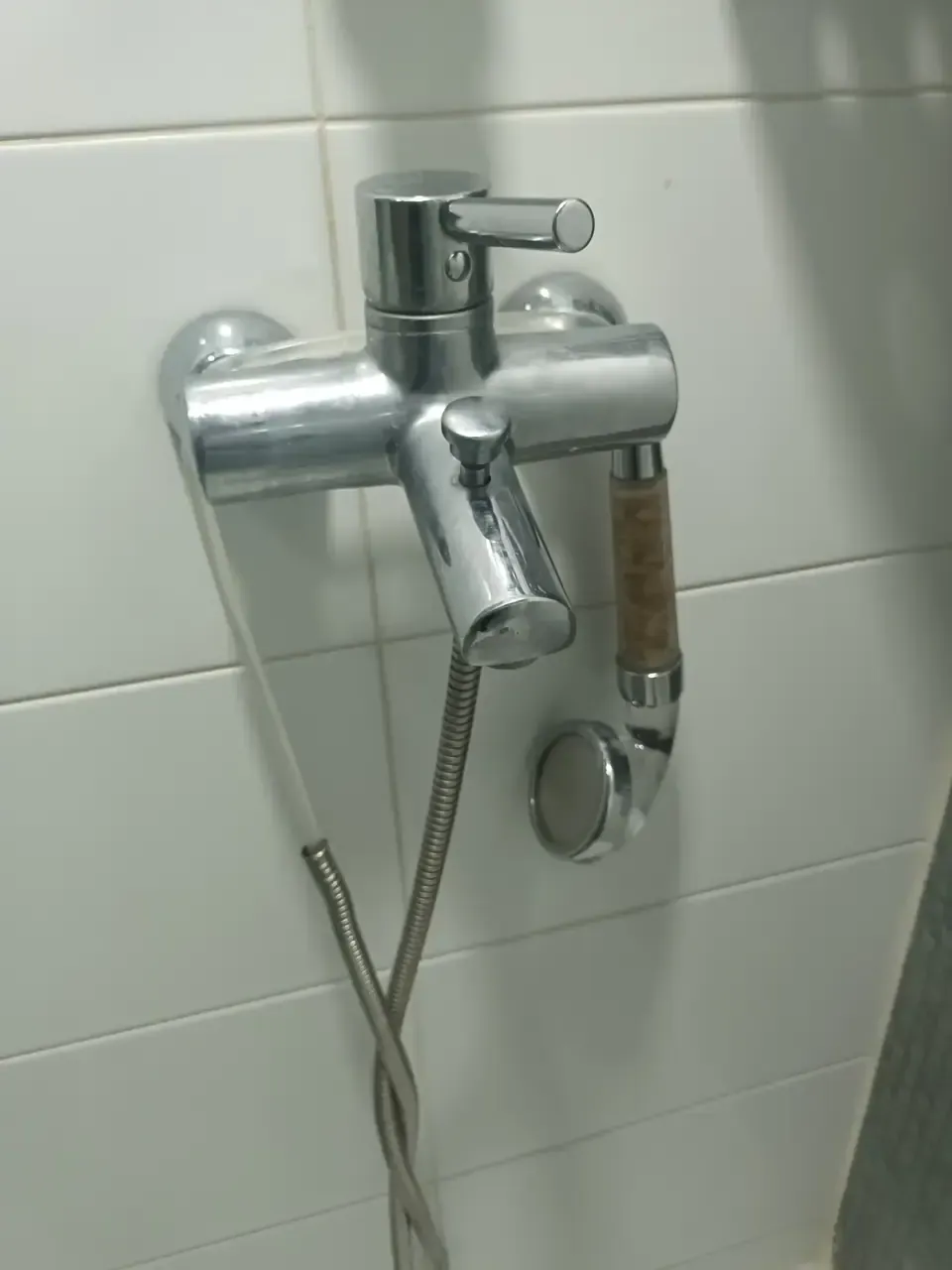
Scale on a shower fitting — this needs descaling, not scrubbing · ⓒ @BalliBalliSeoul
Limescale and silicone. Korea’s water leaves scale on fittings, and the brown crust above is past the point where a sponge helps. Blackened bathroom silicone is a separate case again: it usually has to be cut out and replaced, not cleaned, and a quote that promises to scrub it white is a quote to distrust.
It is worth seeing where that line actually falls.
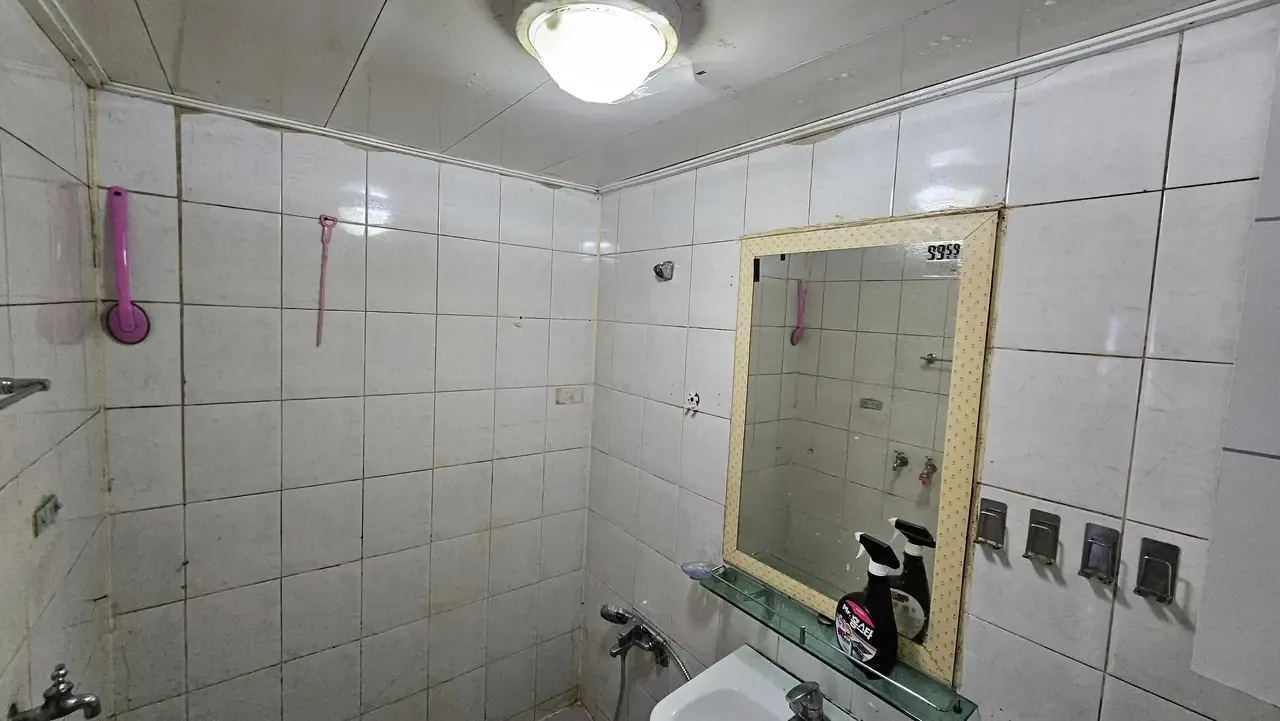
Yellowed grout and a failed seal. No clean returns this to white · ⓒ @BalliBalliSeoul
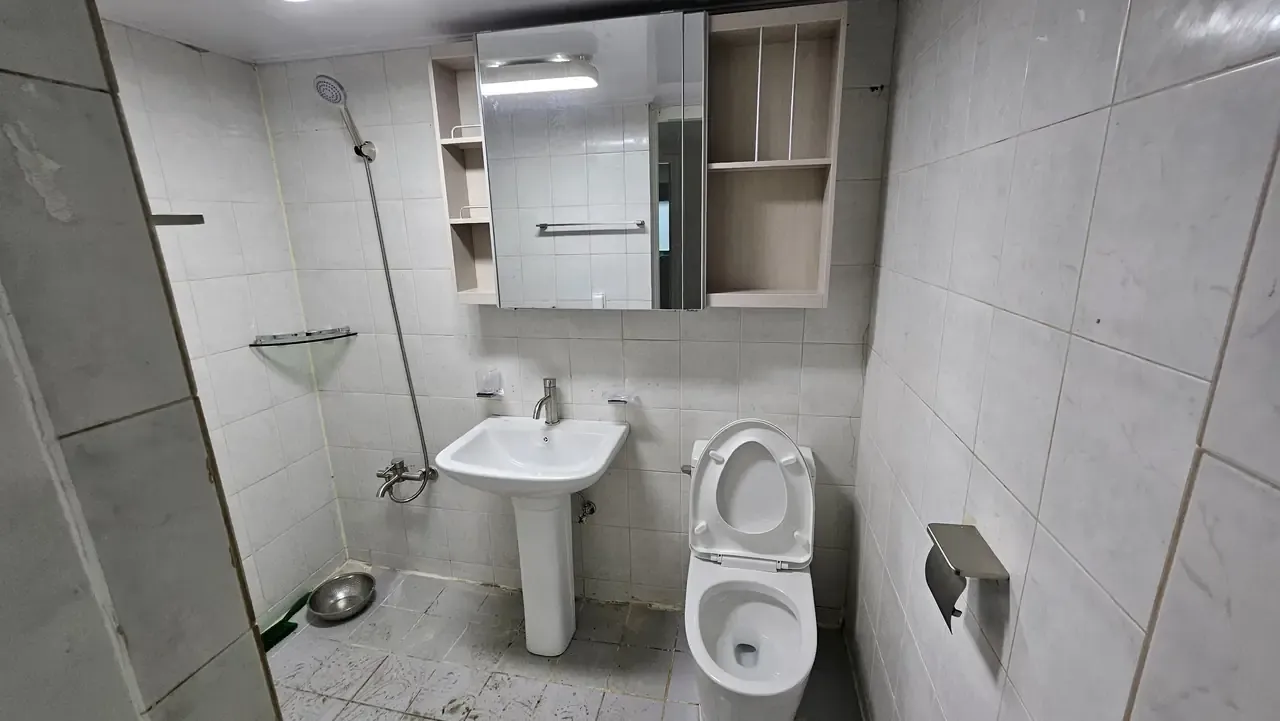
The same bathroom — refitted, not cleaned · ⓒ @BalliBalliSeoul
Those are the same bathroom a few days apart, and the difference between them is new fittings and new sealant. No cleaning crew produced that second photograph, and it is a mistake to look at an after-shot like it and think a clean is what you are buying.
Look at what did not change. The floor tile and its grout are the originals in both frames — still marked, still discoloured. That is the honest picture: the parts that were replaced look new, and the parts that were only cleaned look cleaned.
Behind and under things. The gap behind the washing machine, the floor under the wardrobe, the top of the kitchen cabinets. These are reachable exactly once — while the room is empty — which is the honest argument for doing a heavy clean during a move rather than around your furniture.
What a clean will not fix is anything structural. Damp at the bottom of a wall is not dirt, and scrubbing it changes nothing — mould behind the baseboard is a building problem with a different owner and a different bill.
What it costs, and why the quotes disagree
Published guide ranges in Korea, as of 2026, vary enormously — and it is worth understanding why before you read them.
The ordinary end first, because most people reading this need it more than they need a clearance crew. Empty-flat cleaning is priced per 평 (pyeong, about 3.3㎡ — the number is on your lease).
| Job | Guide range |
|---|---|
| Empty-flat clean (입주 / 이사청소) | Roughly ₩23,000–25,000 per pyeong — about ₩250,000 for a one-room |
| Partial (부분청소), one room | From around ₩70,000 |
| Partial, kitchen or bathroom | From around ₩80,000 |
When a quote arrives, divide it by your floor area. A figure near that line is an ordinary job; a figure far above it is a heavier one, and you should be able to hear why. The size-by-size breakdown lives in move-in cleaning.
A quote far below the line is also worth a question, not just gratitude. Korean cleaning firms warn about the same thing themselves: a price that undercuts the market is often the shape of a job that grows on the day, or gets done in half the hours.
Now the heavy end, and here the published numbers stop agreeing.
| Job | Guide range seen |
|---|---|
| Organising (정리수납), two professionals | From around ₩600,000 |
| Organising, 30 pyeong home | Roughly ₩600,000–1,500,000 |
| Clearance clean (특수청소), ~10 pyeong | Roughly ₩300,000–1,200,000 |
| Clearance clean, one-room in bad condition | Frequently quoted ₩800,000–1,500,000 |
| Clearance clean, 20–30 pyeong | Roughly ₩500,000–1,500,000 |
Those ranges overlap and contradict each other, and that is the finding. Different firms publish figures that differ by a factor of three for the same floor area, because floor area is not what they are pricing. They are pricing volume, contamination and access — how many bags come out, whether anything has gone bad, and whether there is a lift.
Notice the gap between the two tables. A 20-pyeong flat cleaned normally is around ₩500,000; the same flat as a clearance job can be two or three times that. Almost all of that difference is stuff, not dirt — which is the argument for the bin bags again.
Which means a number quoted over the phone, before anyone has seen it, is not a real number. Send photographs. Every firm will ask for them, and the quote you get from photos is far closer to the final one than any figure derived from your pyeong count.
If what you actually want is ongoing help rather than a one-off rescue, that is a different market with different prices — finding a weekly housekeeper covers it.
If you are renting
Two things worth knowing before you book anything.
Photograph the flat now, in its current state, and again after. Not for anyone else — for you. If a landlord later argues about the condition of the floor or the walls, a dated set of photographs is the only thing that settles it, which is the same reason the move-in photos matter.
A heavy clean before you hand back the keys is usually cheaper than the deposit deduction it prevents. Landlords deduct for condition, and they deduct at their own estimate rather than at market rates.
The Korean part
Every firm in all three categories works by phone and KakaoTalk, in Korean, and the conversation is specific: the floor area in pyeong, the condition, how much is coming out, the building’s lift and parking, and the date. A vague answer gets a vague price, and a vague price is where the arguments start.
There is also a discretion problem that nobody writes about. Asking three companies to look at photographs of your home in this state, in a language you do not speak, is a genuinely uncomfortable thing to do. It is also completely routine work for them — this is what the trade exists for, and the crews have seen far worse than whatever you are looking at.
Get it sorted
Start with bin bags and an hour. Everything after that gets cheaper.
When you are ready for quotes, we handle the Korean side: we describe the job accurately to firms that do this work, get you comparable numbers in English, and sort out the access and the disposal timing. The cleaning page has our guide ranges, and the first answer costs nothing.
Once a date is booked, the part worth preparing for is the end of it — what the crew does on the day, and the check to do before you pay.