Weekly Housekeeper in Korea: What It Costs and What They Do
Ask around about hiring a weekly cleaner in Korea — a residential cleaner, a housekeeper, a cleaning lady, whatever it was called at home — and you may get puzzled looks, which convinces a lot of people it isn’t done here. It is. Korea has a mature, app-driven home cleaning market and an informal English-speaking one beside it, and households use both without ceremony.
The part that actually trips people up is different. Korea sells two cleaning products that English calls by the same word, they cost five times apart, and ordering the wrong one is the most common mistake we see.
Two different products
| 가사도우미 / 정기 청소 | 입주청소 / 청소 (deep clean) | |
|---|---|---|
| What it is | One person, your home as it is | A crew with machines, the home empty or close to it |
| Cadence | Weekly, fortnightly, monthly | Once — at a move, or once or twice a year |
| Equipment | Usually your cleaner and vacuum | Theirs: steam, extractors, chemicals |
| Covers | Floors, bathrooms, kitchen surfaces, tidying | Inside every cabinet, hood, silicone, window frames, skirting |
| Typical price | From ₩70,000 for about 3 hours | ₩250,000 for a studio, ₩500,000 for a 2-bed, ₩700,000+ for 30평 |
Neither one replaces the other, which is the whole point of the table. A weekly cleaner keeps a clean home clean. They will not get the grease film off the inside of the range hood, and they were never asked to. That is a different trade, described in deep cleaning in Korea.
Most households need the first one regularly and the second one rarely. Knowing which you are asking for is most of the battle.
The app tier: how Koreans book it
The domestic market runs on housekeeping apps — the names locals give you are 청소연구소 (Cleaning Lab) and 미소 (Miso) — matching vetted cleaners to homes for one-off or recurring visits.
- Priced by home size and hours. A standard visit for an ordinary flat runs in the region of ₩60,000–70,000 for three to four hours as of 2026, with recurring bookings priced a little better and smaller options for one-rooms.
- Same-cleaner continuity is a supported feature. You can keep the person you like for a recurring slot, and the app tells you about substitutions.
- The apps are Korean-language, with Korean sign-up and Korean payment. That is the wall, and it is the main reason people who would happily pay never start.
An open secret of the market: after some months with the same platform cleaner, many households quietly move to a direct arrangement — same person, similar money, no platform in the middle. It is common enough to count as a norm. The trade-off is real, though: the platform’s insurance and its substitute-cleaner system both go away, and if that person is ill in February, February is your problem.
English-speaking residential cleaners
Parallel to the apps there is an informal market of cleaners and nanny-housekeepers who work the international community, found through community groups and word of mouth. Rates run a bit above app pricing, the communication runs in English, and the arrangements are personal — the same person, weekly, for years, often flexing between cleaning and household help.
For families that flexibility is the selling point the apps cannot match. The cost is that there is no company behind it: no vetting you did not do yourself, no cover, no replacement.
Making the first visit go well
Supplies are usually yours. Korean housekeepers work with the household’s own cleaner, cloths and vacuum. Platforms spell this out; direct hires assume it. Stock the basics before day one — a ₩20,000 Daiso run covers it. (If you would rather not, the cleaner can bring their own for a small fee, but say so when you book.)
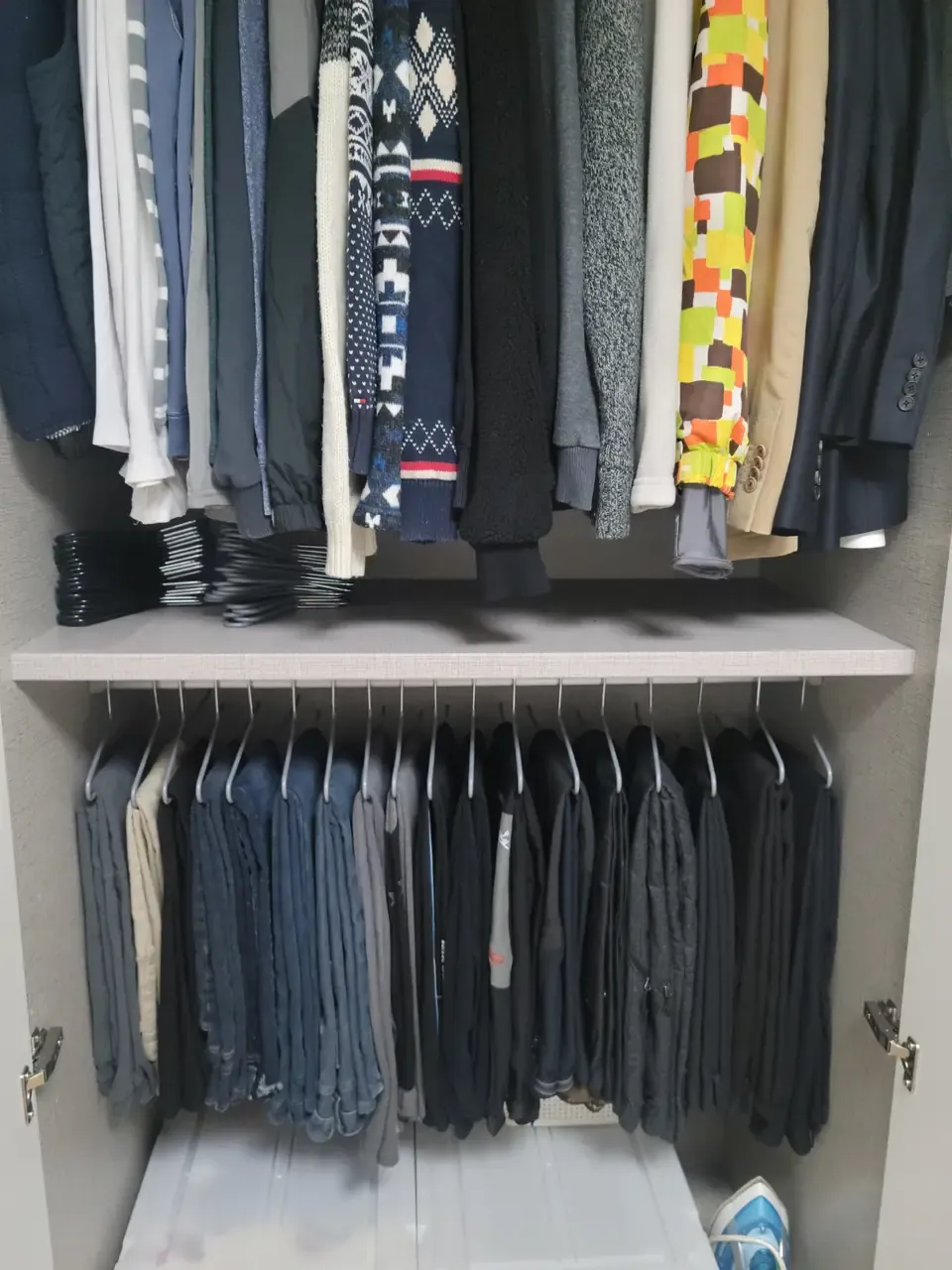
Declutter before they arrive. Cleaning and organising your belongings are different jobs, and a floor covered in things turns paid cleaning hours into paid picking-up hours. If the flat has gone past that point, what you want is not a cleaner at all — it is 정리수납, the Korean organising trade, which is a different booking and a different day.
Write your priorities down, even in translated Korean. “Bathroom mould and kitchen grease first, skip the bedroom” buys you a better three hours than leaving it open-ended. Recurring arrangements find their own rhythm by about week three; the notes matter most at the start.
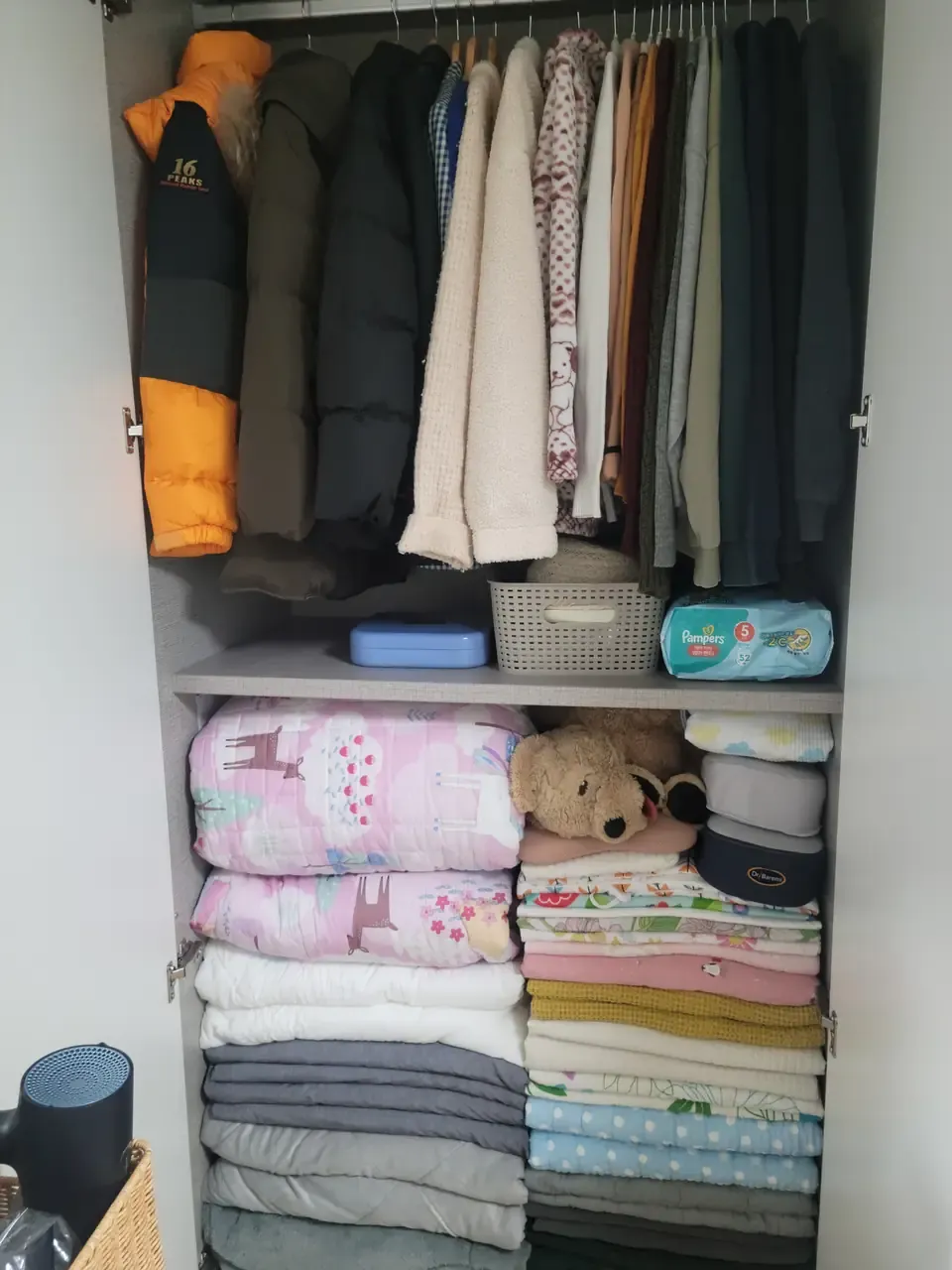
Wardrobe reset — after · ⓒ @BalliBalliSeoul
What a visit actually looks like, kitchen edition — the sink gets scrubbed down to the strainer baskets, not just rinsed:
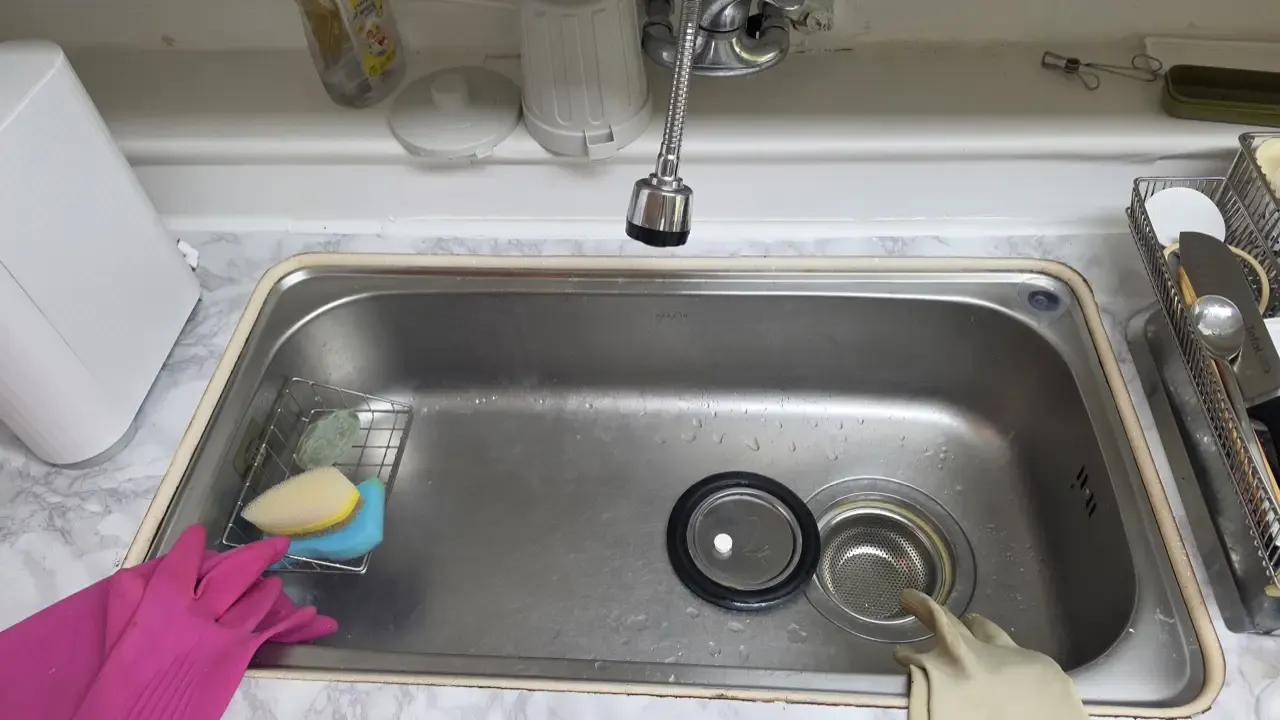
Kitchen sink, mid-scrub · ⓒ @BalliBalliSeoul
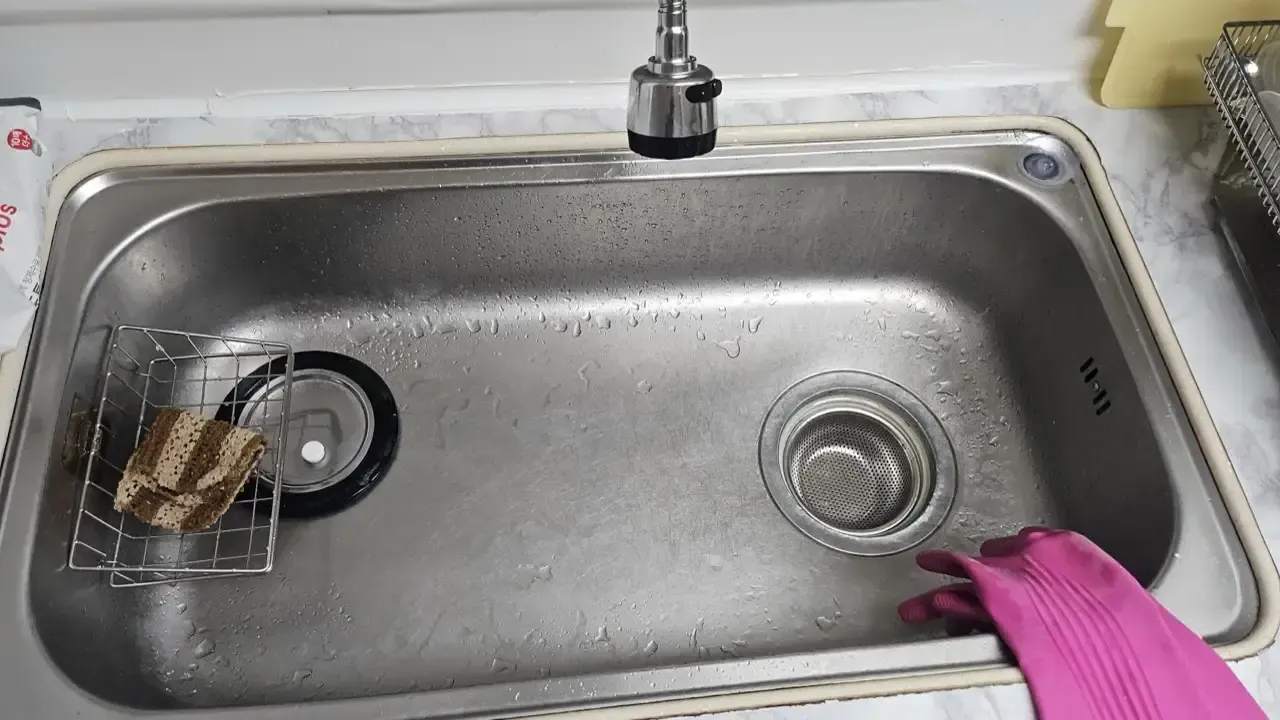
And after · ⓒ @BalliBalliSeoul
Getting them in the door
This is the practical question everyone asks late and should ask early.
Korean door locks make recurring access easy. Most households issue a temporary or secondary door code for cleaning day rather than cutting a key, and change it whenever the arrangement changes. Almost every keypad lock sold here supports more than one code — if you have never opened yours, the panel and its quirks are covered in what your door lock is trying to tell you. Leaving a key with the building office works too.
Being home or not are both normal. First visits usually overlap so you can walk through what you want; established routines run while you are at work.
Trust runs on different rails in each tier. Platforms carry vetting and a damage policy. Direct and informal hires run on references — ask for them, and start with a paid trial visit either way.
And the 이모님 culture is real. Older Korean housekeepers are the backbone of this industry and often its best practitioners. Expect brisk competence, occasional unsolicited life advice, and standards higher than your own.
What a weekly cleaner will not fix
Some things do not respond to frequency. You can clean around them every week for a year and they will be exactly where they started, because they need equipment and time that a three-hour visit does not have.
The clearest examples are the ones in our deep cleaning guide: a fridge that has been emptied but never cleaned, with spills dried hard under the crisper drawers, and a bath tap ringed with years of limescale on a wall of otherwise spotless tiles. Inside the fridge is not in the standard scope of a regular visit, and scale comes off with descaler and time — a cloth never touches it.
The same is true of four other things people expect their weekly cleaner to solve:
| You keep cleaning | What it actually needs |
|---|---|
| A black line in the bathroom silicone | Removal and re-siliconing — or it is damp, not dirt |
| A smell every time the aircon starts | The inside of the unit, dismantled — not a wipe of the filter |
| A sofa or mattress that never feels fresh | Extraction cleaning, which is a machine and a drying time |
| Grease on the hood, cabinet tops, skirting | The deep clean above |
Book the deep clean on a calendar, not on a crisis
Here is the habit worth copying from Korean households: the big clean is scheduled, not triggered.
- Air conditioner — before the season and after it. Late spring so the first hot week does not smell, and autumn so it does not sit damp all winter.
- The whole flat — once a year, and the sensible slot is whenever you are least in it.
- Moving — at both ends. The clean before you move in and the one that protects your deposit are the two most cost-effective cleans anyone ever books.
Booked ahead, a deep clean is a planned cost. Booked in a panic — the week of the handover, the day the landlord is coming — it is the same work at a worse price, in whatever slot is left. When the date comes, here is what the crew does, and what to check before you pay.
Where we fit
Regular housekeeping is the single thing people ask us for most, and setting one up is straightforward: we arrange the recurring schedule with vetted local cleaners, handle every Korean conversation — the booking, the scope notes, the “please also do the balcony this week” messages — and stay in the chat as your channel. You get domestic market prices with the coordination in English. The weekly slot, the one-off deep clean and the move-out clean all run through the same conversation, and the full price list is on the cleaning page.
We take no commission from any cleaner or cleaning company we put in front of you. Whichever one you use, we earn the same — which is why we can tell you that you do not need a ₩500,000 deep clean when three hours a week is the actual answer.
Get it sorted
Drowning in work and laundry? Send us your home size, neighbourhood and the rhythm you want. KakaoTalk is the easiest way to reach us, and WhatsApp works too. We’ll set up a recurring cleaner, brief them in Korean, and relay everything back in English. Asking costs nothing — you pay only for the work you book.
The permission slip, since nobody local seems to hand one out: hiring regular help is ordinary here, cheap by international standards, and the highest-leverage few hours a busy household buys. Start with the weekly visit. Put the deep clean in the calendar. Do not buy the second one when you needed the first.