Photograph Your Flat on Move-In Day — Meters First
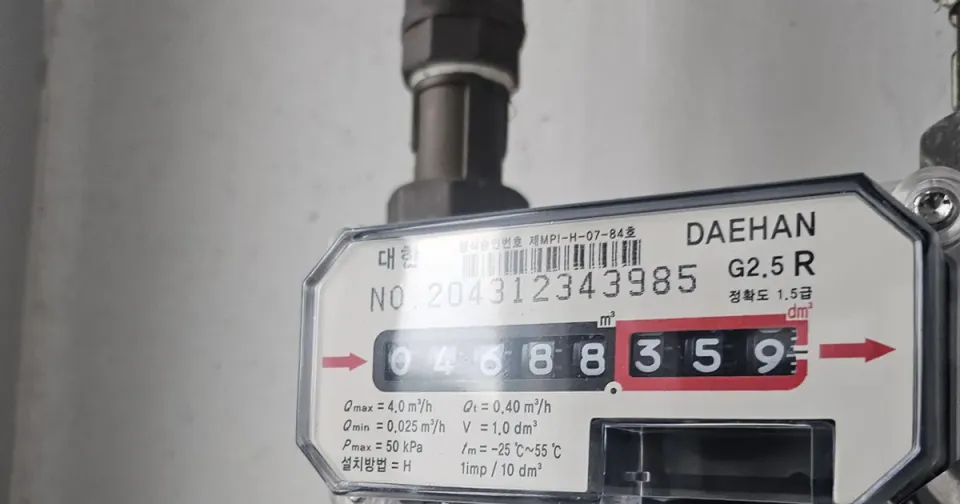
In most countries a rental deposit is a month or two of rent. In Korea it’s routinely ₩10,000,000 or more — the largest single sum you will hand to anyone here, sitting with a landlord for a year or two. (If you have not signed yet, the checks that matter come before that.)
You get it back at the end, minus whatever gets deducted. Which makes move-in day, before you unpack anything, the twenty minutes that decide how that conversation goes.
Start with the meters, not the walls
This is the one everybody skips, and it’s the one that costs money immediately rather than at the end.
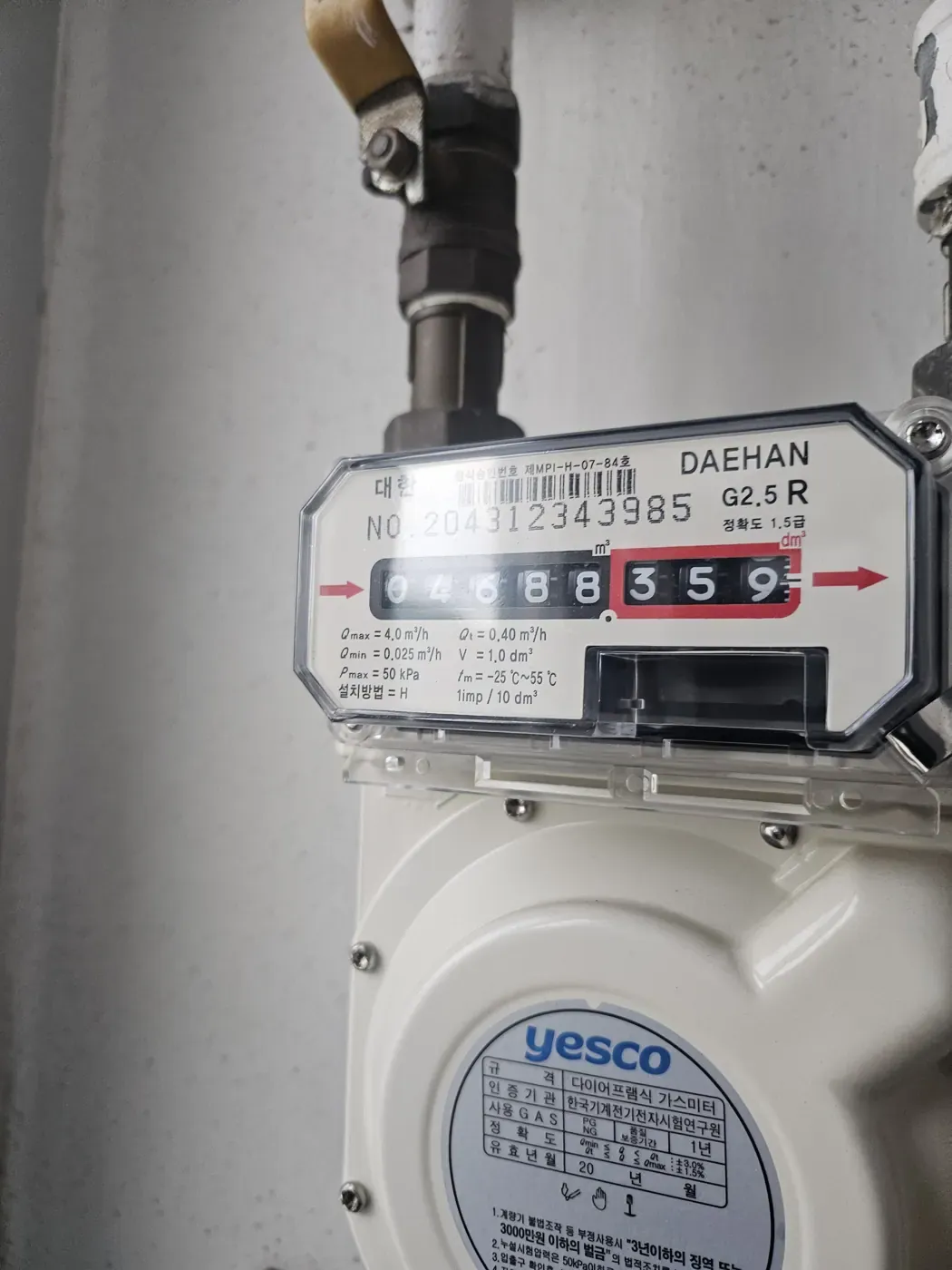
Gas meter, move-in day · ⓒ @BalliBalliSeoul
Korean utility bills are calculated from meter readings, and the reading doesn’t reset because a new tenant arrived. If the number on the meter when you move in is higher than the number the utility has on file, the difference lands on your first bill.
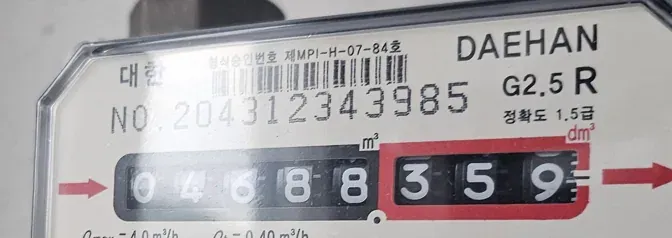
Black digits are whole cubic metres, red are decimals · ⓒ @BalliBalliSeoul
Photograph all three, on the day:
| Meter | Where it usually is |
|---|---|
| Gas (도시가스) | On the pipe near the boiler, kitchen or the outside corridor |
| Electricity (전기) | In the corridor, entrance cupboard, or a shared panel by the stairs |
| Water (수도) | Often a shared box in the hallway or outside — sometimes only in the building’s plant room |
Take one wide shot showing where the meter is, and one close enough to read every digit. In shared buildings there will be a row of identical meters, so get the unit number in frame — a photo of the right number on the wrong meter is worse than no photo.
If a reading looks wildly different from what the landlord or agent told you, that’s a question to ask now, politely, not after the first bill arrives.
Then the rest of the flat
Work round the room once, and shoot in pairs: a wide shot for context, a close one for the detail. The list is short because it targets the places deposits actually get argued over.
- Wall bases and corners, especially exterior walls — the same places we said to check before you sign
- Ceilings, for brown rings or a sagging cornice
- Floors — scratches, dents, lifted vinyl edges
- Silicone around the bath, sink and shower tray, which discolours and is a classic deduction
- Window frames and screens — condensation marks, tears, holes
- Every appliance, switched on. A photo of a working screen is the proof it worked
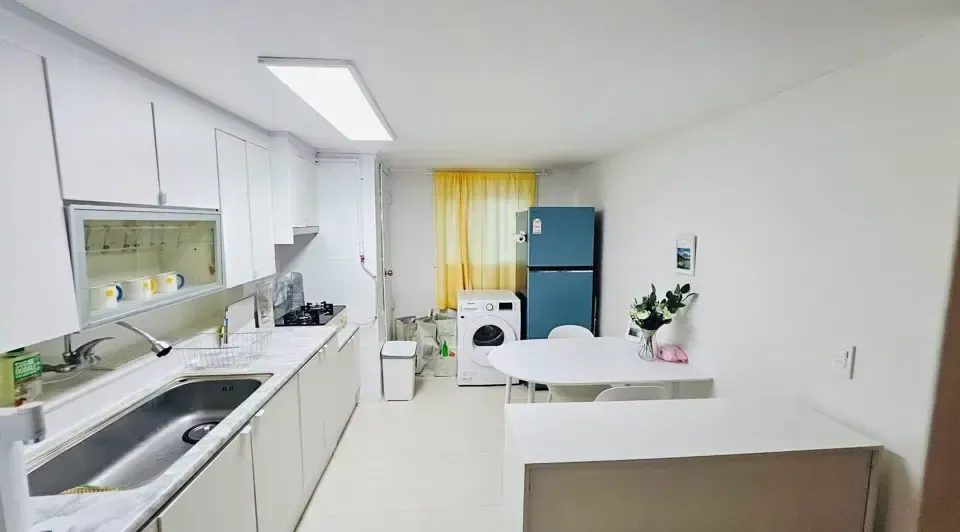
Kitchen, day one — get every appliance in frame, switched on · ⓒ @BalliBalliSeoul
- Anything already broken or marked. Don’t tidy it out of the frame — this is the whole point
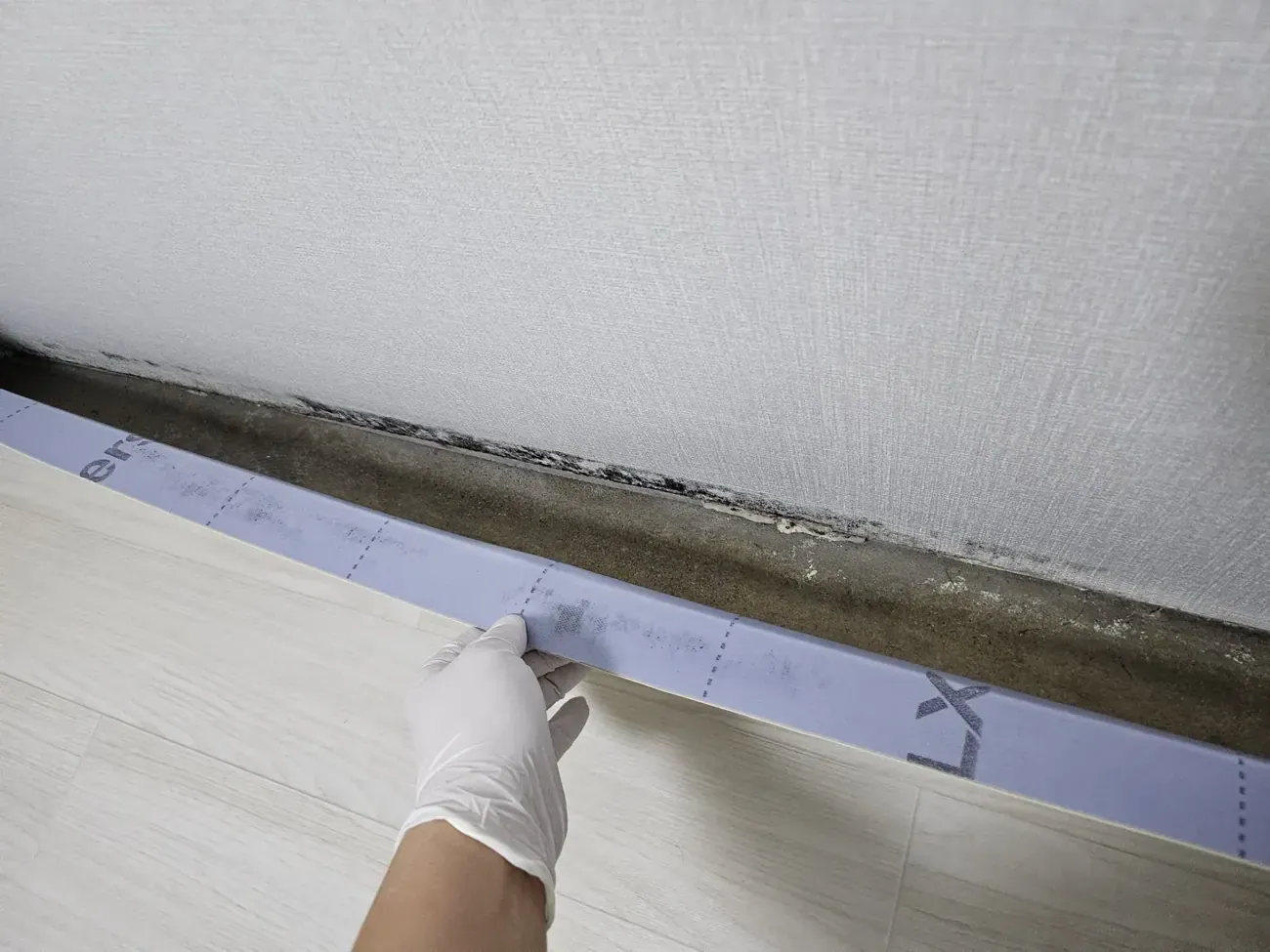
Existing damage is the most valuable thing in the album · ⓒ @BalliBalliSeoul
Twenty minutes, once.
Make the date provable — quietly
The photos are only worth anything if it’s clear they were taken on day one rather than reconstructed later.
You don’t need anything clever:
- Leave automatic cloud backup on. Google Photos or iCloud stamps the upload date independently of the file itself.
- Email the batch to yourself the same evening. A dated email in your own inbox is a simple, ordinary record.
- Don’t strip the metadata. Sending photos through some messaging apps re-compresses them and drops the EXIF date — keep the originals somewhere untouched.
What not to do
Here’s where foreign advice goes wrong, so let’s be direct.
Don’t send the landlord an album of every scratch on move-in day. It isn’t the norm here, and it doesn’t read as diligence — it reads as somebody who has arrived expecting a fight. You will be dealing with this person for a year or more, and the tone you set in week one lasts.
Do report actual defects. These are two different things:
| Action | Normal in Korea? |
|---|---|
| Keeping your own photo record | ✅ Sensible, and invisible |
| Sending “here is every mark I found” | ❌ Reads as adversarial |
| Reporting mould, a leak stain, a broken appliance — with a photo | ✅ Expected. This is a repair request |
So: record everything for yourself, and raise only the things that actually need fixing. If you signed through an agent (부동산), raising them via the agent is smoother than going direct — that’s part of what the fee bought you.
And for anything that is genuinely a fault rather than a scuff — a stain spreading on the ceiling, hot water that comes and goes — report it early and in writing. Waiting doesn’t make it your landlord’s problem any less; it just makes it look like you caused it.
Wear and tear versus damage
The deduction argument almost always comes down to one distinction: ordinary living leaves marks, and that isn’t damage.
Broadly, and this is not legal advice:
- Expected — faded wallpaper, minor scuffs, furniture marks on vinyl flooring, general wear on fittings over a two-year tenancy
- Chargeable — holes drilled in walls, burns, broken fittings, a wall covered in mould because the room was never once ventilated, damage from a frozen pipe after the heating was left off all winter
The grey zone in between is exactly where your day-one photos do their work. You can’t win that argument with a memory.
Do it again on the way out
Before you hand the keys back, walk the same route and take the same shots from the same angles.
A matched pair — this corner in March last year, this corner today — settles in ten seconds what an argument would take a week to resolve. It also tells you, honestly, whether a deduction is fair.
Two things happen either side of those photographs. On the way in, the flat gets cleaned before your furniture lands, and the walk-through is where you separate what a cleaner fixes from what the landlord has to repair — that is move-in cleaning. On the way out, the same flat gets cleaned again, and this time it is your deposit paying attention — that is move-out cleaning. Either way, the crew’s last twenty minutes are yours: walk the clean before you pay for it.
The other thing that lands in that same week is getting the internet on — worth settling before you agree to anything, because the standard offer is a three-year contract.
The Korean part
Move-in day is usually the day everything else is happening at once: the van, the contract, the internet installation, the agent, a landlord speaking Korean at speed.
Our moving service handles the van and the crew, and through our anything-else concierge service we’ll walk the flat with you, find the meters, read what’s written on them, and raise anything that needs raising with the landlord — in Korean, in the tone that gets it fixed rather than the tone that starts a year of friction.
Get it sorted
Moving in and not sure what to record — or already staring at a deduction you don’t agree with? Message us on WhatsApp with photos and we’ll tell you where you stand. Asking costs nothing — you pay only for the work you book.
The one-line version: photograph the three meters before you unpack, shoot every wall base, corner and appliance, keep it in your own cloud rather than the landlord’s inbox, and repeat the same angles on the day you leave.