Check Behind the Baseboard Before You Sign a Korean Lease
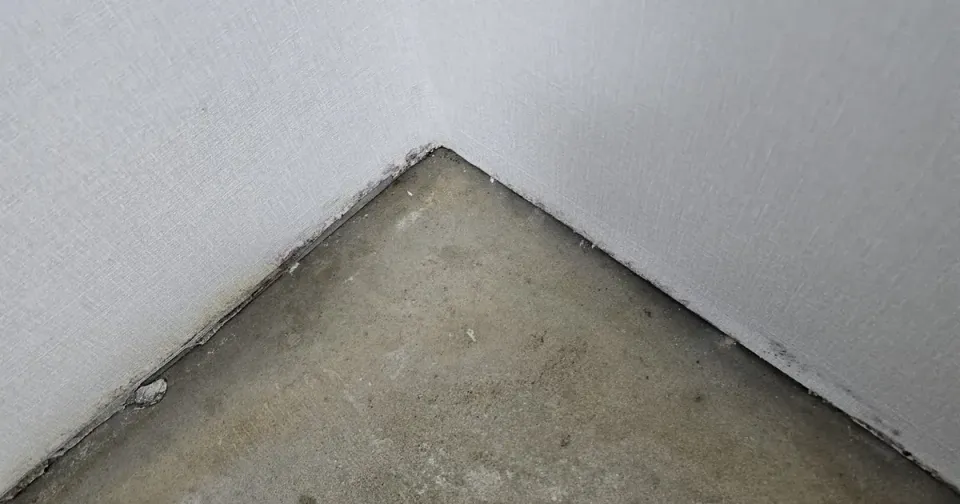
The room in these photographs looks fine. Clean wallpaper, laminate floor, nothing on the walls, no smell that hits you at the door. You would view it, like it, and sign.
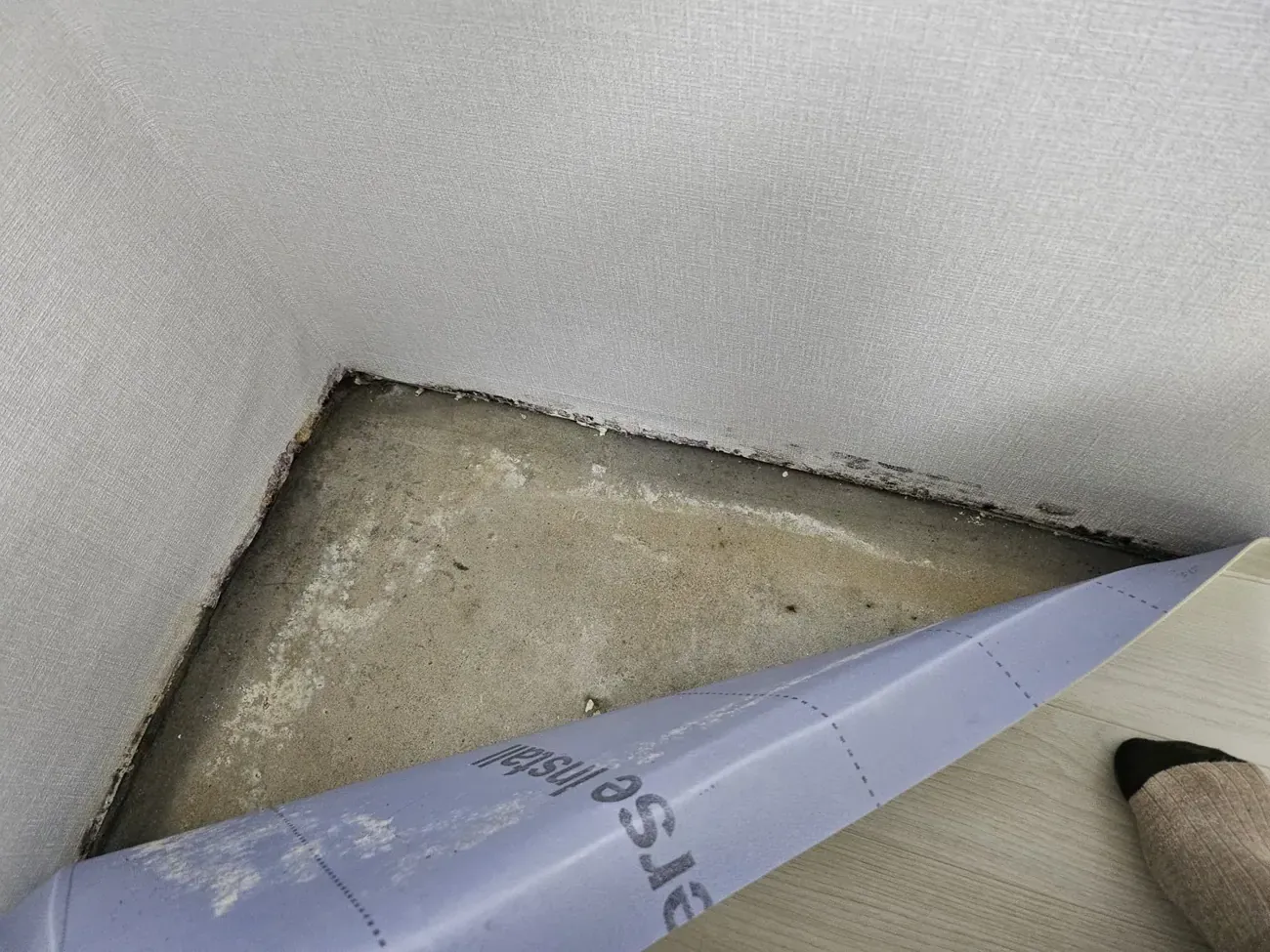
Then you lift one plastic strip along the bottom of the wall.
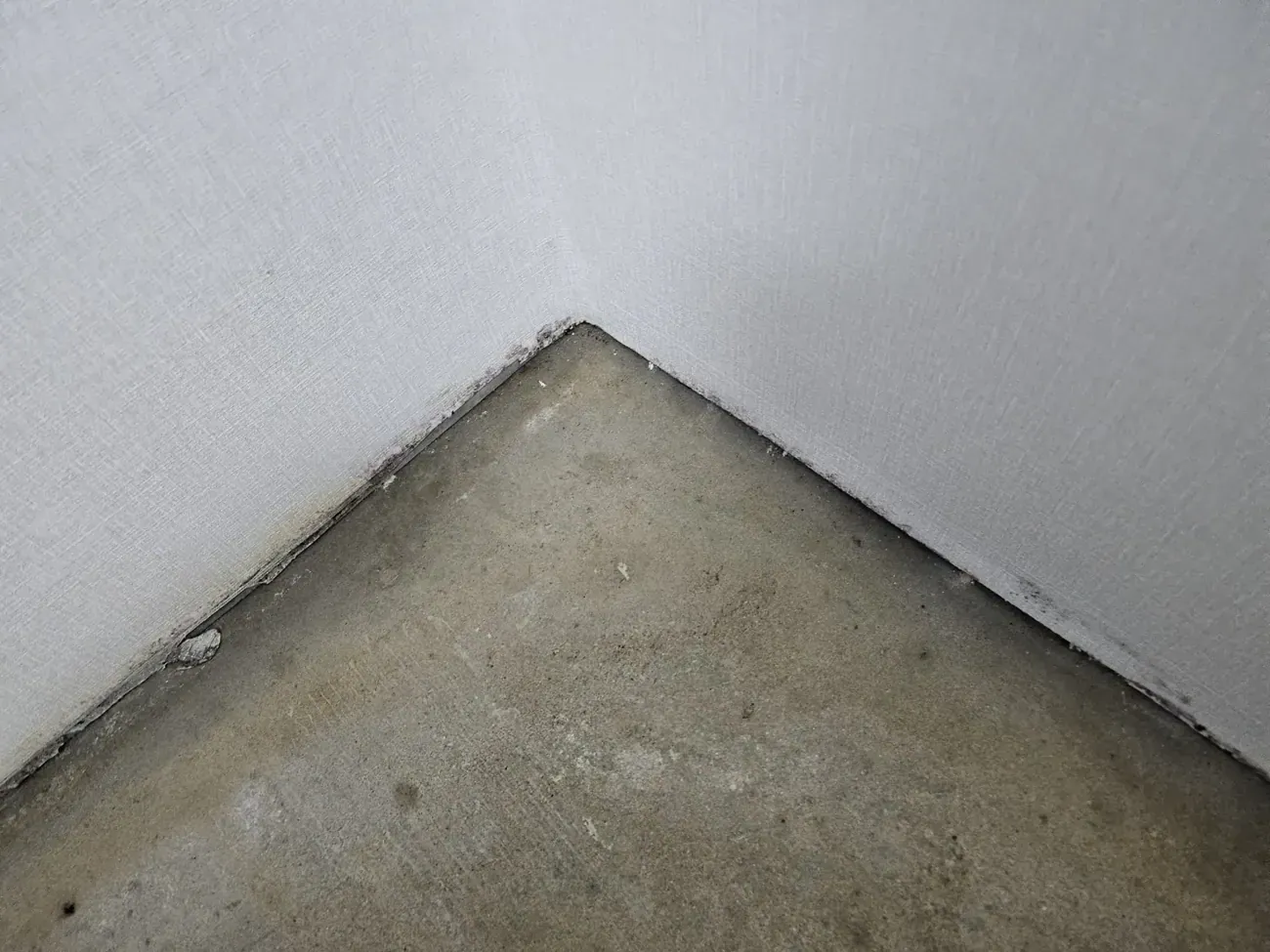
The strip comes away in one piece · ⓒ @BalliBalliSeoul
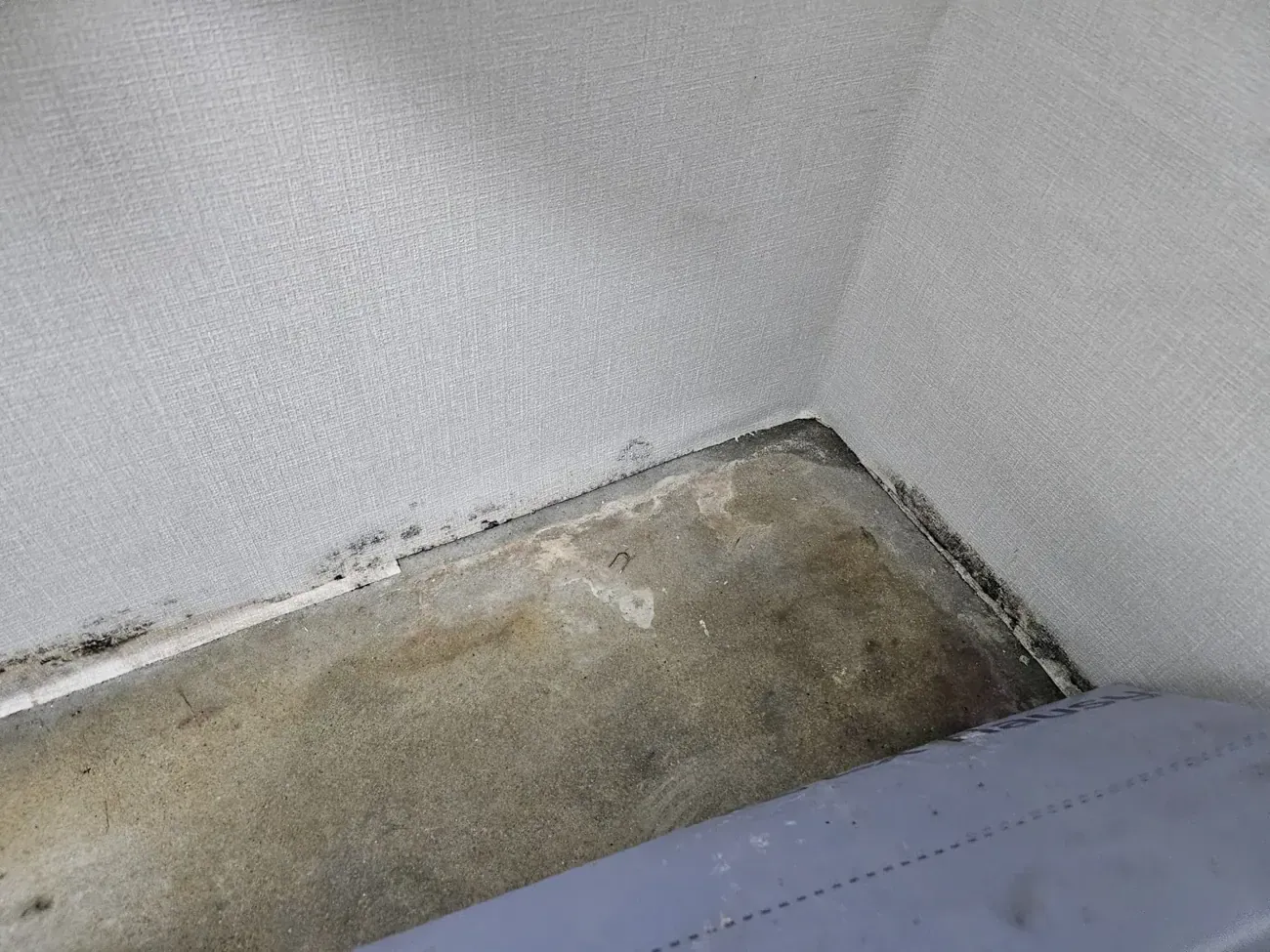
That dark band runs the length of the wall. It was there at the viewing. It just wasn’t visible.
Why Korean interiors hide it so well
This isn’t a uniquely Korean problem — damp exists everywhere — but Korean finishing makes it uniquely invisible.
Walls here are papered rather than painted, floors are covered with vinyl sheet or laminate, and the join between them is capped with a baseboard strip (걸레받이). Three layers, all of them opaque, all of them meeting exactly where moisture collects.
A painted wall shows damp as a stain within weeks. Wallpaper hides it until the paper itself gives up — by which point what’s behind has been growing for a long time.
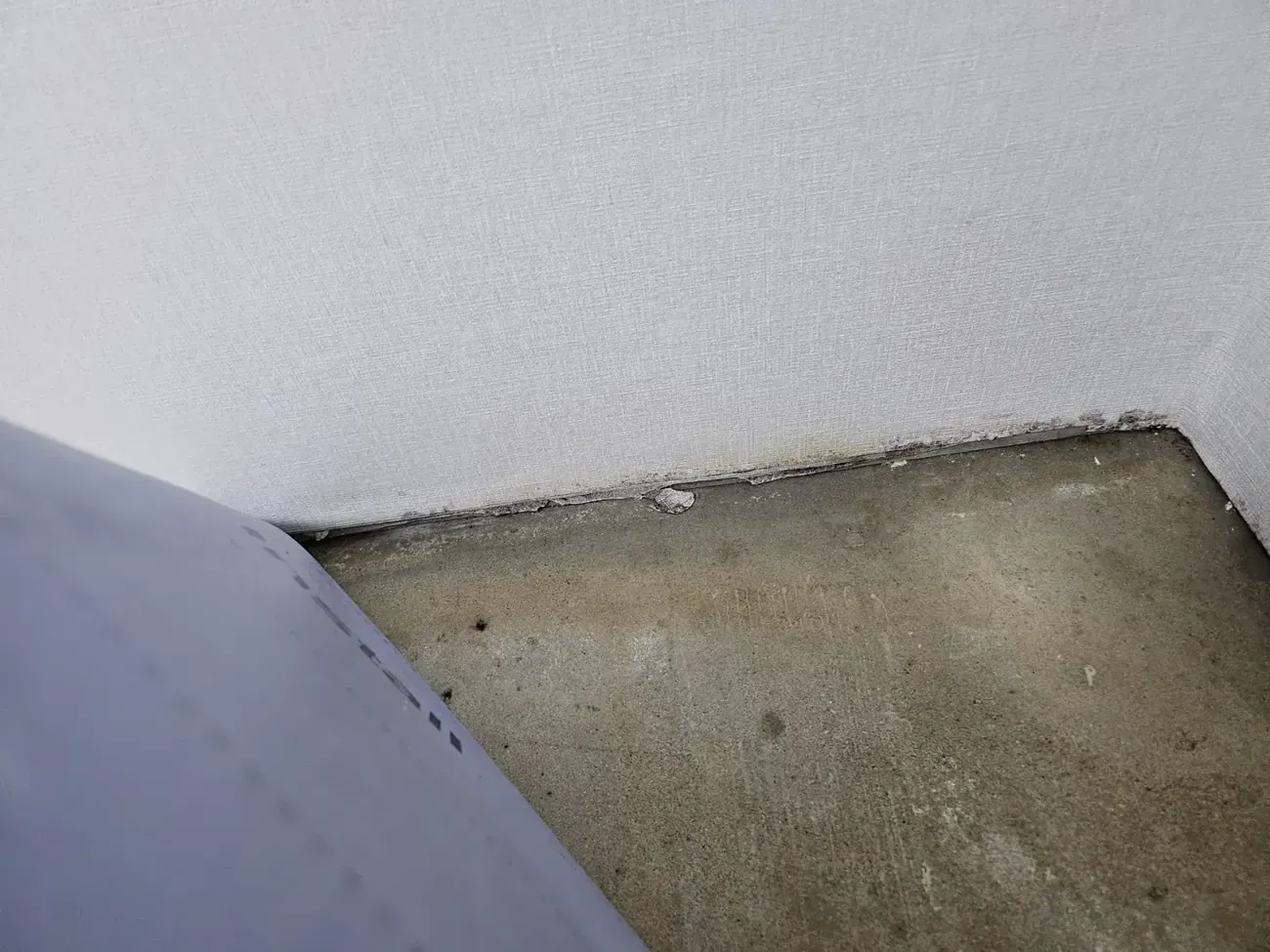
This is what “the flat looked clean” can mean · ⓒ @BalliBalliSeoul
The white powder matters as much as the black
Look at the pale crust in this next photo, next to the black.
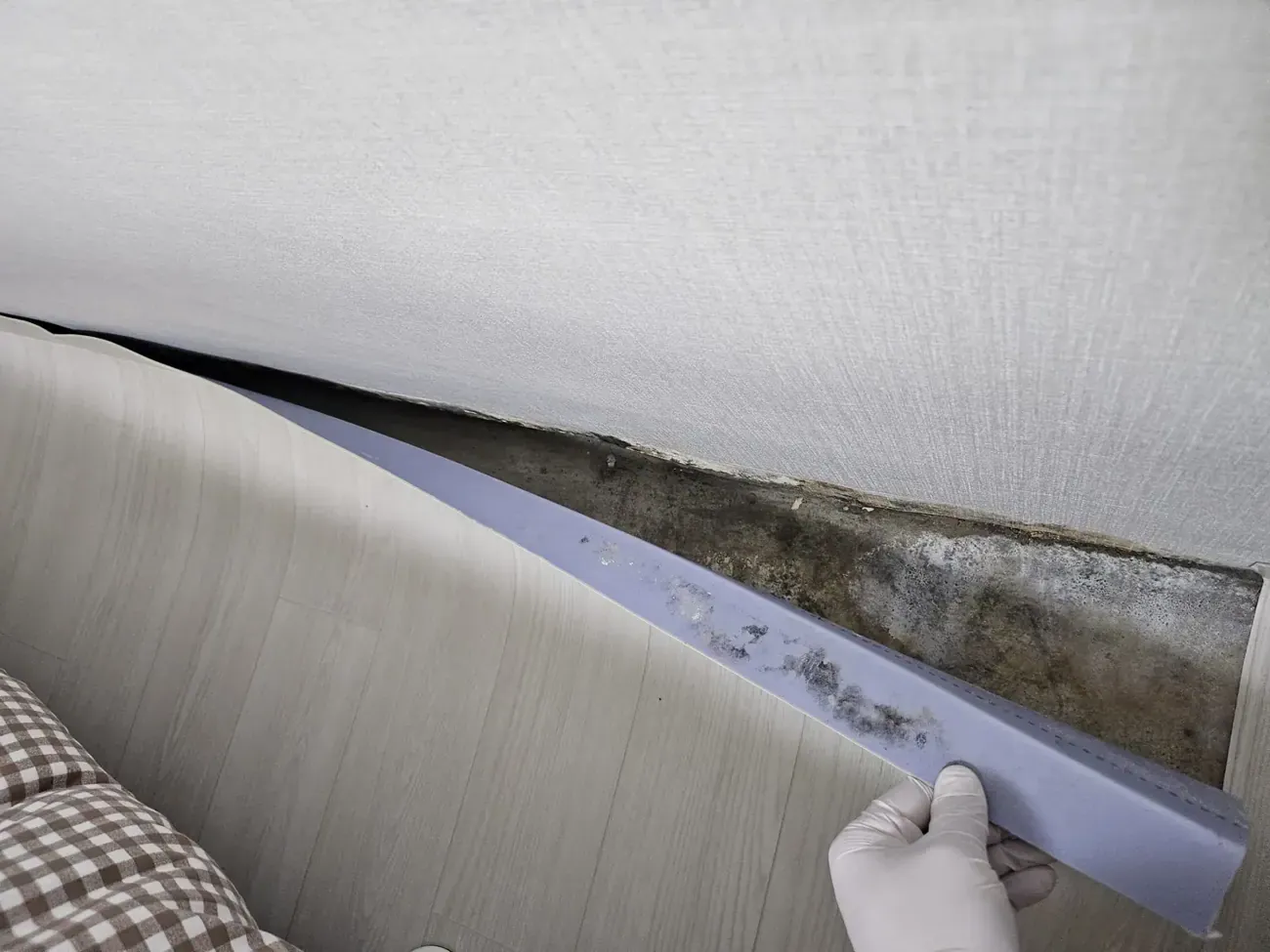
White salt crystals — the giveaway · ⓒ @BalliBalliSeoul
That white deposit is efflorescence (백화): salts carried out of the concrete by moisture and left behind as the water evaporates.
Mould tells you the surface has been damp. Efflorescence tells you water has been moving through the structure itself — repeatedly, over a long period. It’s the difference between a wet towel left against a wall and a wall that is wet.
If you see the white, the problem is not a cleaning problem.
What to check at a viewing
You will not be pulling baseboards off during a ten-minute viewing. You don’t need to. Five checks, none of which look strange:
1. Smell the corners, not the room. Crouch near the floor in a corner, ideally behind where furniture would go. Damp has a distinct earthy smell that sits low and disappears at standing height. If the flat has been aired out for you, the corners still tell the truth.
2. Run a finger along the bottom edge of the wallpaper. Look for discolouration, a wavy or lifted edge, or paper that feels cool and slightly soft. Clean paper meeting the floor in a straight, tight line is a good sign.
The paper edge gives it away before anything else does · ⓒ @BalliBalliSeoul
3. Look behind and under everything that’s already there. The wardrobe against the outside wall, the bed head, the boxed-in corner. Mould grows where air doesn’t move, which is exactly where furniture sits.
4. Check the corners of exterior walls first. Especially north-facing ones, and especially at floor level. Corners are colder than flat wall, so they condense first.
Corners go first · ⓒ @BalliBalliSeoul
5. Ask directly, and watch the answer. “곰팡이 있었어요?” — has there been mould? A landlord or agent who says “it was treated last year” has told you something important. So has one who looks uncomfortable.
And treat fresh wallpaper in one room only as a question, not a feature. New paper is how mould gets covered, not just how flats get refreshed.
The flats where this is most likely
Not every Korean home has this problem. These raise the odds:
- Semi-basement (반지하) and ground-floor units — the classic case, and the reason those flats are cheaper
- North-facing rooms, which stay cold and condense
- Older buildings with thin or no wall insulation
- Villas rather than large apartment complexes, where construction and maintenance standards vary far more
- Rooms where the previous tenant kept a drying rack indoors all winter with the window shut
Why it matters beyond the ugliness
We’re not going to overstate this, and we’re not doctors. But the consensus is unremarkable: living with visible mould is associated with respiratory irritation, coughing, worsened allergies, and aggravated asthma. People with existing asthma, allergies or compromised immunity have the strongest reason to care.
The practical point for you is simpler. You will be sleeping in that room, with the window closed, for months. A flat that grows mould in the corners in August will grow more of it during the monsoon, and you will be breathing it the whole time.
If you already live there
- Photograph it now, with dates, before any conversation starts. This is the same discipline that matters when water comes through a ceiling — the record is what settles arguments later.
- Tell the landlord in writing, not verbally. A message with a photo establishes both the problem and the date you reported it.
- The cause decides who pays. Mould from a building defect — failed waterproofing, no insulation, a leak — is the property’s problem. Mould from a tenant drying laundry indoors with every window shut all winter is a harder argument to win. Expect that distinction to be the whole conversation.
- Surface cleaning is not a repair. Wiping the visible black off wallpaper and re-papering treats the symptom. If the concrete behind it is still damp, it comes back — usually within a year.
What actually fixes it
In rough order of seriousness:
- Ventilate and de-humidify. Cheapest, and genuinely effective for condensation-driven mould. Air the room daily even in winter; run a dehumidifier in the rainy season.
- Move furniture a few centimetres off exterior walls. Air needs to move behind it. This one costs nothing and prevents a lot.
- Professional cleaning and treatment for anything that has taken hold on surfaces.
- Address the source — insulation, waterproofing, a leak. If there’s efflorescence, you are in this category, and it’s the building’s job, not a weekend’s work.
Steps 3 and 4 are where we come in: our cleaning service handles the treatment, and for anything structural we get the right trade in and translate the diagnosis — because “the wall is wet and nobody will tell me why in English” is exactly the problem this company was built around. If the treatment is part of a bigger clean, the check before you pay is where you confirm it was treated and not just wiped.
If keeping on top of it is the issue rather than fixing it once, weekly cleaning help is easier to arrange here than most people assume.
This check is one of several worth doing before you sign anything. The rest — what the deposit is telling you, the management fee, the ten minutes at the viewing — are in our guide to renting in Seoul, and once you have the keys, photograph everything you find on day one.
Get it sorted
Viewing a flat and unsure what you’re looking at? Send us photos on WhatsApp — corners, wall bases, behind the furniture — and we’ll tell you what we’d walk away from. If you already live with it, we’ll tell you whether it’s a clean or a repair. Asking costs nothing — you pay only for the work you book.
The one-line version: crouch in the corners and smell, check the bottom edge of the wallpaper, treat white crystals as a red flag, and remember that fresh paper in one room is a question — not a selling point.