Deep Cleaning in Seoul: What Actually Comes Apart
Book a deep clean in Korea and what arrives is not a person with a cloth. It is a crew who will take your flat to pieces, wash the pieces, and put them back.
That is the whole difference, and it is the thing that is hard to picture before you have paid for one. So here it is in photographs: one flat, and every part of it that came off before anything got cleaned.
The kitchen: nearly all of it unbolts
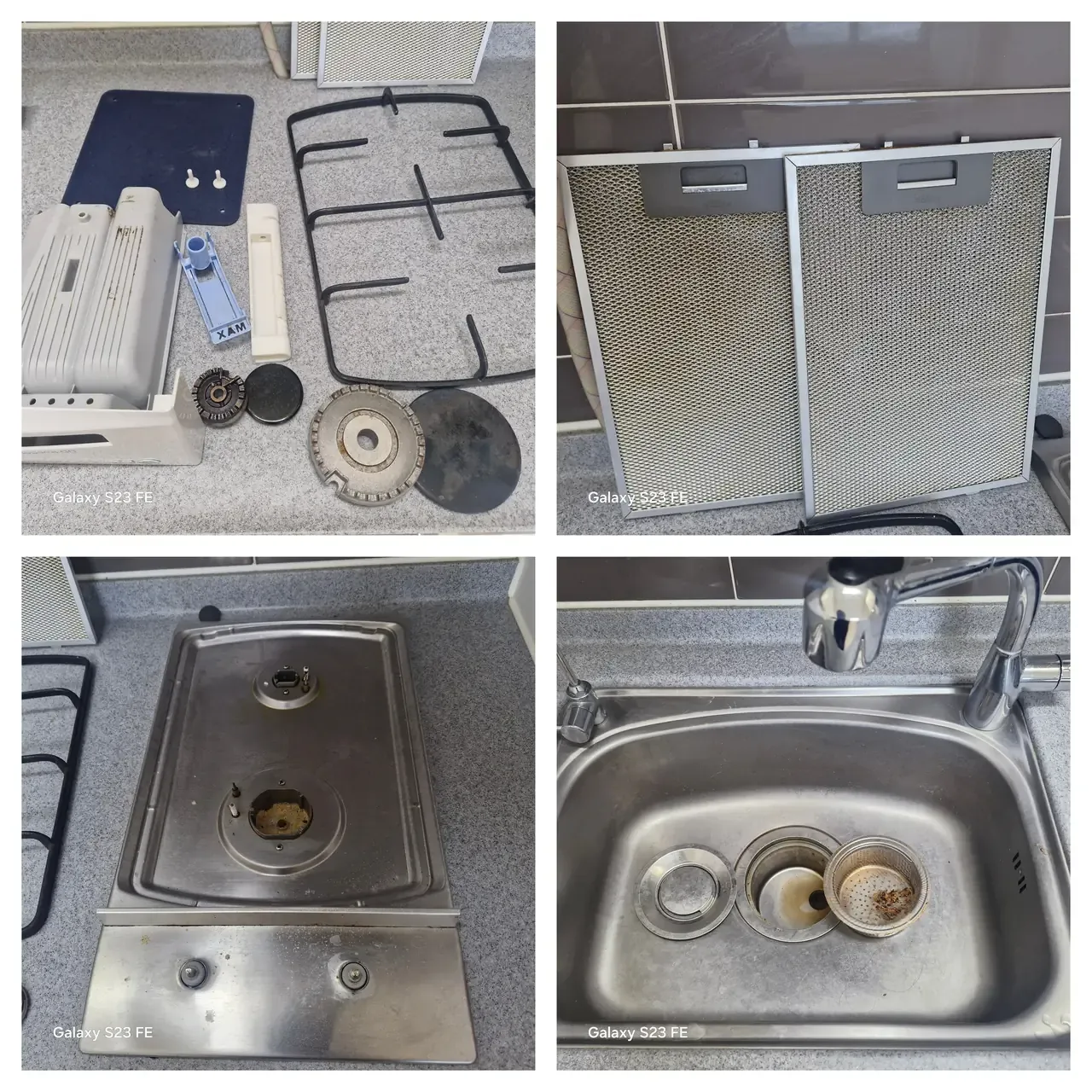
Burner caps, trivets, the hob tray, hood filters, the sink strainer — all removed first · ⓒ @BalliBalliSeoul
The range hood filters are the single most neglected object in a Korean rental. They are metal mesh, they slide out, and after a year of frying they hold a film of oil you can scrape with a fingernail. Nobody who lives there has ever removed them, because nothing in the flat tells you that they come out.
The hob comes apart into six or seven pieces. Burner caps, the rings under them, the trivets, the drip tray, the control knobs. Degreasing those in a sink is a different operation from wiping a hob.
The sink strainer assembly unscrews into three parts, and the part that smells is the one underneath.
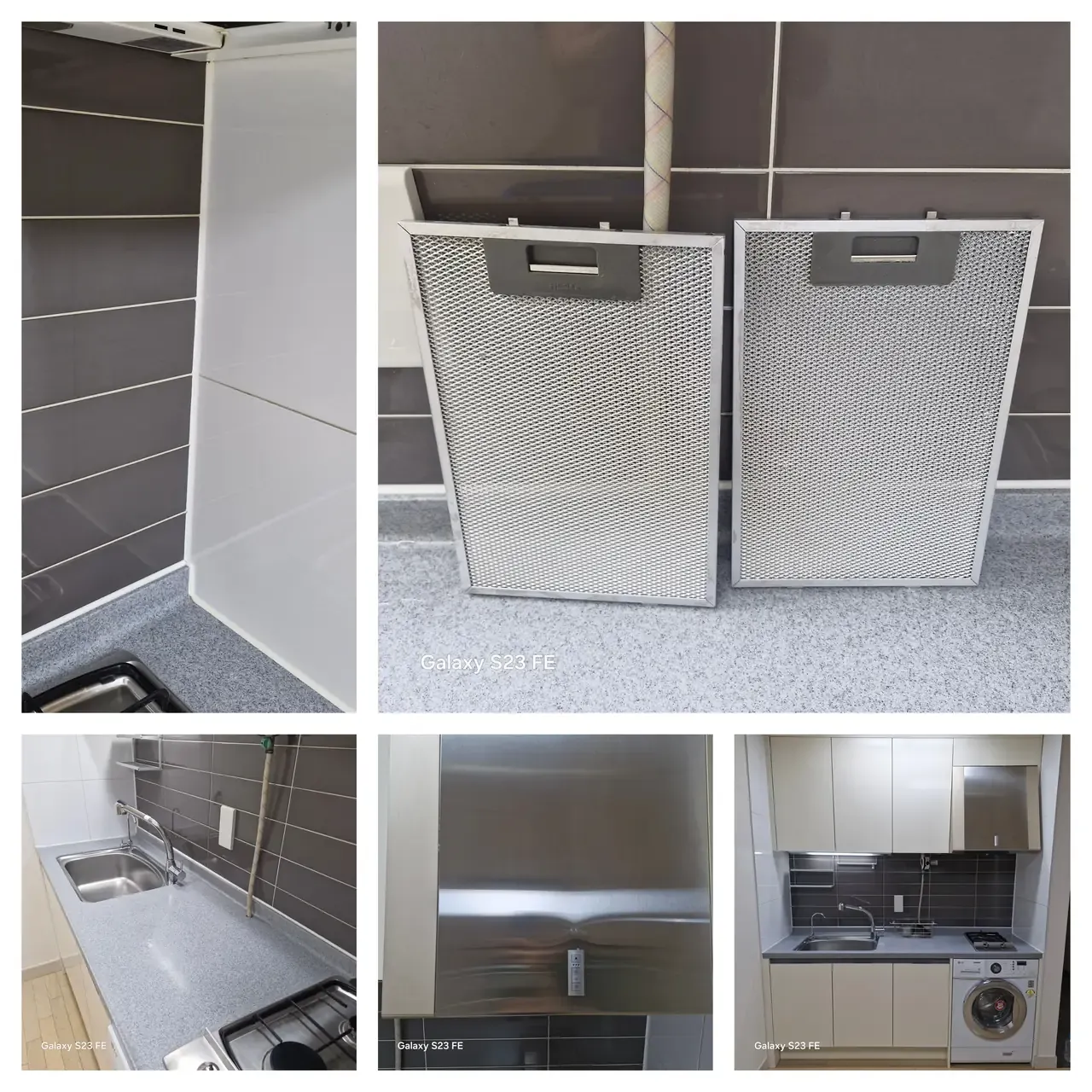
The same kitchen afterwards — the filters washed and standing on the worktop, waiting to go back in · ⓒ @BalliBalliSeoul
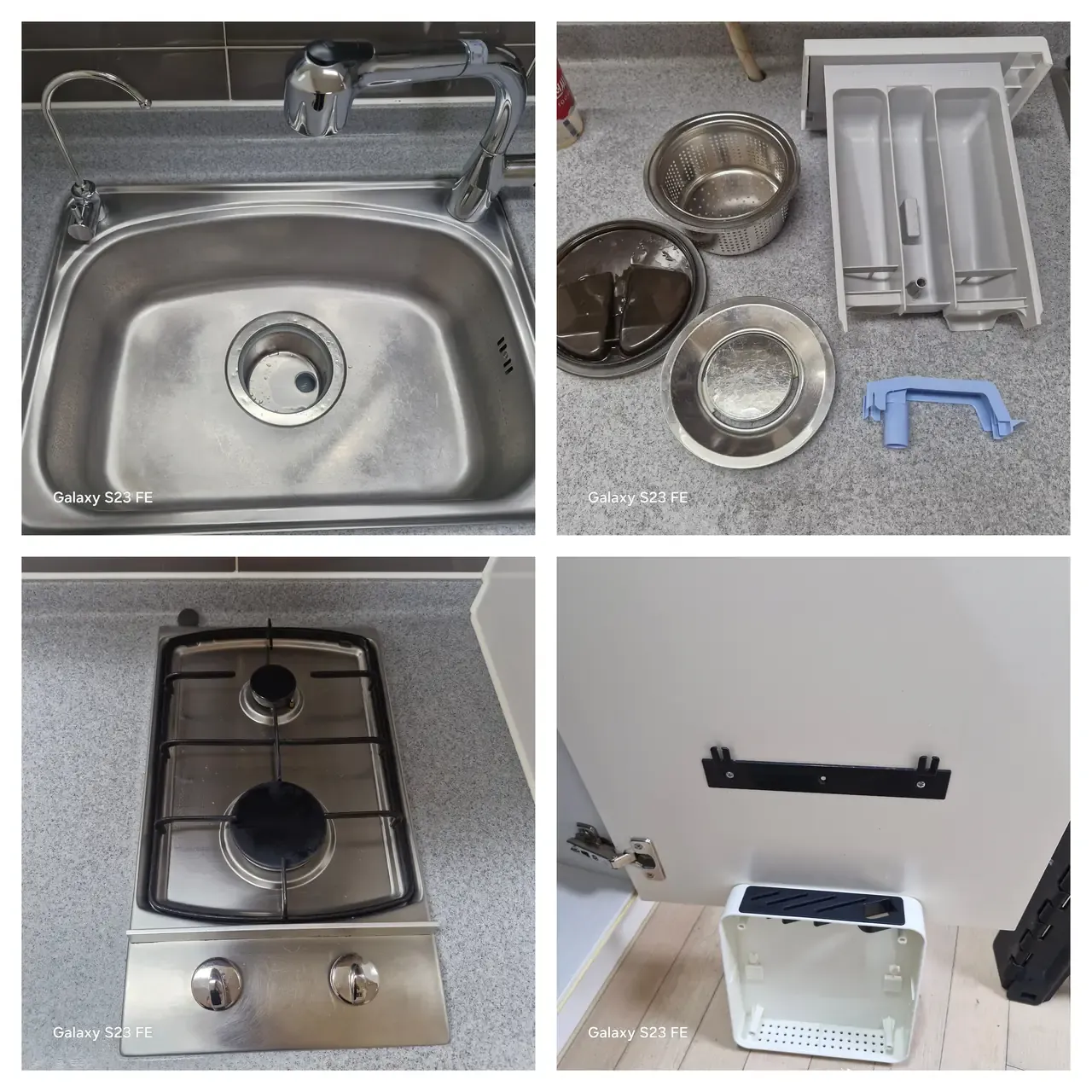
Strainer basket, drain cover, cutlery tray — washed separately, then put back · ⓒ @BalliBalliSeoul
Every grille in the flat is a lid
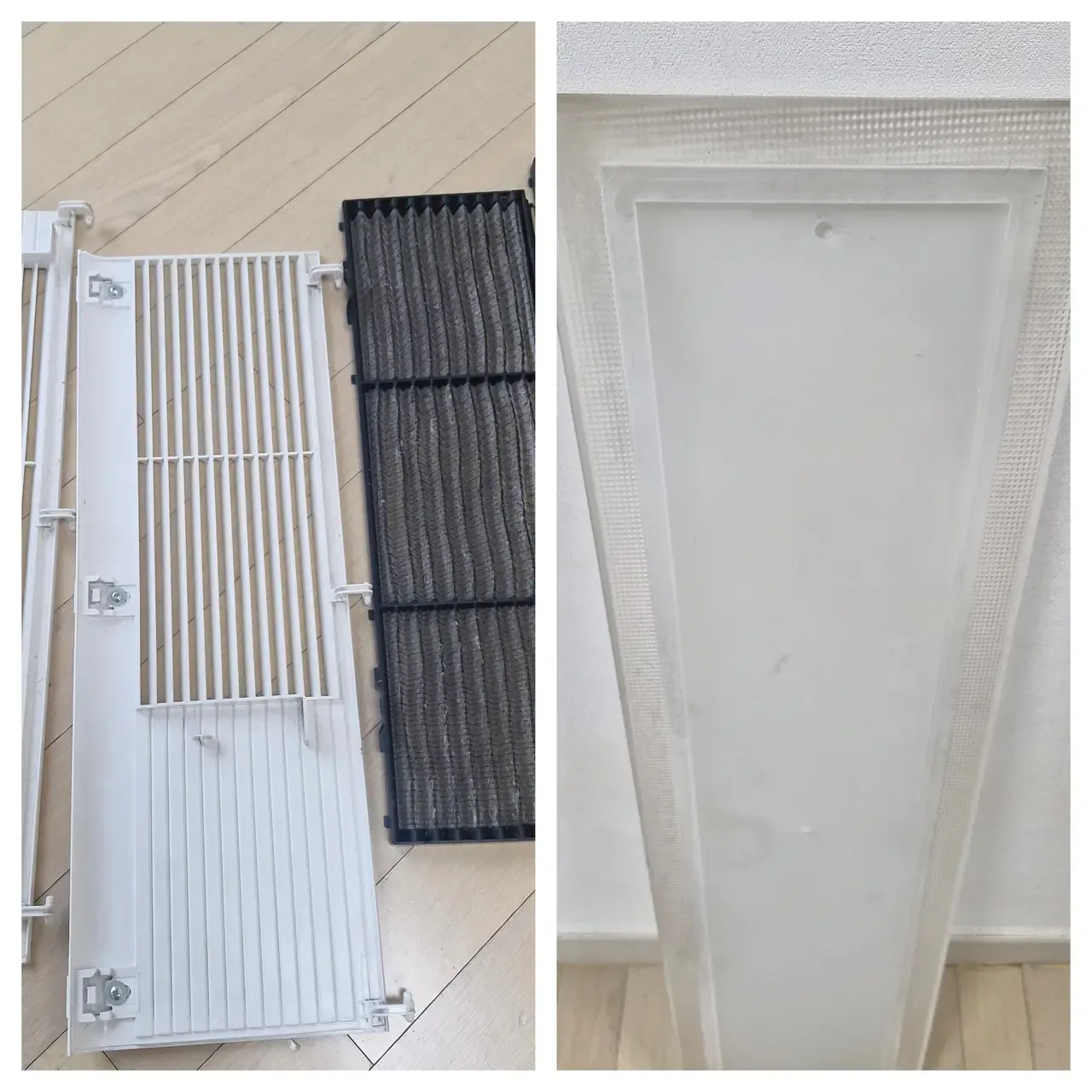
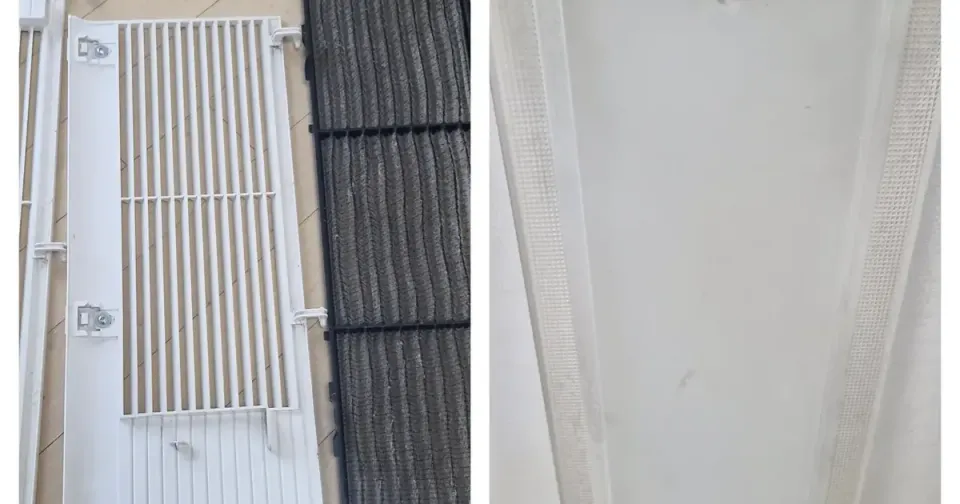
An air purifier’s filter, and a ceiling light cover off its fitting · ⓒ @BalliBalliSeoul
The front panel of an air conditioner unclips and the filters slide out behind it. So does the grille on an air purifier. So do the ceiling light covers, which collect a decade of dust on the inside where nobody looks.
None of it is difficult. All of it is invisible until somebody takes it off, which is why it goes unwashed for years.
Two things worth separating, because they are priced differently:
- Filters and the grille — part of a deep clean, no extra machinery
- A full strip-down of the unit (분해세척, the drum and the heat exchanger taken out and washed) — a specialist job, usually booked separately, and the subject of aircon cleaning in Korea
The bathroom: the drain is three pieces
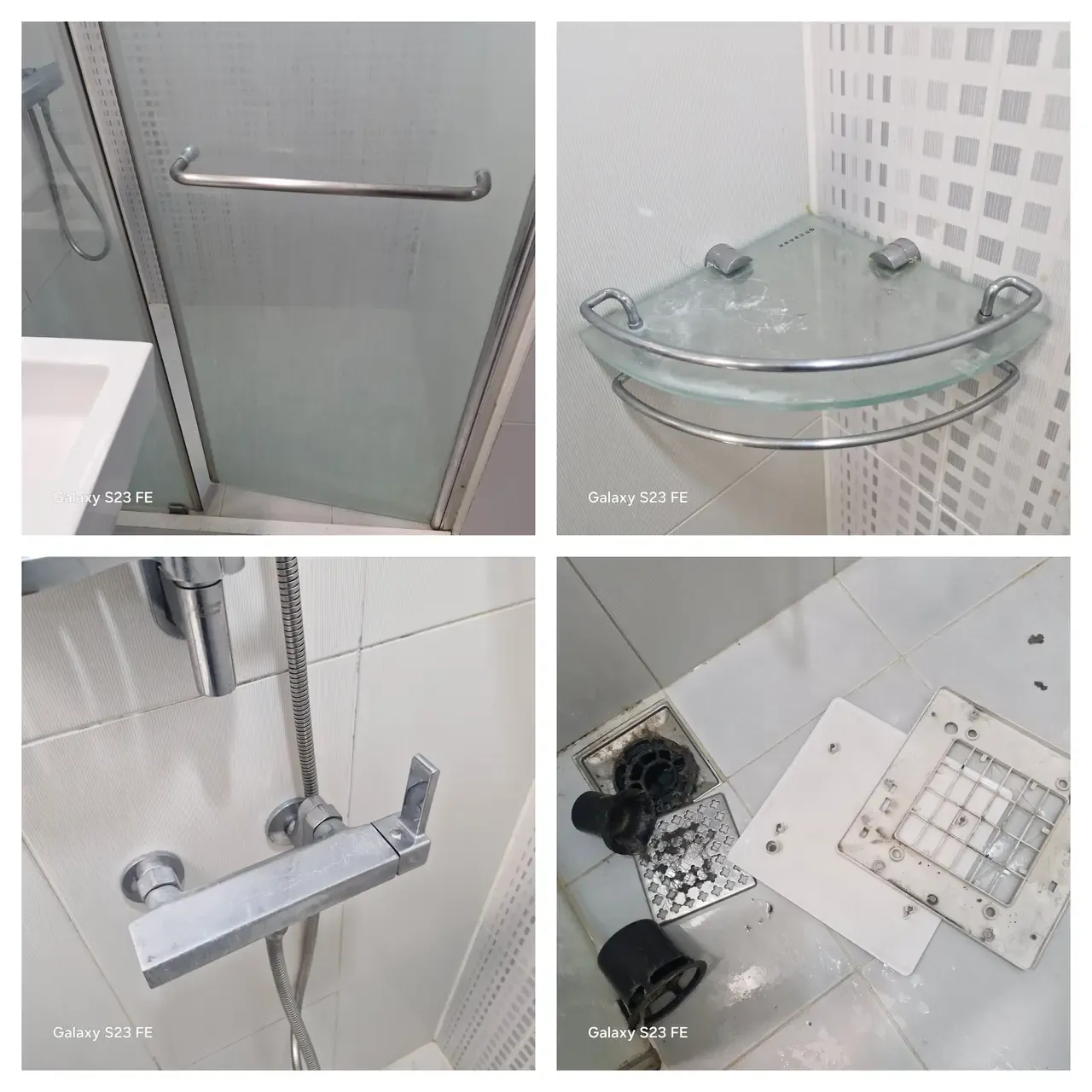
Before: scale on the glass, and the floor drain in the pieces it is made of · ⓒ @BalliBalliSeoul
A Korean floor drain is a stack: the grating, a cup trap that holds the water seal, and a rubber collar below it. The smell lives in the middle piece, and until it is lifted out and washed nothing you pour down the drain will make a lasting difference.
The bidet seat comes off its bracket too, which is the only way to clean under it.
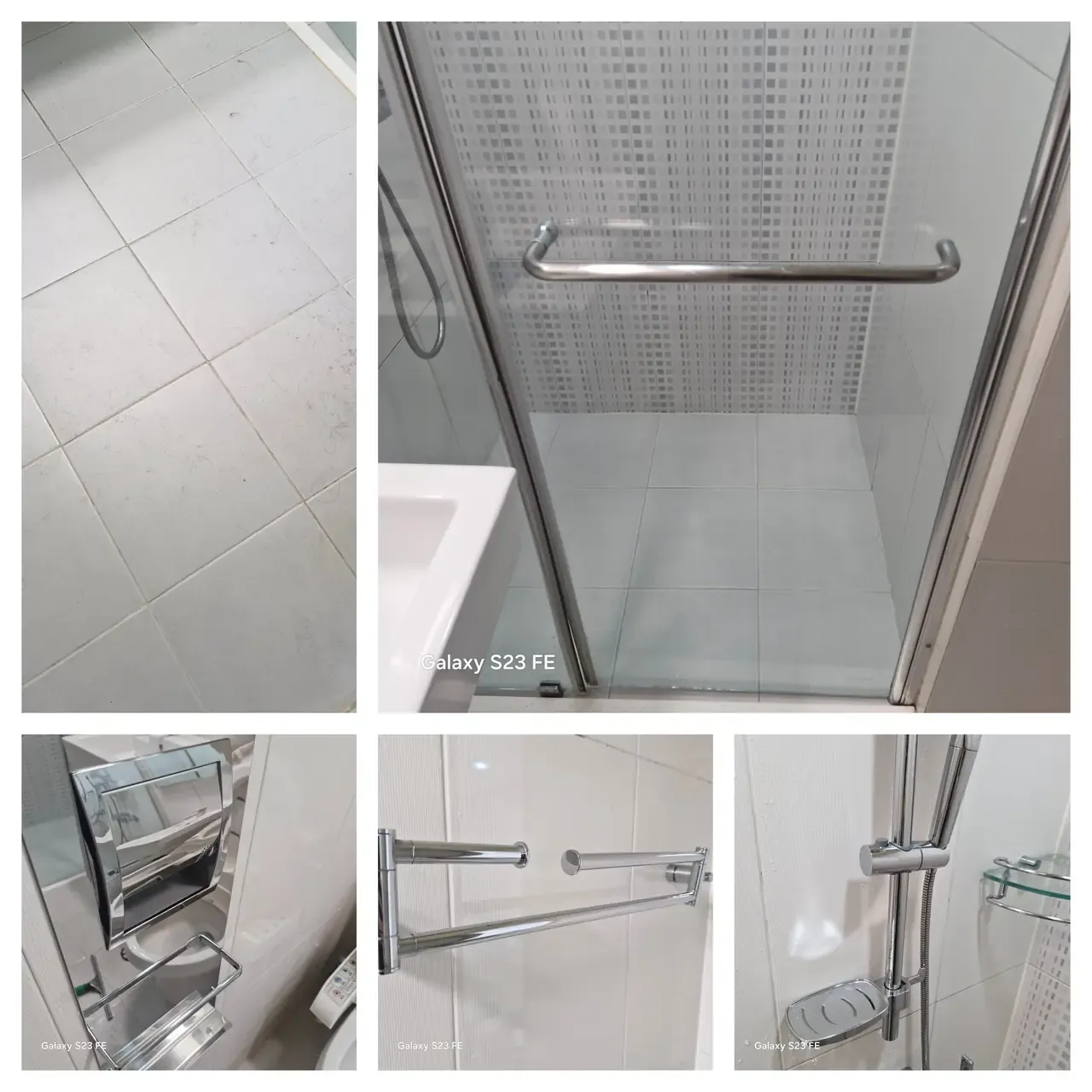
Before, and the same room finished · ⓒ @BalliBalliSeoul
What a crew cannot fix is the part that is damage rather than dirt — silicone gone black through its depth, crumbled grout, rust. That line is drawn in bathroom deep clean in Seoul.
The fridge: shelves out, every one
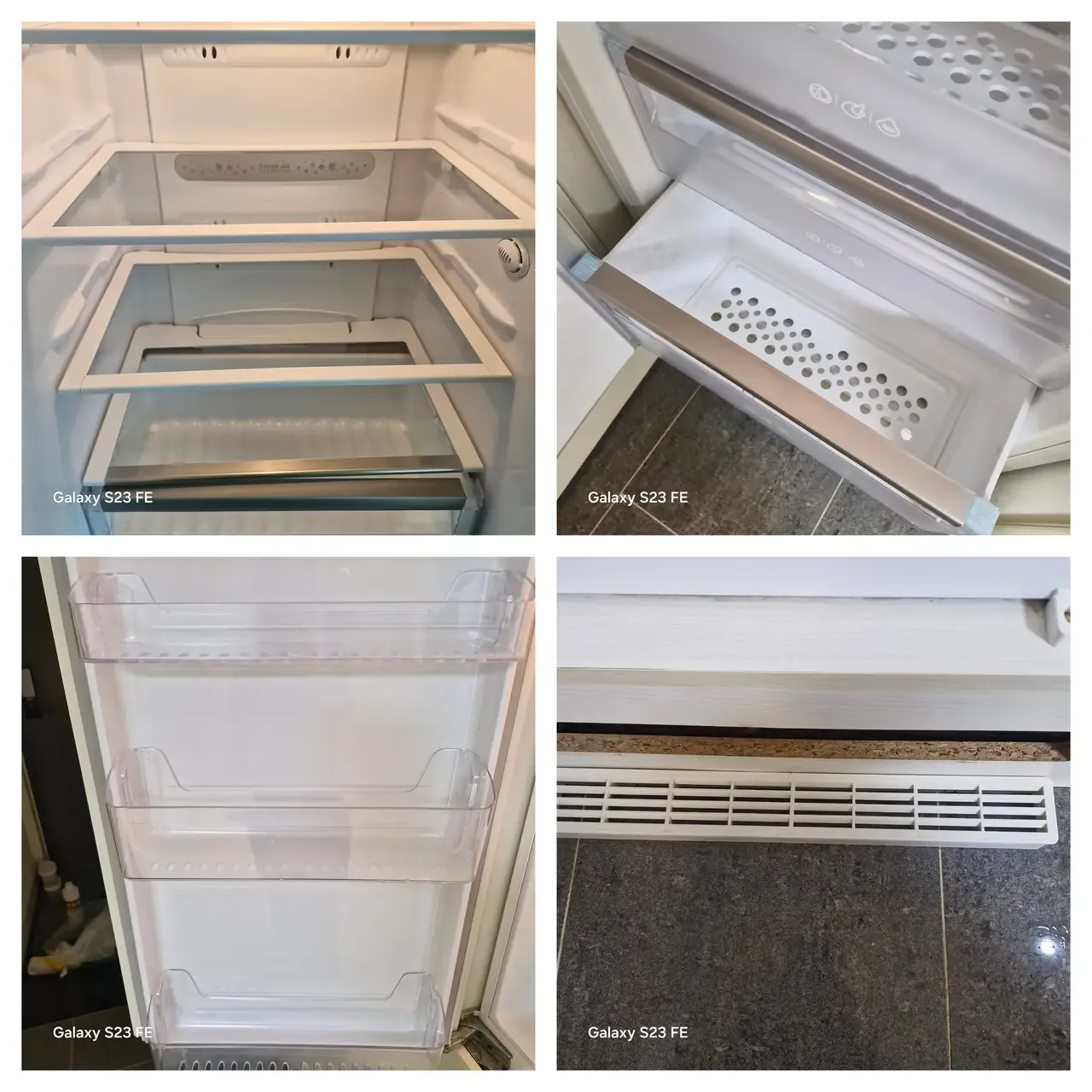
Glass shelves, drawers and door bins, washed out of the cabinet · ⓒ @BalliBalliSeoul
If the flat came furnished, the fridge is the appliance most likely to hold somebody else’s year. Shelves and drawers lift out and get washed in the sink; the cabinet gets wiped with the shelves out, which is the only way to reach the runners and the vents.
Windows: the tracks and the screens
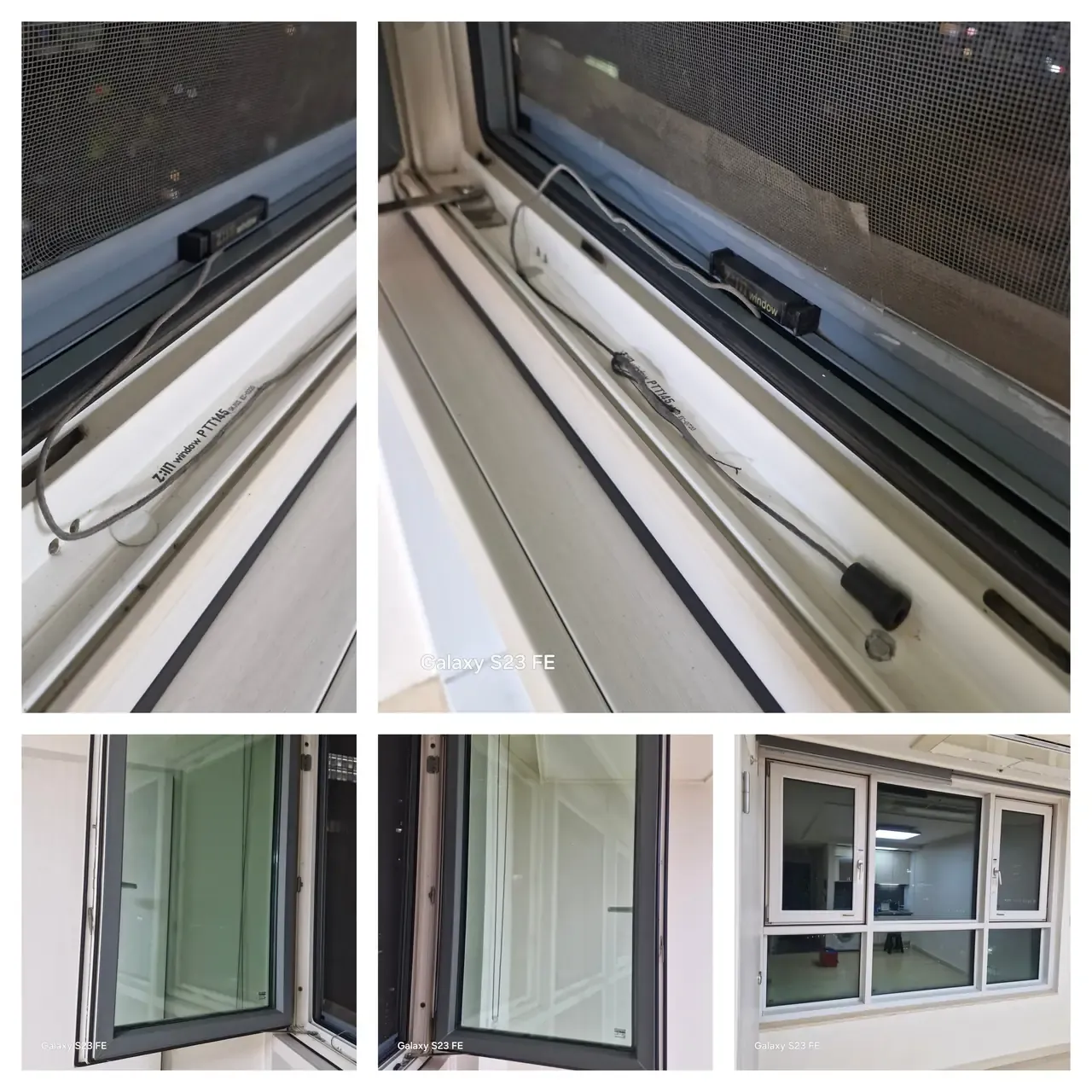
The track and its little drain channel, then the windows afterwards · ⓒ @BalliBalliSeoul
Window tracks and insect screens are the two things that make a flat look cleaned or not cleaned, and both are usually skipped. The screens lift out of the frame and get washed flat.
Under the sink, behind the appliances
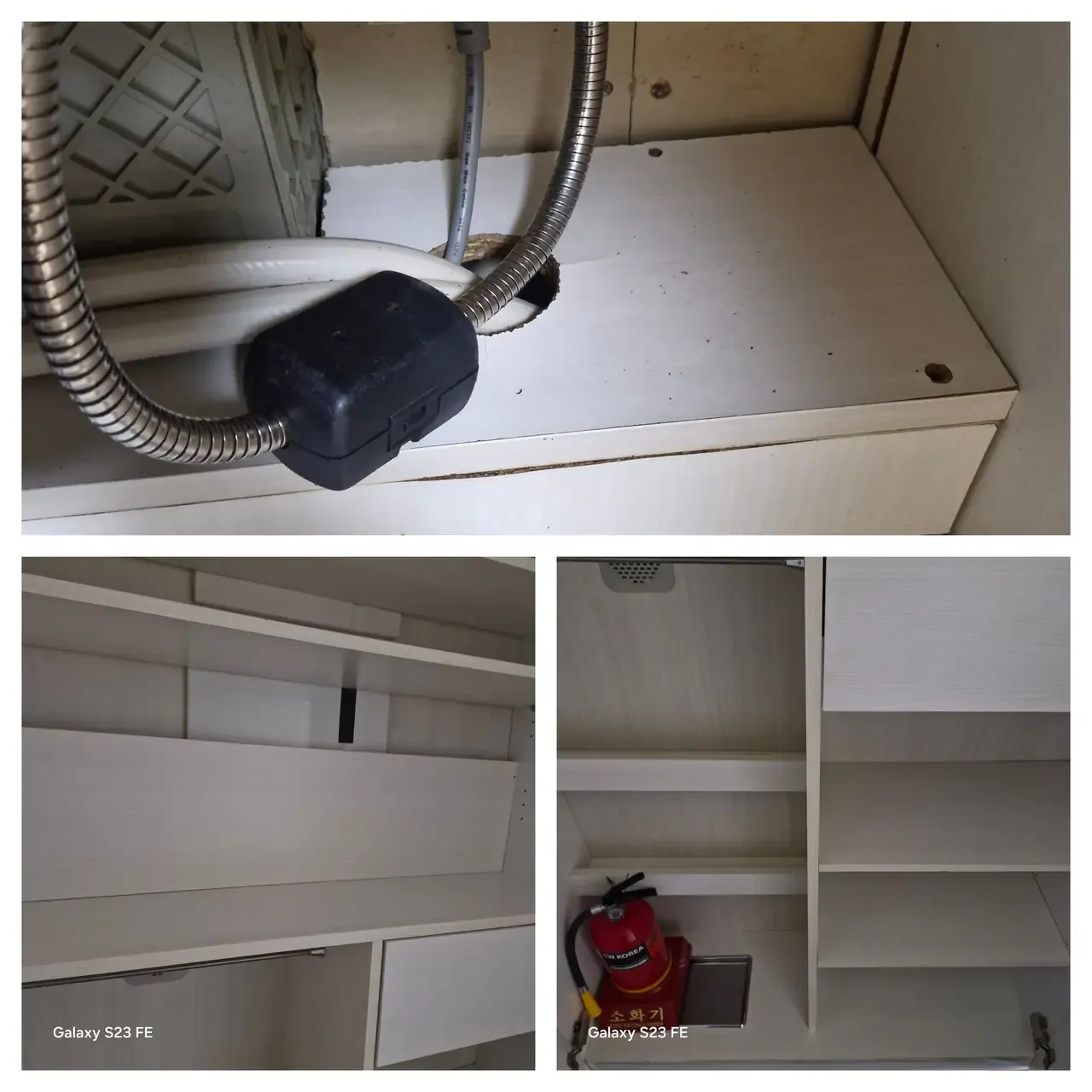
Under the sink, where the pipes and the junction box live — and the cupboards after · ⓒ @BalliBalliSeoul
The cupboard under the sink is where a previous tenant’s leaks, spills and pest problems all end up, and it is reachable exactly once: when the flat is empty, before your things go in. The same goes for the gap behind the washing machine and the floor under the fridge.
This is the argument for booking the clean in the empty window rather than after you move in, which is the timing problem described in move-in cleaning in Seoul.
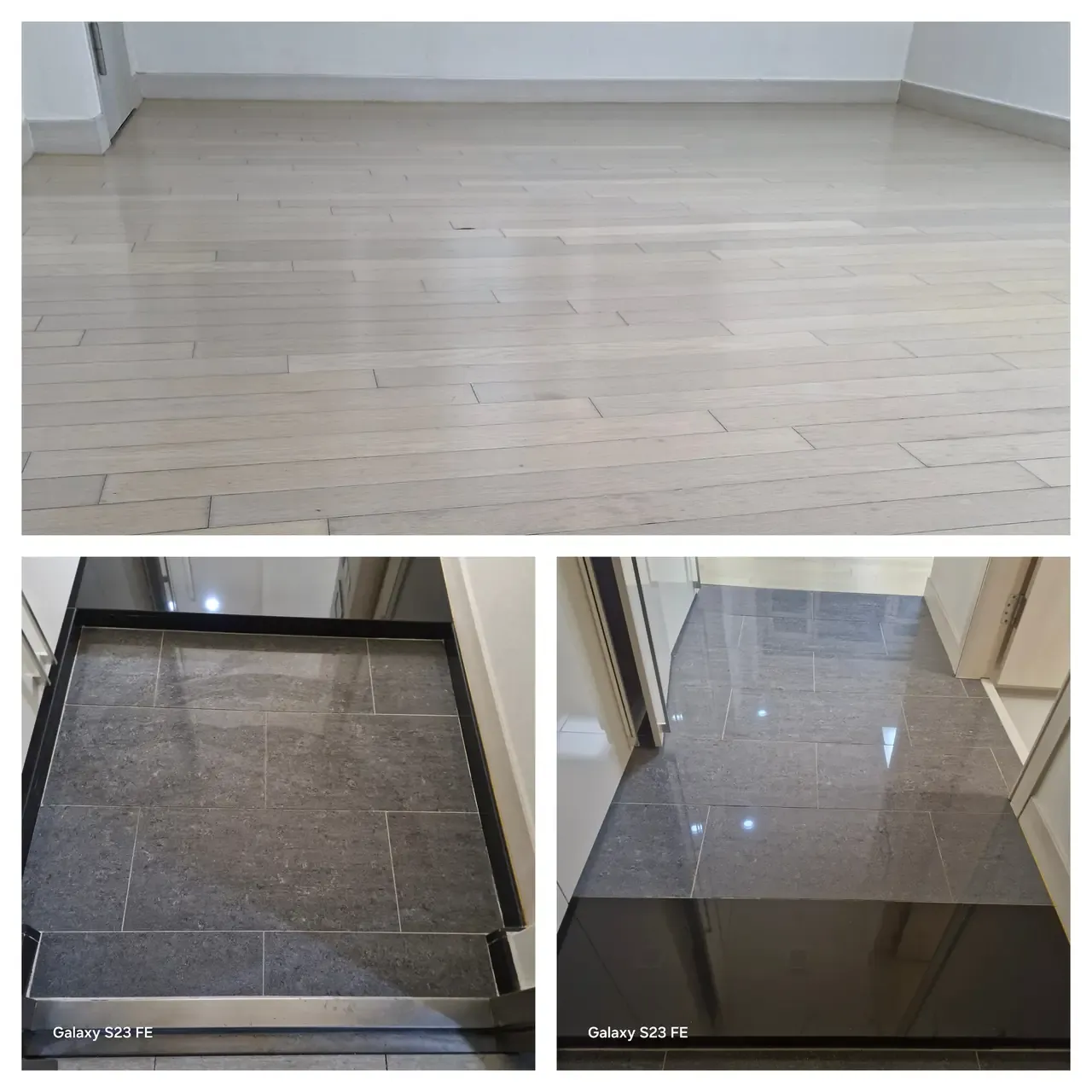
Floors last, after everything above them · ⓒ @BalliBalliSeoul
What this means for the quote you get
And between deep cleans, four of those parts are yours to pull out and wash in a sink — the twenty minutes you can do yourself.
Three practical consequences, if you are deciding what to book.
- Ask what comes off. “Do you remove the hood filters, the aircon filters and the floor drain trap?” is a better question than “do you do a thorough job?”, because the first one has a factual answer.
- Disassembly is where the hours go. A crew of two can wipe a flat in two hours. Taking the kitchen apart, washing the parts and refitting them is most of a day — which is why a deep clean costs what it costs.
- Condition moves the price more than floor area. Send photographs of the hob, the hood and the bathroom drain when you ask for a quote, not just the pyeong.
The six Korean cleaning categories, and which one you actually need, are in deep cleaning in Korea.
The Korean part
Booking this runs in Korean, and the questions come fast: how big, occupied or empty, which floor, when, and what condition. The answer that changes the quote most is the condition, honestly described.
Two phrases worth having, because they are the ones that decide whether the filters come out:
- 후드 필터도 분리해서 세척해 주시나요? — do you remove and wash the hood filters?
- 배수구 트랩도 분해해 주시나요? — do you take the drain trap apart?
Get it sorted
Send us photographs of the kitchen, the bathroom and anything that looks bad. We will tell you whether it is a partial clean or the full job, what it should cost, and we will put the two questions above to the crew in Korean before anyone is booked — so that what arrives is the version that takes things apart.
Prices are quoted before VAT, and parking is billed at what it costs. The cleaning page has the rest of the price list.