Renting in Seoul: What the Deposit Really Tells You
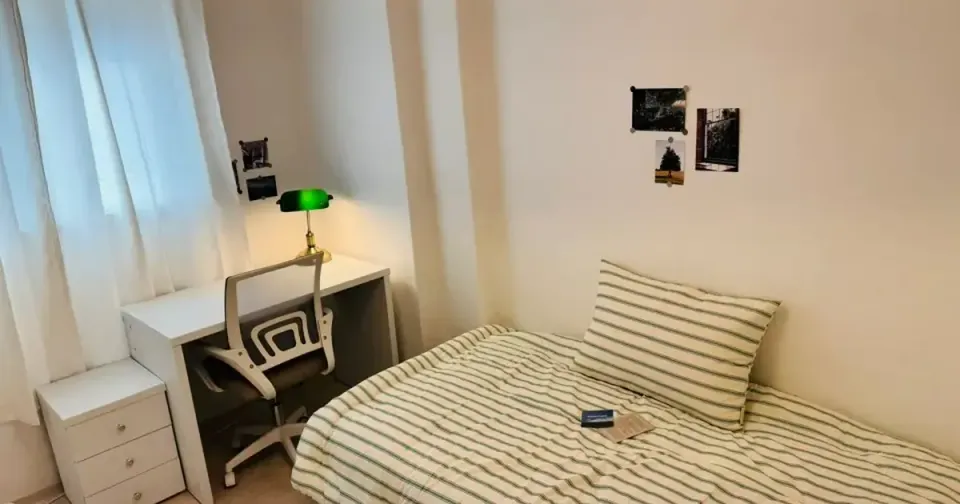
Someone moving to Seoul for an internship asked a good question on Reddit recently. They’d been browsing Facebook housing groups and kept seeing the same numbers:
“Deposit around 1–2 million KRW · Monthly rent around 300,000 KRW · Plus management fees ~100,000 KRW … Are prices like this normal/legit for very small one-rooms in Seoul, or should I be suspicious?”
The honest answer is the one the thread eventually landed on: those numbers are real, but they are almost certainly not describing a one-room studio.
What the deposit is actually telling you
Korean rentals trade deposit against rent. A bigger deposit buys a lower monthly payment, and you can usually negotiate along that line. Which means a low deposit on its own means nothing — it’s low deposit and low rent together that gives the game away.
Rough market shape in Seoul, as of 2026:
| What it is | Deposit | Monthly | What you get |
|---|---|---|---|
| 고시원 / 고시텔 | Little or none | ₩300,000–500,000 | A bed, a desk, sometimes a tiny shower. Kitchen and often bathroom shared |
| One-room (원룸) | From around ₩10,000,000 | ₩400,000–700,000+ | Your own room, kitchenette and bathroom |
| Officetel | ₩10,000,000+ | ₩700,000+ | Better building, lift, security, higher 관리비 |
A ₩1–2M deposit with ₩300,000 rent is goshiwon territory, not a studio. Goshiwons are a real and legitimate housing type — students and workers live in them for years — but they are a single small room, often windowless, with shared facilities. Nobody is scamming you. The listing is just being generously described.
For an actual one-room in Seoul, plan on ₩10,000,000 as the realistic floor for the deposit. Below that, either the deposit has been converted into much higher rent, or you’re looking at a different category of housing entirely.
This matters most for newcomers, because the deposit is the number that decides whether you can move at all — and it’s the reason coliving and share houses exist, since they take deposits sized in the low millions rather than the low tens of millions.
Read the management fee before the rent
관리비 — the monthly management fee — is where the real cost hides. ₩100,000 is normal, but the number is meaningless until you know what’s inside it.
Ask explicitly: does it include water, electricity, gas, internet, cleaning of common areas? A ₩50,000 fee that covers nothing and a ₩120,000 fee that covers water, internet and heating are very different propositions, and the cheaper-looking one often costs more.
The internet answer is worth pressing on, because in Korea the building is very often already a subscriber and people end up paying twice — internet in Korea covers what to ask before you sign anything.
Use an agent, and know why
The strong advice from residents who’ve done this: go through a licensed agent (부동산).
It costs a fee. What it buys you is a contract that follows the standard form, paperwork that’s actually filed, and — the part people underestimate — a witness who is not your landlord.
Foreign tenants in these threads describe landlords who assumed they didn’t know the rules: demanding extra payments after the fact, or objecting to how much water and electricity they used. A signed agency contract is the thing that ends those conversations.
Two more contract facts worth knowing before you sit down:
- The standard residential lease is two years. One-rooms and officetels often do one year, but shorter than that is a negotiation, not a norm.
- 가계약금 — a small holding deposit to reserve a unit while the contract is prepared — is normal practice. Confirm in writing what happens to it if either side walks away.
Now the ten minutes that matter
You’ll get one viewing, and it will feel rushed. Here’s the order we’d go in.
Before you walk in
- Which floor, and is it below ground? 반지하 (semi-basement) units are cheaper for reasons you will feel in July.
- Which way does it face? North-facing rooms stay cold and damp. Ask, or check which way the sun is coming from.
- How far is the station, walking, uphill? Listings measure distance generously and rarely mention the hill.
The two-minute physical test
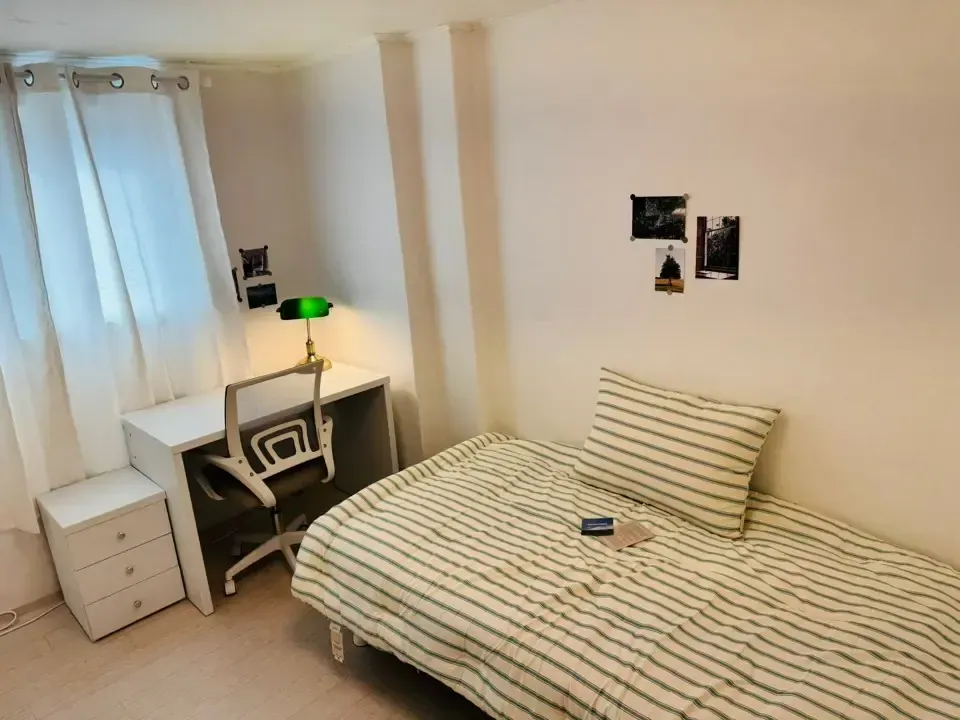
You get about ten minutes in here. Use them · ⓒ @BalliBalliSeoul
Water pressure. Turn the shower on and flush the toilet at the same time. If the shower dies, that’s your morning, every morning.
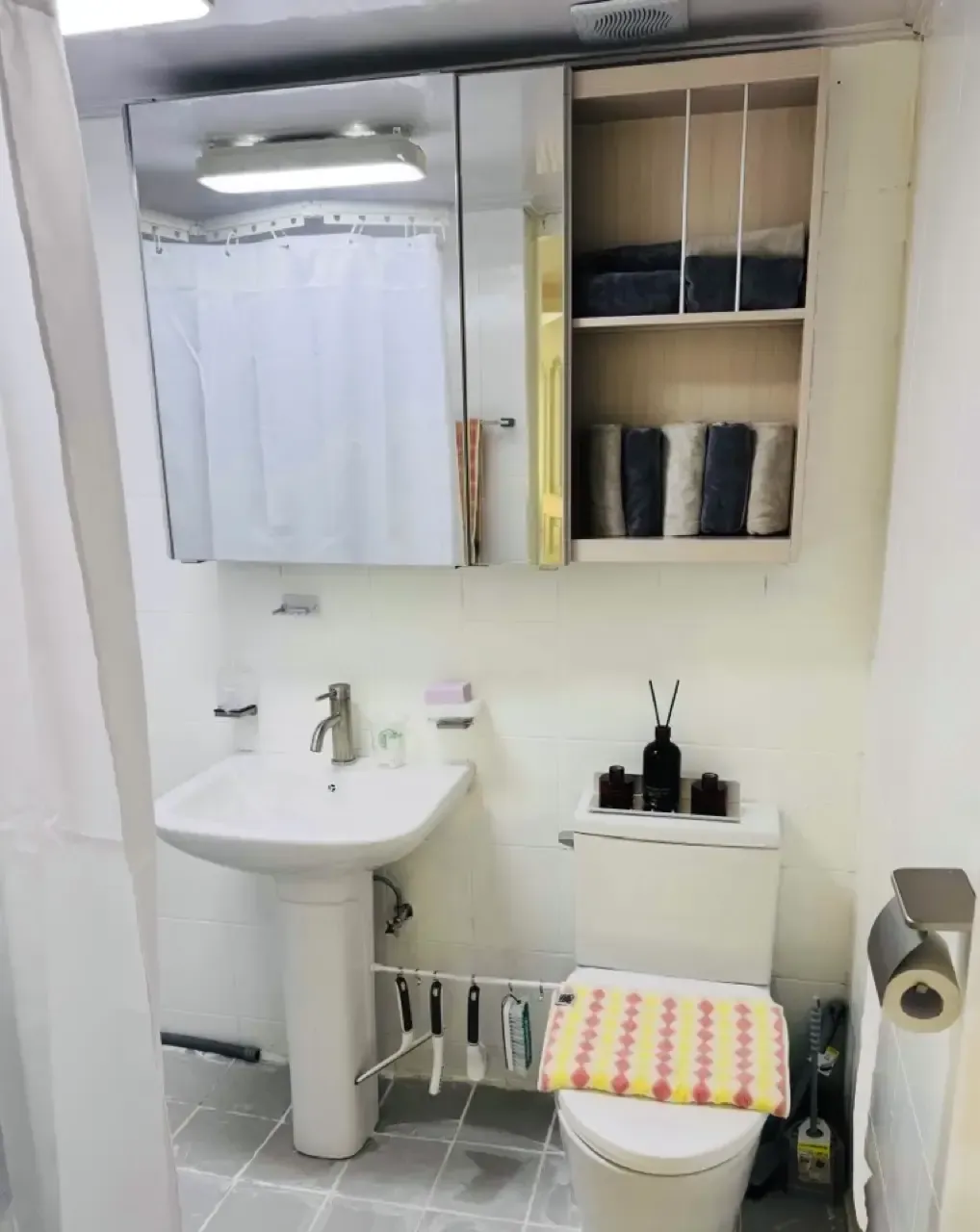
Run the shower and flush together — it takes ten seconds · ⓒ @BalliBalliSeoul
Hot water. Run the tap and wait. How long until it’s actually hot? And find the boiler: there’s a plate on it with a manufacture date. A boiler over about ten years old is near the end of its life — we wrote about what that means and who pays.
Mobile signal. Check your phone in the room, not the hallway. Thick concrete and a back-alley position can leave you with no bars where you sleep.
The wall, the ceiling, the window
This is where a cheap flat tells the truth.
Crouch at the wall base and smell. Damp sits low. Then look at the very bottom edge of the wallpaper, especially in corners and on exterior walls.
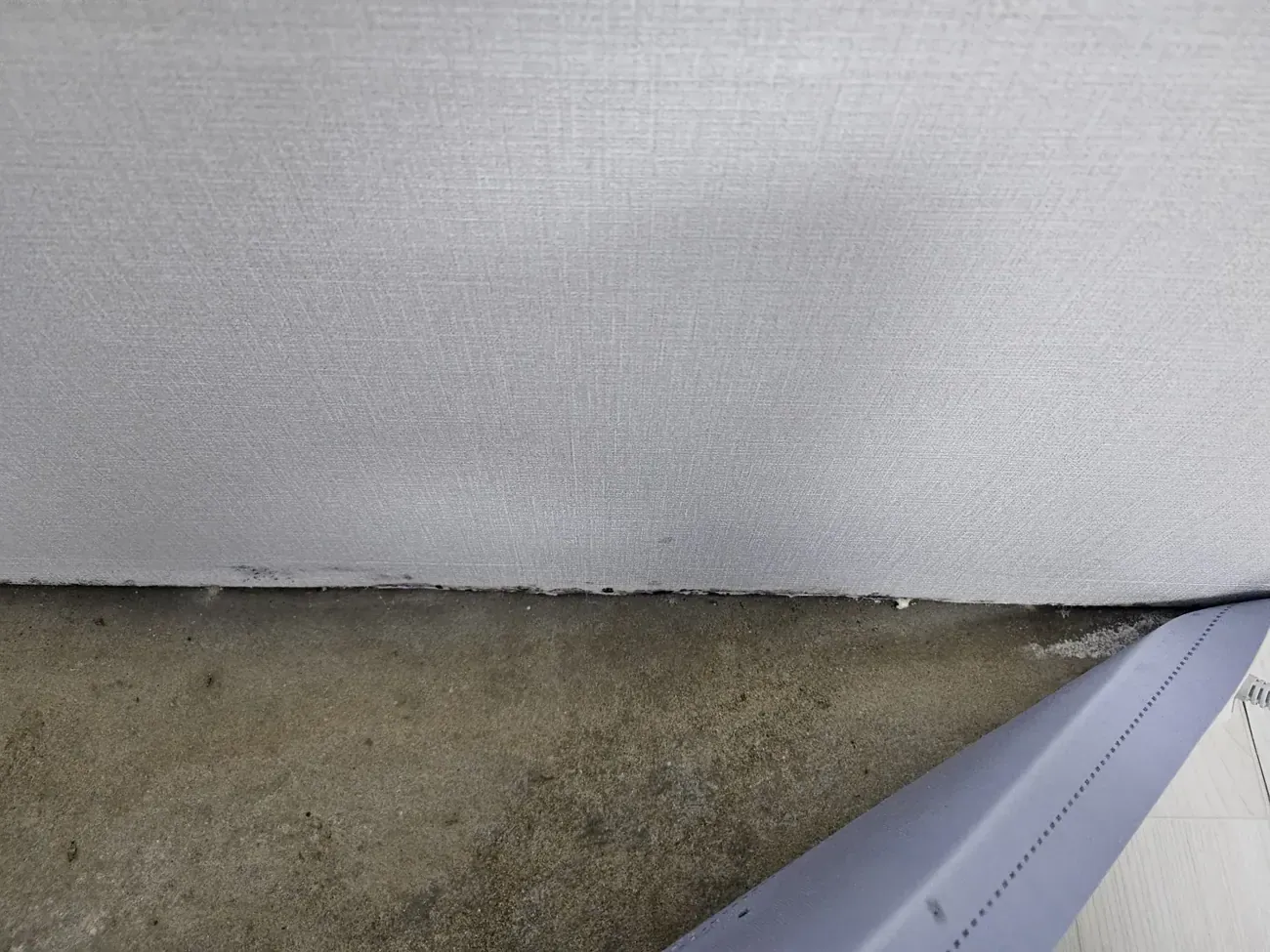
This was behind a strip that lifted off in one piece · ⓒ @BalliBalliSeoul
White crystalline deposits are worse than black spots. That’s efflorescence — salt carried out of the concrete by water moving through the structure, not just surface damp.
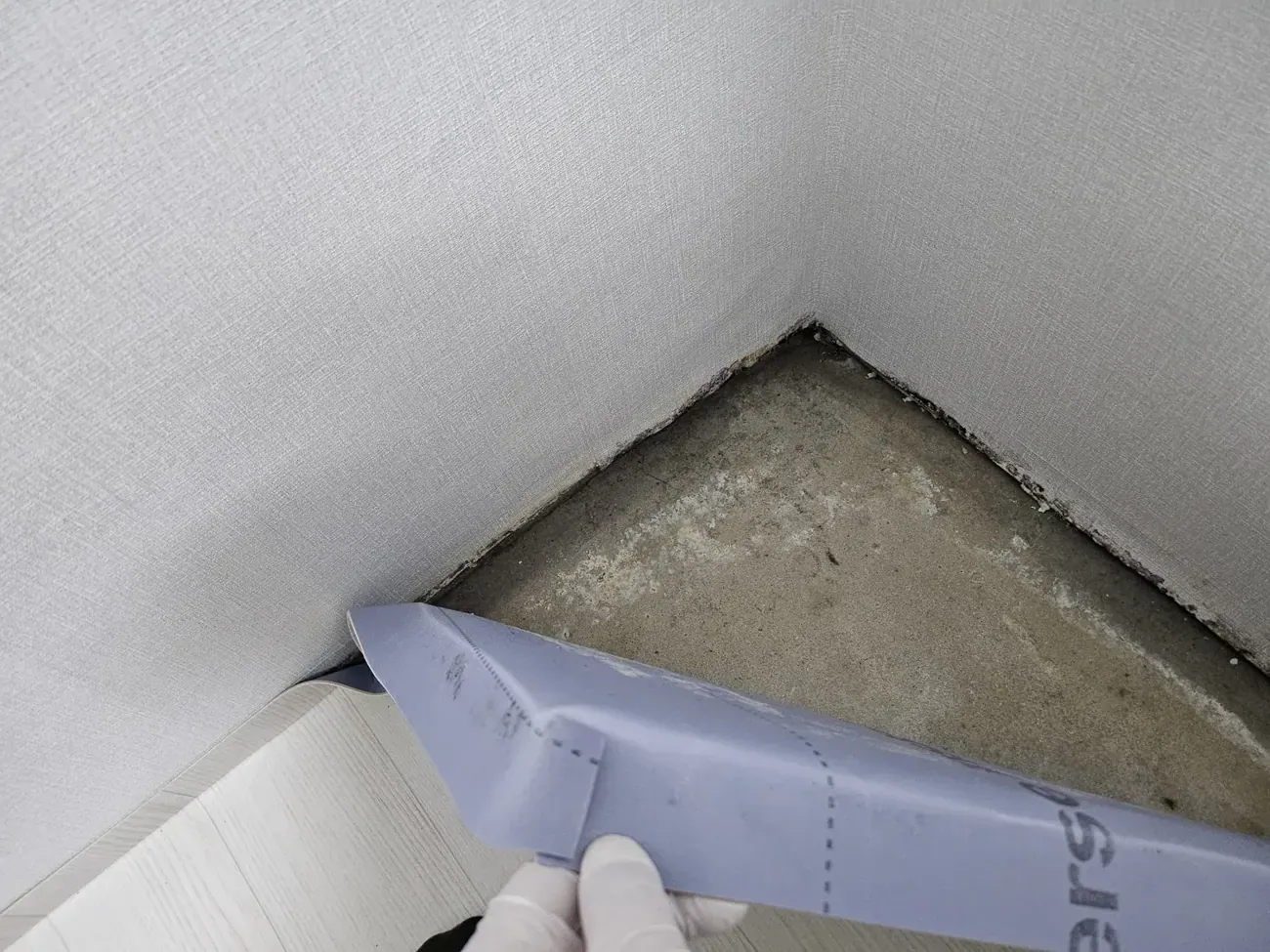
White means water has been coming through, repeatedly · ⓒ @BalliBalliSeoul
The full version of this check — including why Korean interiors hide it so well and what to ask the landlord — is here.
Look up too. Brown rings or a sagging cornice mean water has come from above at some point. Leaks between floors are common and slow to resolve, and a stain is evidence that the building has form.
Open the windows. Do they actually open, is there an insect screen, and does anything about the frame look like it sweats in winter? Condensation marks around window frames are the early version of the mould above.
Separate the dirt from the damage while you are still standing there. Grease, limescale and stains are somebody’s cleaning bill. Failed sealant, flaking window frames, lifting wallpaper and rust are repairs, and they belong to the landlord — but only if you raise them before you move in. Move-in cleaning covers where that line falls and what the clean itself costs.
Before you sign
Photograph everything, with dates. Every mark, scuff, stain and appliance, on move-in day.
This is the single highest-value ten minutes of the whole process, and it has nothing to do with the flat’s quality: it is your evidence when you move out and the deposit conversation starts. Existing damage that you didn’t record is, by default, damage you caused.
Once you’ve signed
Before any of that, though, there is the question of which door you went through at all — an agent, a short-stay app, coliving, a share house — and each one trades a different thing away. Every route, and who it suits sets those side by side.
The checks above protect you before money changes hands. The other half of protecting a deposit happens on the day you get the keys: photograph the flat before you unpack, starting with the meter readings, because utility bills are calculated from a number that does not reset for a new tenant. And if the flat is being cleaned before you move in, check that clean before you pay for it.
If you are arriving for a semester and do not have an ARC or a Korean phone number yet, the doors that are actually open to you are a different set — we went through them separately.
A note on pets
Since it comes up constantly: “pet-friendly” in Korean listings usually means small dogs. Under roughly 5–10kg, in practice. A large breed narrows your options dramatically regardless of budget, and it needs to be the first thing you tell an agent — not something that emerges at the viewing.
The Korean part
Everything above happens in Korean: the listing, the agent, the contract, the landlord’s answer about the boiler, the negotiation over the management fee.
We do two things here. Through our anything-else concierge service we come to viewings with you — translating, asking the questions above, and telling you honestly what we’d walk away from. And when you’ve signed, our moving service handles the van, the crew and the disposal of whatever the last tenant left behind.
Get it sorted
Looking at a listing and not sure what you’re reading? Send it to us on WhatsApp — we’ll tell you what kind of housing it actually is, what that price should get you, and what to check when you go. Asking costs nothing — you pay only for the work you book.
The one-line version: a ₩1–2M deposit means goshiwon, a real one-room starts around ₩10M, the management fee matters more than the rent, and ten minutes with the shower running and your nose at the skirting board will tell you more than any listing photo.