Student Housing in Seoul: Renting Without an ARC or Phone
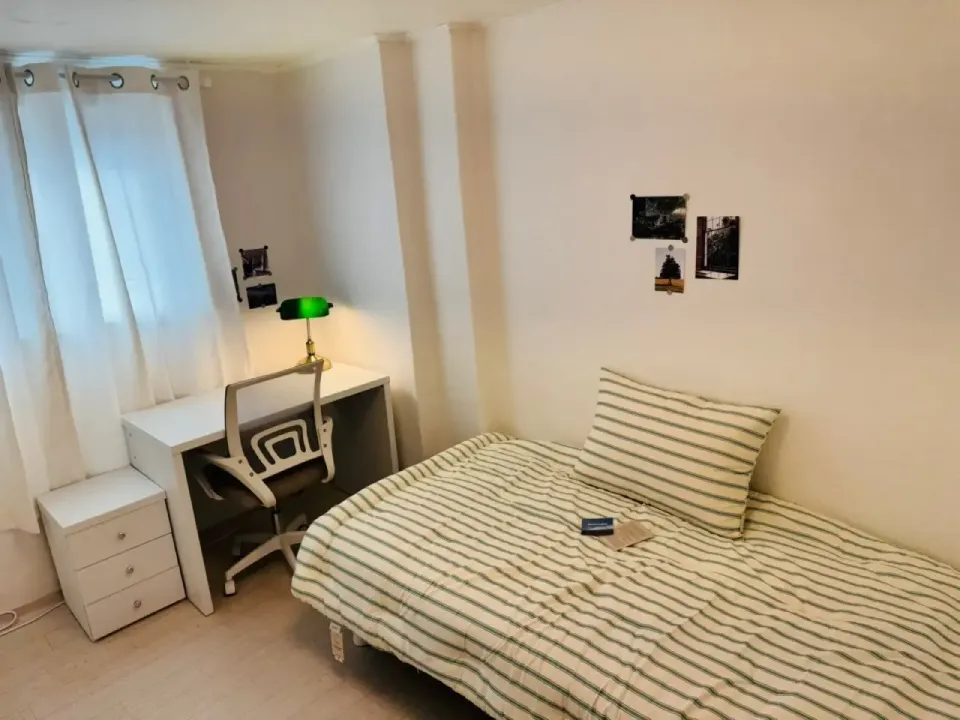
It’s August, your Korean semester starts in September, and you’re trying to line up a studio from abroad. You’ve discovered the wall every incoming student hits: Korean housing platforms want a Korean phone number and an ARC — the two things you won’t have until after you arrive. Meanwhile the deposit numbers you’re seeing make no sense, and half the advice online says “just look when you get here.” Here’s how this actually works, and the play that students use every intake.
🏠
One spot open right now— now taken, as of August 23, 2026
We run coliving houses ourselves, and we have one place free in a twin room in Dongdaemun-gu, taking fall-semester students now. It’s walking distance to Kyung Hee University and Hankuk University of Foreign Studies.
Deposit US$1,000 · Rent US$400/month (utilities and maintenance billed separately)Minimum stay: 6 monthsFurnished room, shared kitchen and laundry — and no ARC or Korean phone number needed to book it, which is the whole problem this article is aboutThat room is gone. We said we would update this box when it filled, so here we are — the twin room in Dongdaemun-gu was taken for the autumn intake.
Rooms do come free, usually between semesters and often at short notice. As of 30 August 2026 all three of our houses are full, and the next rooms are two singles from 24 December 2026. If you are looking, ask us on WhatsApp or in our KakaoTalk open chat and we will tell you plainly what is actually available — including when the answer is nothing right now. Everything else in this article works whether or not you end up with us.
Why every site rejects you
Korean rental platforms (Zigbang, Dabang and friends) sit behind Korea’s identity-verification system — the same wall that blocks foreigners from half the Korean internet. Verification needs a Korean phone in your name; a Korean phone contract effectively needs an ARC; and your ARC only exists a few weeks after you land. It’s not personal, it’s plumbing — but it means the mainstream listing apps are read-only for you until you’re already here.
The three doors that are actually open
1. Foreigner-friendly platforms (book from abroad). A handful of services — Enko/Enkostay is the one students name most — list studios you can reserve with a passport and a credit card, no ARC, no Korean phone, and little or no deposit. Understand the trade you’re making: you’re paying the deposit in the rent. A studio that a local rents at ₩500,000 with a ₩10,000,000 deposit shows up here at ₩1,000,000+ all-in with almost nothing down. For a one-year exchange with no Korean bank account, that trade is often rational — just make it knowingly. Short-term platforms (the 33m²-style monthly rental services) are the same idea but usually cap stays around three months.
2. The two-step: land short, then sign local. The veteran move: book only your first 2–4 weeks (goshiwon, short-term studio, or a hostel), then hunt in person through a neighborhood realtor (부동산) once you can see rooms with your own eyes. In-person contracts are possible with a passport before your ARC arrives — plenty of landlords sign them — and local contracts get you local pricing. The catch is the deposit (next section) and the Korean-language everything.
3. Share houses and university housing. Dorms fill fast but cost least; share houses split the difference — low deposits, furnished rooms, other students and young workers around, and operators who are used to foreign paperwork. If the private-studio requirement is negotiable, this door has the least friction per won.
What “furnished” means in practice: bed, desk, chair, storage, air conditioning and curtains already in the room, so you arrive with suitcases and nothing else. The trade for the lower deposit is that kitchen, laundry and living space are shared:
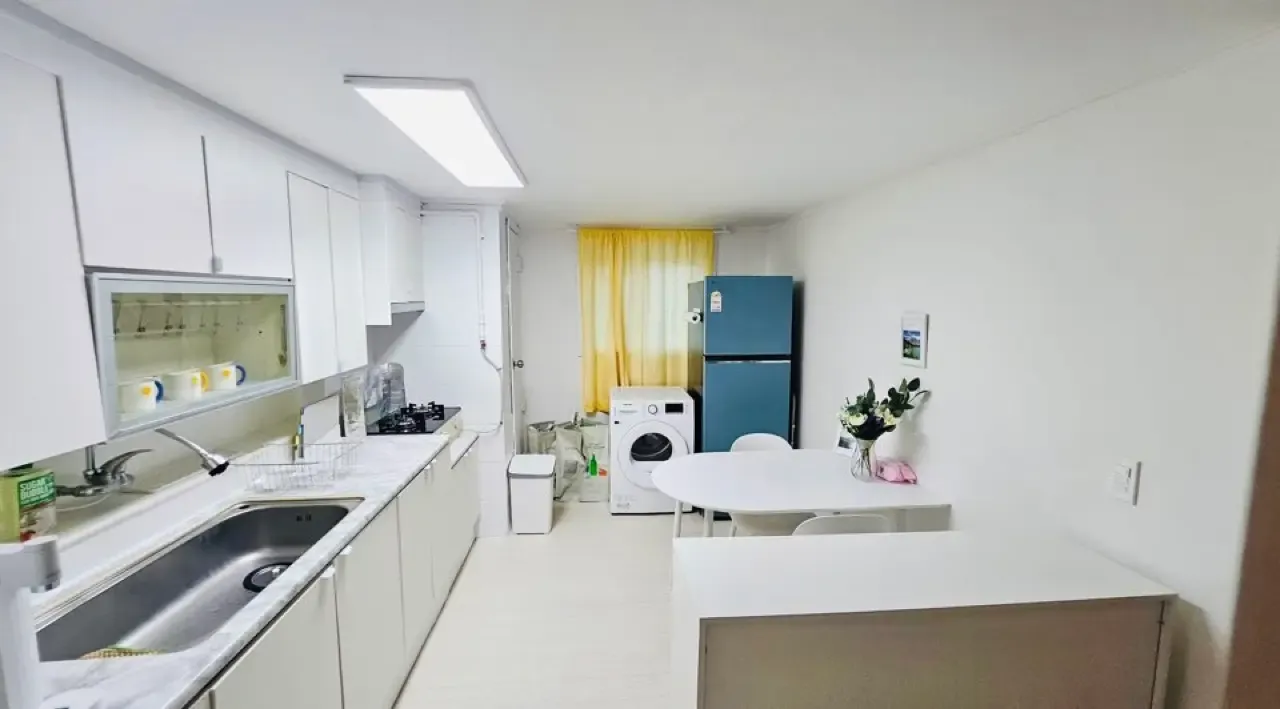
Shared kitchen and laundry — the trade for a lower deposit · ⓒ @BalliBalliSeoul
Two details that matter more than they sound: the front door usually runs on a keypad code rather than keys, which is how you get in on arrival day without meeting anyone at a specific hour — and how a landlord or operator can let you in remotely.
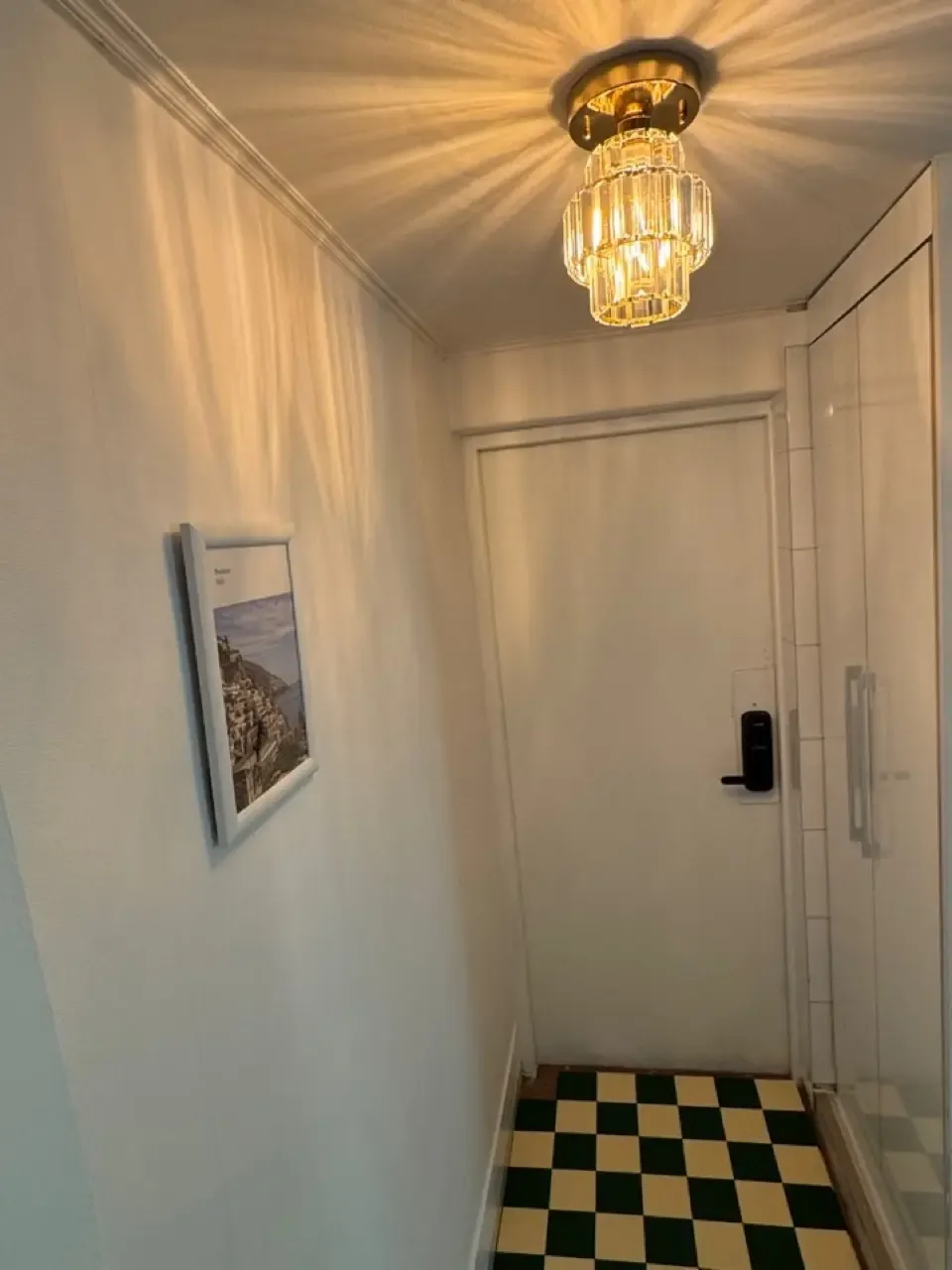
Keypad entry — no key handover needed · ⓒ @BalliBalliSeoul
Worth knowing before it happens to you at 1 a.m.: those keypads run on batteries, and when the battery dies the door simply stops opening. It’s the single most common way people get locked out here, and it’s fixable in minutes if you know the trick — we wrote up what to do when a keypad lock dies, and we open doors in English when it can’t wait.
The deposit reality check
This is the number that decides which door is yours. Standard Korean one-room contracts run ₩5,000,000–10,000,000 deposits (fully refundable at move-out, and often tradeable — bigger deposit, lower rent). If you can wire that and want the cheapest monthly cost, the two-step local contract wins. If your ceiling is ₩2,000,000–3,000,000, be honest with yourself: you’re shopping the foreigner platforms and share houses, and chasing regular listings will burn weeks you don’t have. Neither answer is wrong — they’re different products for different wallets. The deposit is also the single most informative number in any listing — we pulled apart what different deposit sizes actually tell you about the property you are looking at.
Picking the neighborhood: commute math first
Seoul students overwhelmingly optimize on one number: door-to- door commute time, and 30–40 minutes is the comfortable line. Three local tricks make the map read differently than it looks:
- Express trains skip stations. Line 9’s express doubles your speed — but only if both your station and campus station are express stops. Check the stopping pattern, not just the line.
- Bus-subway transfers are free (T-money handles it), so a “15 minutes from the station” listing with a good bus stop outside often beats a pricier one next to the tracks.
- Next to elevated tracks = noise. Rooms within a couple hundred meters of above-ground rail sound like it; a few blocks of buffer fixes it. Ask, or check the map for elevated lines.
University belts (the streets around every campus) stay the cheapest hunting grounds — that’s where the one-room supply was built for exactly your situation.
The Korean part
Everything decisive here happens in Korean: the realtor conversation, the landlord’s questions, the contract you’re signing, the building registry check that confirms the “landlord” owns the building. This is our home turf twice over.
First, directly: we run coliving houses in Seoul ourselves, full of students and young internationals — furnished rooms, low deposits, English spoken, no verification wall. If a room is open when you write, the simplest answer to this whole article is “stay with us.” If we’re full, we’ll happily point you to operators we know and trust — that introduction is free.
Second, as backup for any other room you find: through our anything-else concierge service we translate the listing, call the landlord or realtor with your questions, and read the contract with you before you sign — a language-and-paperwork service, priced as such. To be clear, we’re not a licensed real estate brokerage and don’t broker other people’s rooms: your contract is always signed directly with the landlord or a licensed agent (공인중개사). And if the move itself is the next headache, our moving help covers that leg too.
Get it sorted
Semester’s coming and the housing hunt is stuck? Send us your budget, university, and dates on WhatsApp — if one of our own rooms fits, we’ll show it to you; either way we’ll tell you which door fits your budget and help with the Korean side. Asking costs nothing — you pay only for the work you book.
If you are not a student — or you need a short lease rather than a semester — the same walls apply with different answers. The apps, agents and coliving people actually used are in finding housing in Korea.
The one-line version: no ARC means platforms-with-a-premium or land-short-then-sign-local; your deposit ceiling picks the door; and commute math beats neighborhood hype. Sort those three and September gets a lot less scary.