Korean Conversation Practice and How to Find a Tutor
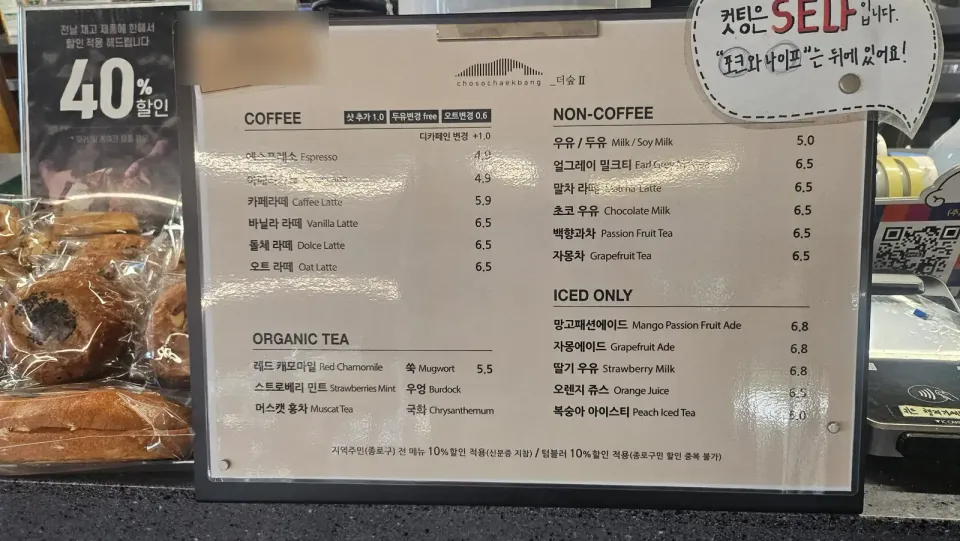
You have done the app. You know more words than you can use. And then someone at a counter says one sentence you did not expect, and your whole vocabulary evaporates.
This is not a knowledge problem. It is a rehearsal problem, and it is the reason people who “know” more Korean often speak less of it than people who know less.
Why textbook Korean does not survive contact
Three things go wrong between the book and the street.
Real Korean is faster and shorter. Textbook sentences are complete. Actual counter Korean is clipped, dropped-particle, half-sentence — and the polite endings you learned get contracted into something that sounds nothing like the recording.
You learned the question, not the answer. Most courses teach you to ask. What breaks people is the reply, which arrives at full speed with a word you have never heard.
You are practising the wrong situations. Chapter dialogues are about hobbies and weekend plans. The Korean you will actually produce in your first month is about your address, your card, a delivery, an appointment, a broken thing in your flat.
The situations that actually come up
If you want a study list that maps onto your real life, it is short. These are the encounters that repeat, in rough order of how soon they hit you:
- Ordering, paying, and the follow-up question — for here or takeaway, do you have a point card, do you want a bag. The restaurant system has its own script, and cafes run the opposite one
- The convenience store counter — bag, heating something up, topping up a transit card
- Deliveries and the door — the courier calling you, the entrance code, “leave it at the door”
- Taxis and directions — a destination, a landmark, “just here is fine”
- A pharmacy or clinic — describing a symptom well enough to be handed the right thing. Which clinic to walk into is half the problem; saying what hurts is the other half
- Your building — the management office, a neighbour, a leak or a repair
- Anything with a landlord or an agent — the highest-stakes Korean you will ever attempt, and the one to prepare for rather than improvise. What to ask is in the renting guide
That list is twenty-odd exchanges, not a language. Rehearsed, it covers most of a normal week here.
What actually moves your speaking
Rehearse out loud, not in your head. Reading a phrase and saying it are different skills. The mouth needs the reps.
Learn the replies, not just the questions. For each situation, prepare the two or three things they are most likely to say back. That is what stops the freeze.
Shrink your sentences. Learners try to say the whole thought and stall halfway. Say the short version. Short and delivered beats complete and abandoned, every time.
Get one situation to automatic before adding another. Ordering coffee should be boring before you take on the pharmacy.
Bank the phrase that buys you time. Knowing how to say “one moment”, “again please”, “slowly please” turns a collapse into a pause. These are the highest-value phrases in the language and almost nobody drills them.
The bit you cannot self-study
Reading, listening and vocabulary all work fine alone. Apps are genuinely good at them.
Speaking does not work that way. You cannot hear your own mistakes, you cannot know whether what you said landed as polite or blunt, and you cannot practise being interrupted. Nor can you generate the unexpected reply that is the actual failure point — you know what you are about to say.
That is what a person is for. Not grammar explanations you could have read; someone to be the counter staff, say the unexpected thing, and tell you what you actually sounded like.
Which leaves the practical question of what kind of person:
- A university language institute is thorough and structured, and runs as a fixed timetable of classes — the lectures are excellent and the schedule is not negotiable. Seoul’s free city classes belong in the same bracket, and what each route costs is worth knowing before you pay for anything
- A conversation exchange partner is free and sociable, and will almost never correct you, because correcting a friend is rude in any language
- A tutor is the one that fits around a job: your hours, your situations, and someone whose actual job is to tell you what you got wrong
Politeness level is the clearest example. The gap between fine and faintly rude in Korean is a verb ending, and no app will ever tell you that you have been slightly rude to a shopkeeper for six months.
🇰🇷 Want a Korean teacher? We can introduce you

Elli, one of the teachers we introduce · ⓒ Balli Balli Seoul
We can introduce you to a Korean teacher — and this kind of lesson is the most common request, not the exam kind.
- All lessons run online, by video call, so your location and time zone do not matter
- In Seoul? Ask about in-person lessons too
- Tell us what you want to be able to do — hold a conversation, handle specific situations, sound less stiff, or just practise speaking with someone patient
- Tell us your rough level and when you are free
Message us on WhatsApp and we will come back with options. Asking costs nothing — you pay only for the work you book.
Rates and how it works are on our Korean lessons page, and there is a free ten-minute call with a teacher first — which is the sensible way to find out whether you get on, before money changes hands.
To be clear about what this is: we make the introduction and handle the arrangement, and the teaching is the teacher’s. If your goal is the official exam instead, that is a different plan and we can arrange that too.
Practise on the small stuff, get help with the big stuff
One rule worth adopting early: the fastest progress comes from needing the language — but choose where you need it.
The coffee order, the convenience store, the taxi, the delivery driver: practise on these. Low stakes, high repetition, and nobody minds.
A contract, a hospital admission, a dispute with a landlord, a deposit you might lose: do not make these your practice ground. That is what our anything-else concierge service is for. We will take the call in Korean and tell you in English what was actually said.
Get it sorted
The situation that costs the most money when you cannot do it is the trade call — naming the job, describing the symptom, agreeing the price. That one has its own guide: who to call for what in a Korean flat.
The one-line version: the problem is rehearsal, not vocabulary. Pick the twenty situations that make up your week, drill the replies rather than the questions, learn the phrases that buy you time — and get a person for the speaking, because it is the one part you genuinely cannot do alone.