How Korean Restaurants Work: Drawers, Bells, Free Banchan
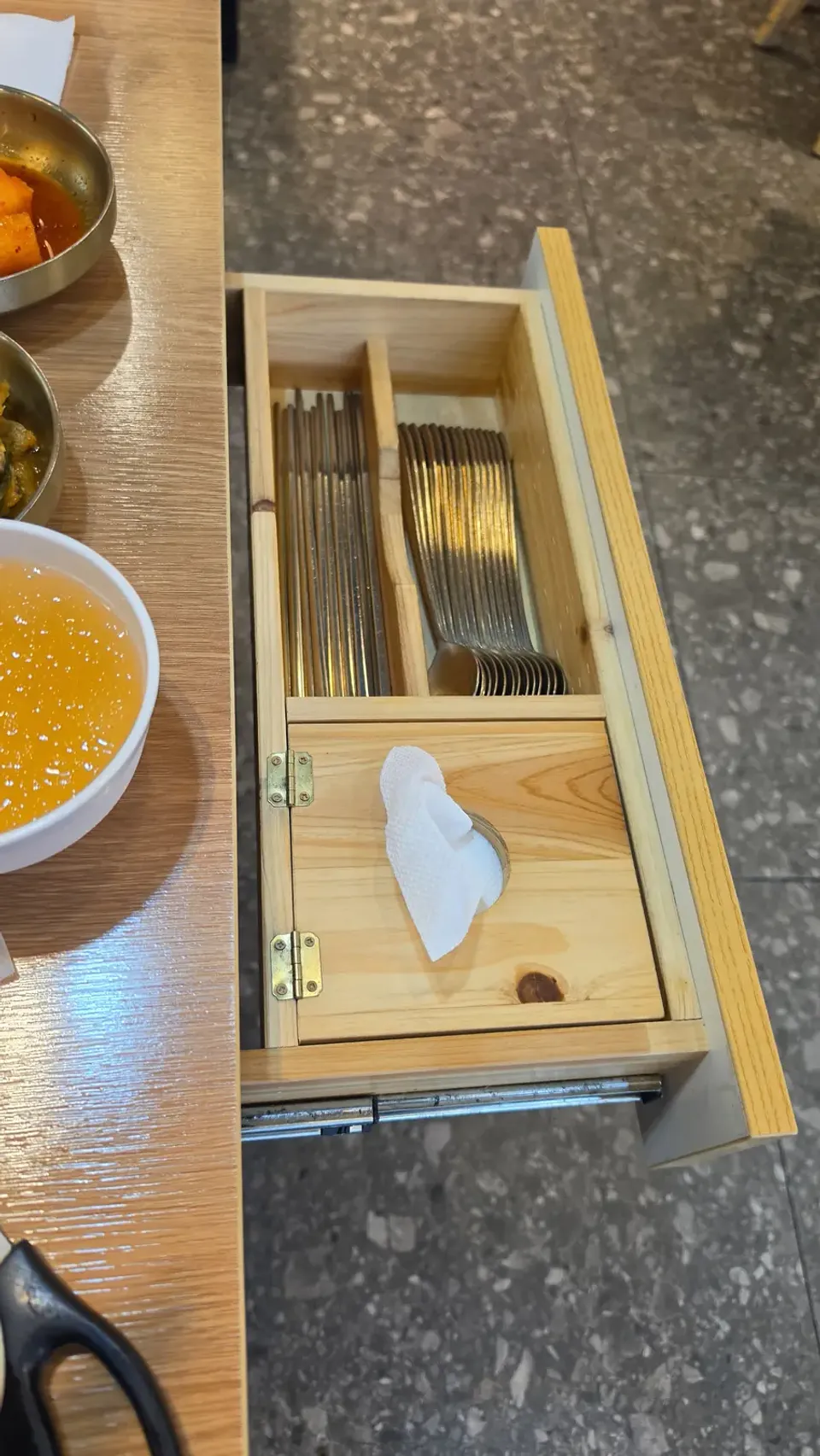
You sit down at a Korean restaurant and the table is bare. No cutlery, no napkins, no menu handed over, and no server heading your way. In most countries this means something has gone wrong. Here it means everything is going exactly as designed — you just haven’t been told where the design keeps things. Five rules and you’ll order like you’ve done it a hundred times.
1. Your cutlery is in the table
Look at the side of the table, or just under the edge: there’s a shallow slide-out drawer. Inside are the spoons, chopsticks, napkins and often wet wipes. Pull it open and set your own place.
(No drawer? Then look for a stainless steel box on the table with the same contents, or a cutlery caddy near the water station.)
Two related notes: Korean spoons and chopsticks come as a pair — the spoon does the rice and soup work, which surprises people who assume chopsticks do everything — and you should never stand chopsticks upright in a bowl of rice, which is what’s done at funeral rites.
2. Don’t wait to be greeted — press the bell
In much of Europe and North America, you wait at your table until a server comes to you. In Korea, waiting is the mistake. On the table edge or the wall beside you is a small call button (호출벨). Press it, a chime sounds at the kitchen, and someone comes to you.
No bell? Then a clear, unembarrassed “jeogiyo!” (저기요) across the room is completely normal. It sounds brusque to foreign ears and it isn’t — it’s just how the room works, and nobody thinks less of you for it.
The upside of this system is speed: you’re never stuck waving at someone’s back or waiting ten minutes to ask for one more thing. Decide, press, done.
3. Water and banchan are free — and often self-service
Two things arrive that you didn’t order: water and banchan (반찬), the little side dishes — kimchi, seasoned vegetables, pickles, whatever the kitchen does. Both are free, included, and refillable at no charge. You do not get billed for a second plate of kimchi.
One caveat if you do not eat meat: those free side dishes are usually not vegetarian. Kimchi is normally made with salted shrimp or anchovy, and most soups start from anchovy stock — the question that actually works is what the broth is made from.
Refills work one of two ways: press the bell and ask, or help yourself at the self-service station if the restaurant has one — a counter with water dispensers, cups, and trays of banchan.
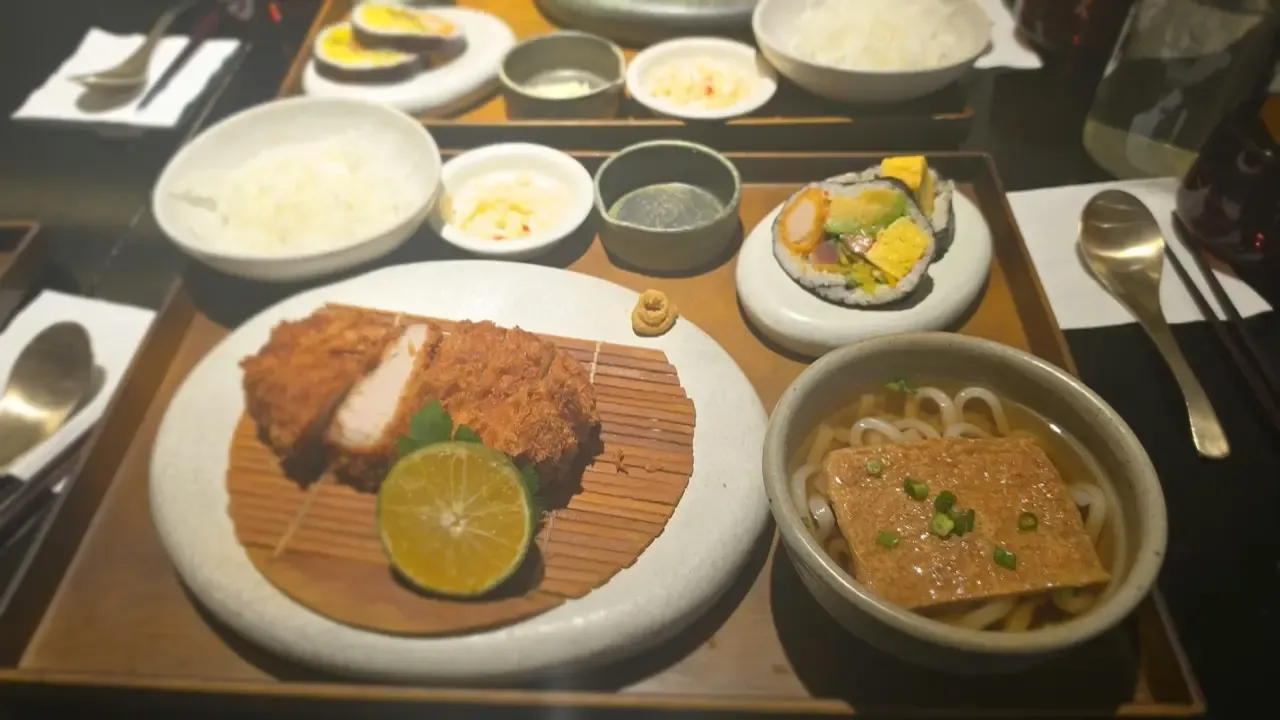
A standard set: main, rice, soup, banchan, spoon and chopsticks · ⓒ @BalliBalliSeoul
The one piece of etiquette that matters: take what you’ll eat. Refills are unlimited; leaving a mountain of untouched banchan is the thing that gets frowned at, because leftover side dishes can’t be reused.
The kimchi on that tray has one detail worth a glance: restaurants here are legally required to tell you which country the cabbage came from, and the notice is on the menu or a small board on the wall. Reading that line takes ten seconds — and it’s the difference between eating Korean kimchi and eating the kind you can buy at home.
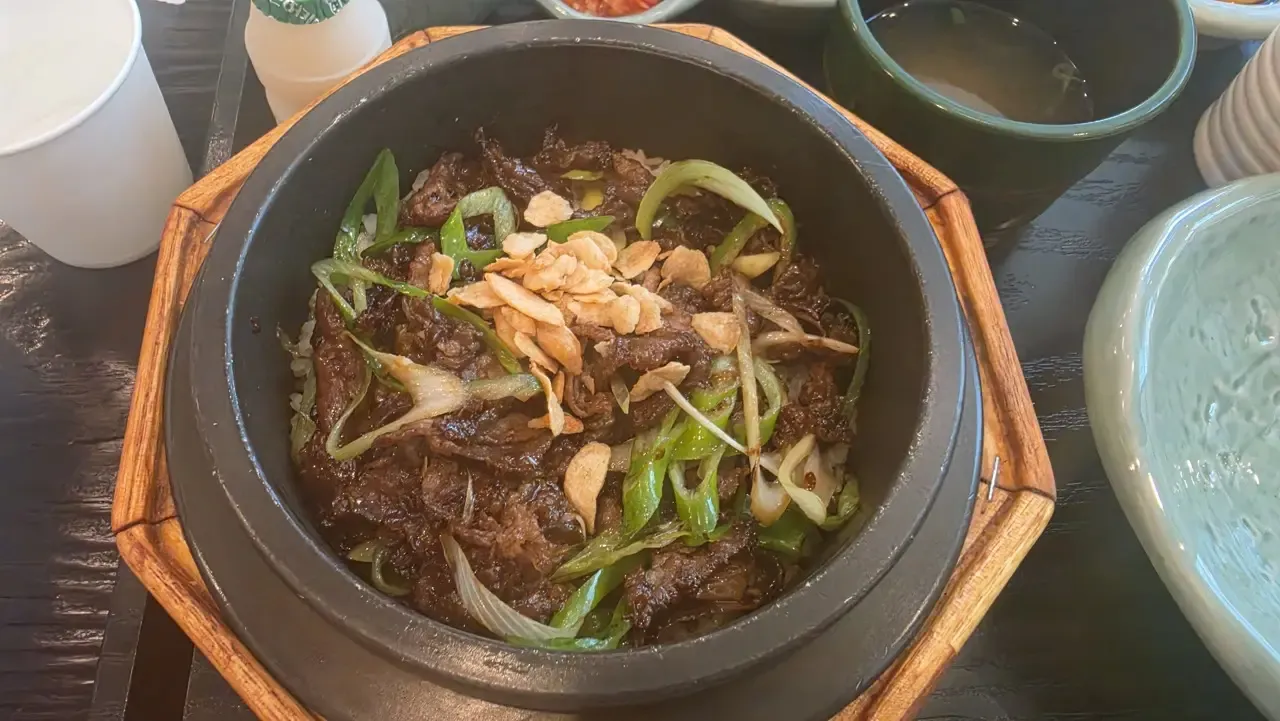
Water, banchan, and a stone pot — the standard table · ⓒ @BalliBalliSeoul
4. Cafes run on the opposite system
Everything above is for restaurants. Cafes invert it: you order and pay first, at the counter or a kiosk, then sit down. Nobody comes to your table to take an order, and sitting first while you wait for service will leave you waiting forever.
After ordering you’ll usually get a buzzer (진동벨) — a puck that flashes and vibrates when your drink is ready, at which point you collect it yourself from the pickup counter. When you’re done, carry your cup to the return station (반납대), where cups, trash and food waste get separated into their own bins. Leaving everything on the table isn’t scandalous, but bussing your own cup is what locals do.
5. You pay at the counter, and you don’t tip
No one brings a bill to your table for you to sign. The paper slip on your table (or handed to you when the food came) goes with you to the counter by the entrance, where you pay by card, cash or phone.
And to settle the question every visitor asks: there is no tipping in Korea — not in restaurants, not on the kiosk screen, not in the taxi. The listed price includes tax and service. We went deep on that one in our guide to not tipping in Korea, because the reflex is hard to unlearn.
The Korean part
Menus without pictures, servers who don’t speak English, the question of what’s in the stew, allergies you can’t explain, and restaurants that only take Korean-language phone reservations — that’s where a meal stops being fun. Send us the restaurant or a photo of the menu on WhatsApp and our anything-else concierge service will translate it, tell you what’s spicy, and make the booking call in Korean.
Ordering is also the best place to start practising, precisely because the stakes are nil and the script repeats — it is the first of the situations worth rehearsing.
Get it sorted
Standing outside a place you can’t read, or stuck at a table with no idea what to press? Message us on WhatsApp — we’ll walk you through it in English, live. Asking costs nothing — you pay only for the work you book.
The one-line version: cutlery’s in the drawer, press the bell, water and banchan are free, cafes want payment first, and you pay at the counter without tipping. Do that and the only hard part left is choosing.