Do You Tip in Korea? No — and the Kiosk Won't Ask
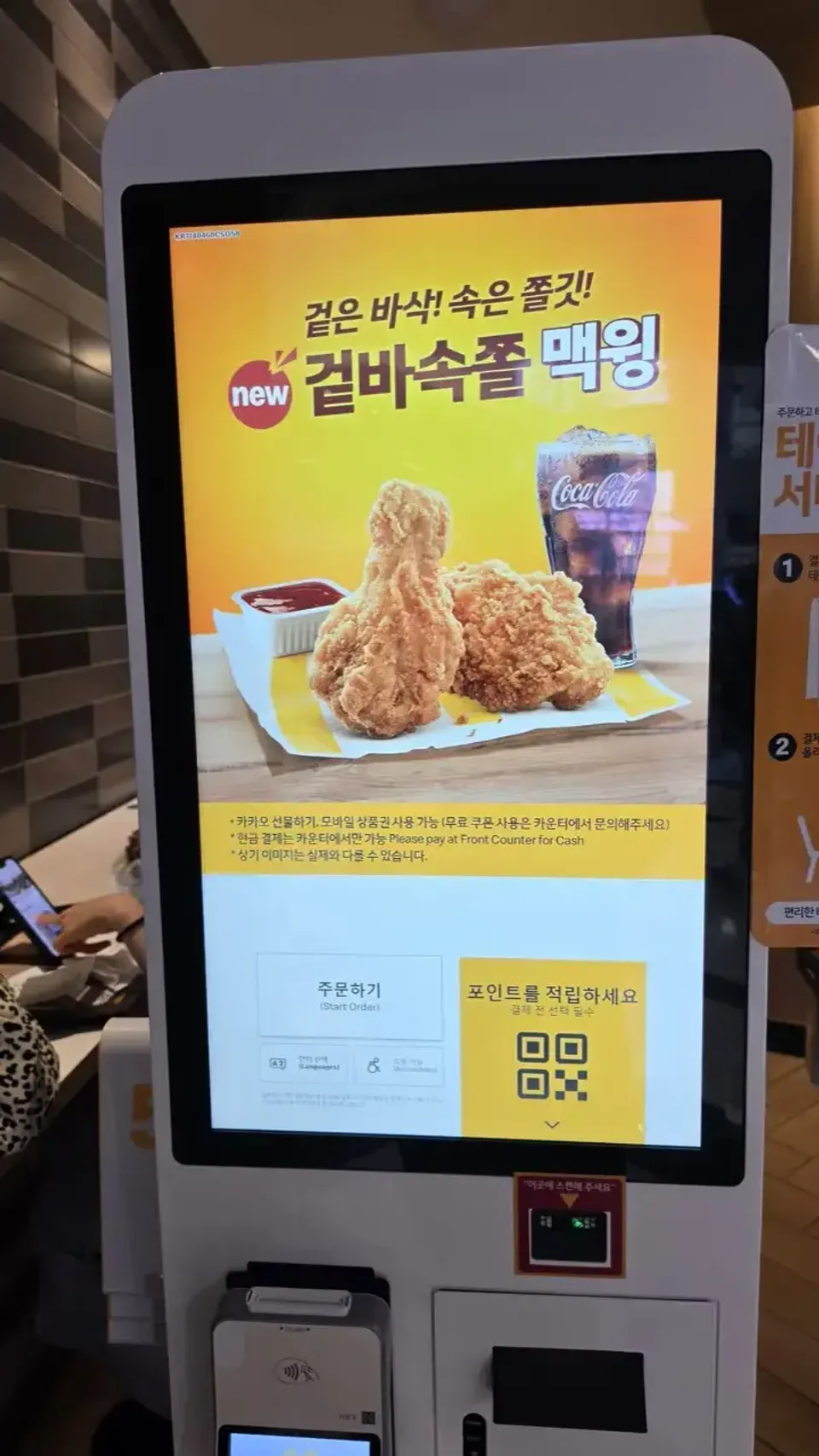
You’ve just paid at a Korean cafe kiosk and something feels off. The screen went straight from “total” to “insert card” — no 15%, 18%, 20% buttons, no guilt-inducing “custom tip” option, no signature line with a blank space daring you. Nothing. So you stand there wondering whether you just stiffed someone.
You didn’t. Korea has no tipping culture, and the payment system reflects that by simply not having the feature. Here’s the whole rule, and what to do instead when service genuinely impresses you.
The short answer
No tipping. Anywhere. Not restaurants, not cafes, not taxis, not hotels, not delivery, not hair salons. The price on the menu is the price you pay — Korean prices are quoted with VAT and any service charge already inside them, so what you see is what’s charged.
The salon is where that surprises people most, because a Korean haircut comes with a consultation, a wash and a blow-dry and still no tip at the end. What it does come with instead is a sales conversation — the treatments, the membership, the prepaid block.
This isn’t a “technically optional but everyone does it” situation like tipping in some countries. It’s genuinely not the custom, and not tipping is not rude. Koreans don’t tip each other either.
“But what about the plumber?”
The question people ask second, once the restaurant part sinks in: what about someone who comes to your home? A repair technician, a cleaner, a moving crew, a locksmith at midnight.
Same answer. You pay the quoted price and nothing more. Trades here quote a job price — call-out plus work — and that number is the whole transaction. Nobody is standing there hoping for an envelope, and offering one is more likely to cause confusion than gratitude.
What actually matters instead is agreeing the price before the work starts, which is the norm here and the thing to insist on. That’s precisely what we do when we arrange a plumber, a locksmith, a cleaner or a moving crew for someone: the price is confirmed in the chat first, so there’s no negotiation at the door and no tipping question afterwards.
The kiosk will not ask you
This is the part that trips up visitors from tip-screen countries most, so let’s be blunt: Korean kiosks, tablets and card terminals have no tip step. There is no percentage screen, no “add gratuity?” prompt, no default 18% pre-selected. The flow is order → pay → done.
If you’re used to the modern tablet-swivel moment — where a screen turns toward you and a cashier watches while you choose a percentage — you can relax. That moment does not exist here. Its absence isn’t a system error, and no one is waiting for you to find a hidden button.
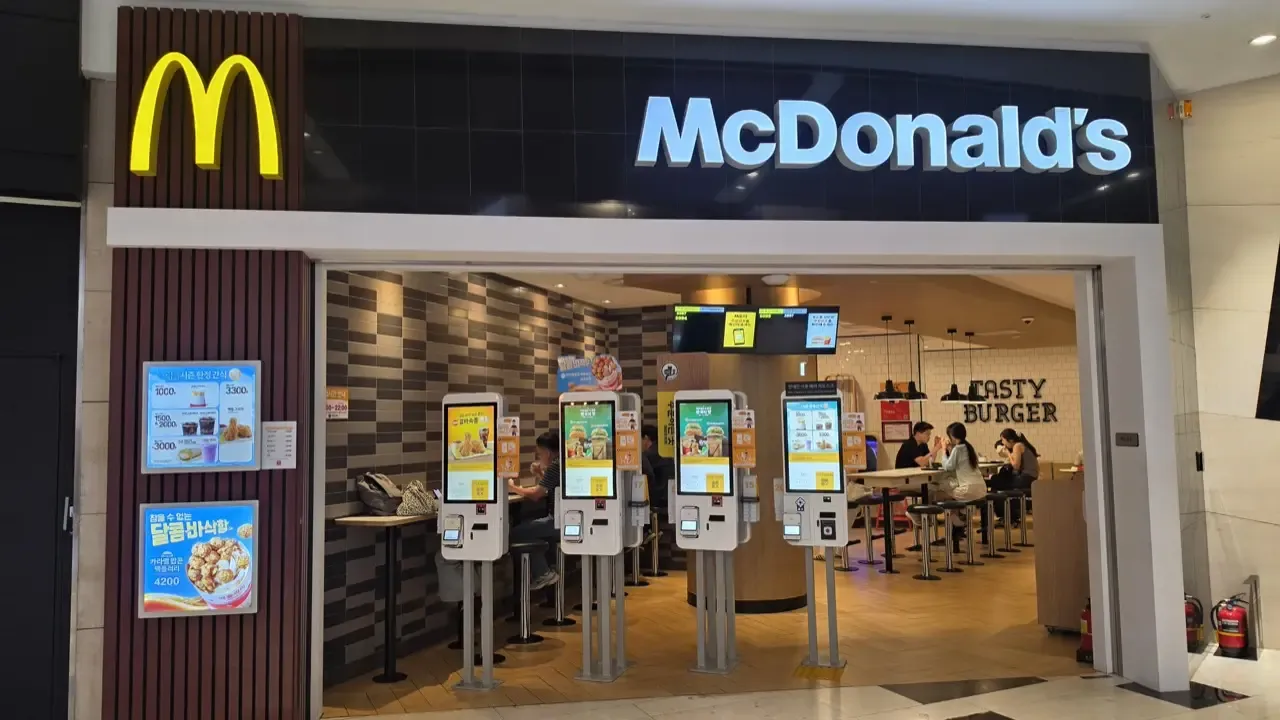
Four kiosks, no tip screen among them · ⓒ @BalliBalliSeoul
Fast food, cafes, cinemas, even many mid-range restaurants now run on kiosks like these — often with an English toggle right on the first screen. You will touch a lot of them in Korea, and not one will ask you for a gratuity.
And the receipt closes the case:
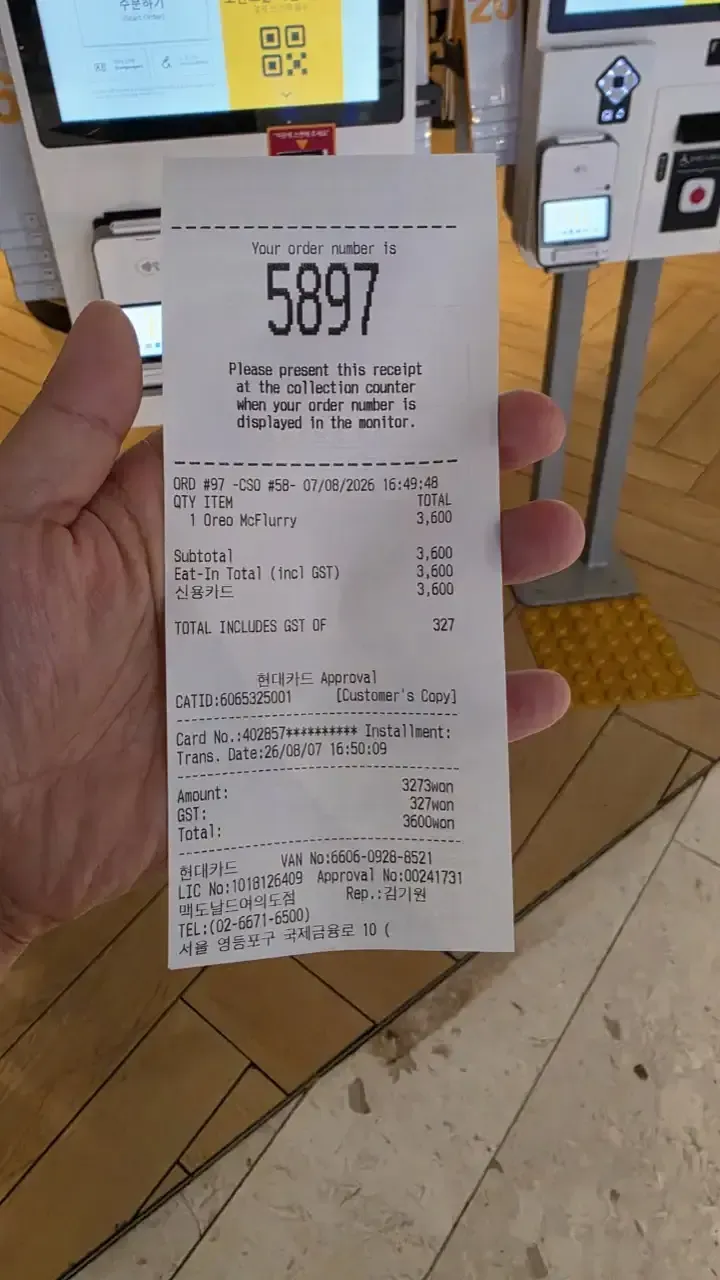
Menu price = subtotal = total. Tax inside, no tip line · ⓒ @BalliBalliSeoul
Look at what that receipt does and doesn’t have. A ₩3,600 item comes to a ₩3,600 subtotal and a ₩3,600 charge — with the note “TOTAL INCLUDES GST OF 327,” meaning the tax was inside the menu price all along. There is no gratuity line, no suggested-tip table at the bottom, no space to write one in.
The same goes for taxis: the meter is the fare, apps charge the meter, and drivers don’t expect a rounded-up bill. Food delivery apps? The delivery fee is in the order total, and there’s no tip field.
What if I really want to tip?
Occasionally a visitor hands over cash anyway — a token of thanks after exceptional service. It’s a kind impulse, so here’s what actually happens if you try:
- Staff will often politely decline. Not because they’re offended, but because it isn’t done, and many workplaces have policies about accepting money from customers.
- It can create an awkward moment for someone who now has to explain, in a second language, why they’re refusing your money.
- In some settings it’s flatly not allowed — anything involving public employees, and many hotel and hospital contexts.
If you insist and it’s accepted, nothing terrible happens. But you’re doing something culturally foreign, not something generous by local standards.
What Koreans do instead
Appreciation here runs through channels that actually help the person or the business:
- Say it. Gamsahamnida (감사합니다, “thank you”) or the warmer jal meogeosseumnida (잘 먹었습니다, “I ate well”) on the way out of a restaurant lands better than cash ever would.
- Leave a review. Naver Map, Google Maps and Kakao Map reviews are what small Korean businesses genuinely live and die by — a good one is worth far more than a ₩5,000 note.
- Come back, and bring people. Regulars are the currency of neighborhood restaurants here.
- Take the free refill graciously. If a place likes you, the gratitude tends to flow in your direction — extra banchan, an extra scoop, a free drink. Accepting warmly is the correct response.
The two edge cases
Two situations occasionally get mistaken for tipping:
- Service charge at luxury hotels and some fine dining — a 10% service charge may be added to the bill. That’s a line item, not a tip, and it means no additional tip is expected.
- Movers, delivery of large furniture, or a long private tour — some residents offer drinks (a cold coffee, a bottle of water) rather than cash. That’s the Korean-flavored version of a tip: hospitality, not money.
The Korean part
Tipping confusion is really a symptom of a bigger question — what’s actually normal here? Payment norms, table buzzers, self-serve water, when to bow, what the kiosk expects. Kiosks in particular reward a little preparation: our movie ticket guide walks through one screen by screen, English toggle included. And when a specific moment stumps you, our anything-else concierge service is a message away.
Get it sorted
Standing at a counter unsure what the local script is? Message us on WhatsApp — send a photo of the screen or the menu and we’ll tell you what’s expected, in English, before the awkward pause gets long. Asking costs nothing — you pay only for the work you book.
The one-line version: the listed price is the whole price, the kiosk has no tip button, and “gamsahamnida” plus a five-star review is the local way to say thanks. Keep your cash — you’ll need it for the convenience store.