Seoul Subway Lines, Explained: What Each Color Gets You
The Seoul subway map looks like a bowl of neon noodles the first time you see it — twenty-plus lines, hundreds of stations, nine million daily rides. But you don’t need the whole map. You need to know what each colour does, because in Seoul, the line you live on shapes your life more than the district you live in. Here’s the cheat sheet.
The system is colour plus number
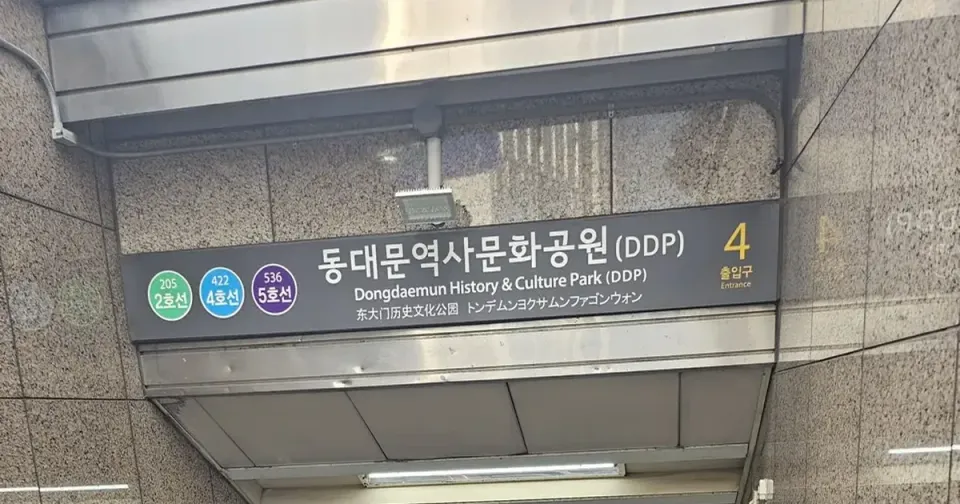
Before the lines themselves, the thing that makes Seoul navigable even when you can’t read a word of Korean. Look at any station entrance:
Three badges, three colours, three numbers — and the station name in Korean, English, Chinese and Japanese. Green 205 means Line 2, station 5. Blue 422 means Line 4, station 22. The first digit is the line; the rest is the station’s position on it.
Say the number, not the name. “Two-two-two” gets you to Gangnam when “Gangnam” does not, and it works with a taxi driver, a ticket machine or a stranger. Once that clicks, the neon noodles stop mattering — you only ever need one colour and one number at a time.
The colours, at a glance
| Line | Colour | What it’s for |
|---|---|---|
| 2 | Green | The loop. Gangnam, Hongdae, Sinchon, Seongsu, Jamsil |
| 1 | Dark blue | The old spine, north–south. Branches — check the destination |
| 3 | Orange | Palaces, Bukchon, Insadong, then Apgujeong |
| 4 | Light blue | Myeongdong, Dongdaemun, Seoul Station |
| 5 | Purple | Gwanghwamun, Yeouido, out to Gimpo Airport |
| 6 | Brown | Itaewon, Hangangjin, Noksapyeong — the international circuit, plus Dongmyo |
| 7 | Olive | East-side connector, skirting downtown |
| 8 | Pink | Jamsil and the southeast |
| 9 | Gold | Express trains. Gimpo Airport to Gangnam |
The rest of this article is what those rows mean in practice.
The lines that run your life
Line 2 (green) — the loop. The single most important piece of infrastructure in your Seoul life. It circles the city core and hits almost everything: Gangnam, Hongdae, Sinchon, Seongsu, Konkuk, Jamsil, City Hall. Jobs, nightlife and universities cluster along it, which is why “near Line 2” is the first filter in every apartment hunt — and why it’s packed at rush hour.
Line 1 (dark blue) — the elder. Korea’s first line (1974), running enormous distances north and south of the city, through Seoul Station and old downtown. Useful, historic, and famously confusing for newcomers — it branches, and boarding the wrong destination train is a rite of passage. Check the train’s final destination, not just the line.
Line 3 (orange) — the culture line. Gyeongbokgung and Anguk (the palaces, Bukchon, Insadong), then across the river to Apgujeong and the Express Bus Terminal. Tourist days mostly happen here.
Line 4 (light blue) — Myeongdong, Dongdaemun, Seoul Station: the shopping-and-transit spine, and reliably full of luggage.
Line 5 (purple) — Gwanghwamun offices, Yeouido (finance and The Hyundai mall), and all the way to Gimpo Airport.
Line 6 (brown) — the expat line. Itaewon, Hangangjin, Noksapyeong (the Haebangchon side) — the foreigner-neighborhood circuit — plus World Cup Stadium. If your social life is international, you’ll memorize this one fast.
It also carries Dongmyo, which has quietly become one of the most foreigner-heavy stops on the network for a reason that has nothing to do with expat bars: the flea market spilling out around the station. Racks of secondhand and vintage clothing sold by the piece for a few thousand won, plus old records, watches and assorted junk, over streets that look like nothing else in Seoul. Go on a weekend, bring cash, and expect to dig. (Dongmyo is also on Line 1, so it’s an easy transfer from the old downtown spine.)
Line 7 (olive) — the east-side connector, threading Konkuk and Cheongdam toward the northeast without touching downtown.
Line 8 (pink) — the southeast shuttle: Jamsil (Lotte World and the mall), Songpa’s apartment seas, and onward past the city edge. Short, uncrowded by Seoul standards, and exactly what it needs to be.
Line 9 (gold) — the express. Gimpo Airport to the Gangnam corridor, with Seoul’s best trick: express trains (급행) that skip stations and cut journeys nearly in half. Red on the platform display means express — check whether your station has express service, and brace: it’s the most crowded line in the city at rush hour.
The suburban cast
- Sinbundang (red) — a fast, slightly pricier private line from Gangnam down to Pangyo (tech-job land) and Suwon.
- AREX — Incheon Airport into the city.
- Gyeongui–Jungang — the scenic river-hugging line across the north bank; lovely, but trains come less often, which matters more than you’d think.
- GTX-A — the new high-speed regional line, turning far suburbs like Dongtan into commutable territory.
Reading the system like a local
- Stations are numbered (Gangnam is 222: Line 2, station 22) — when a name won’t stick, the number works in any language.
- Transfers are legs, not steps: some interchange walks run several hundred meters. Naver or Kakao Map’s route planner accounts for it; your intuition won’t.
- Last trains run around midnight, earlier on Sundays — and the last useful train is earlier still if you need a transfer. Miss it and you’re in taxi territory.
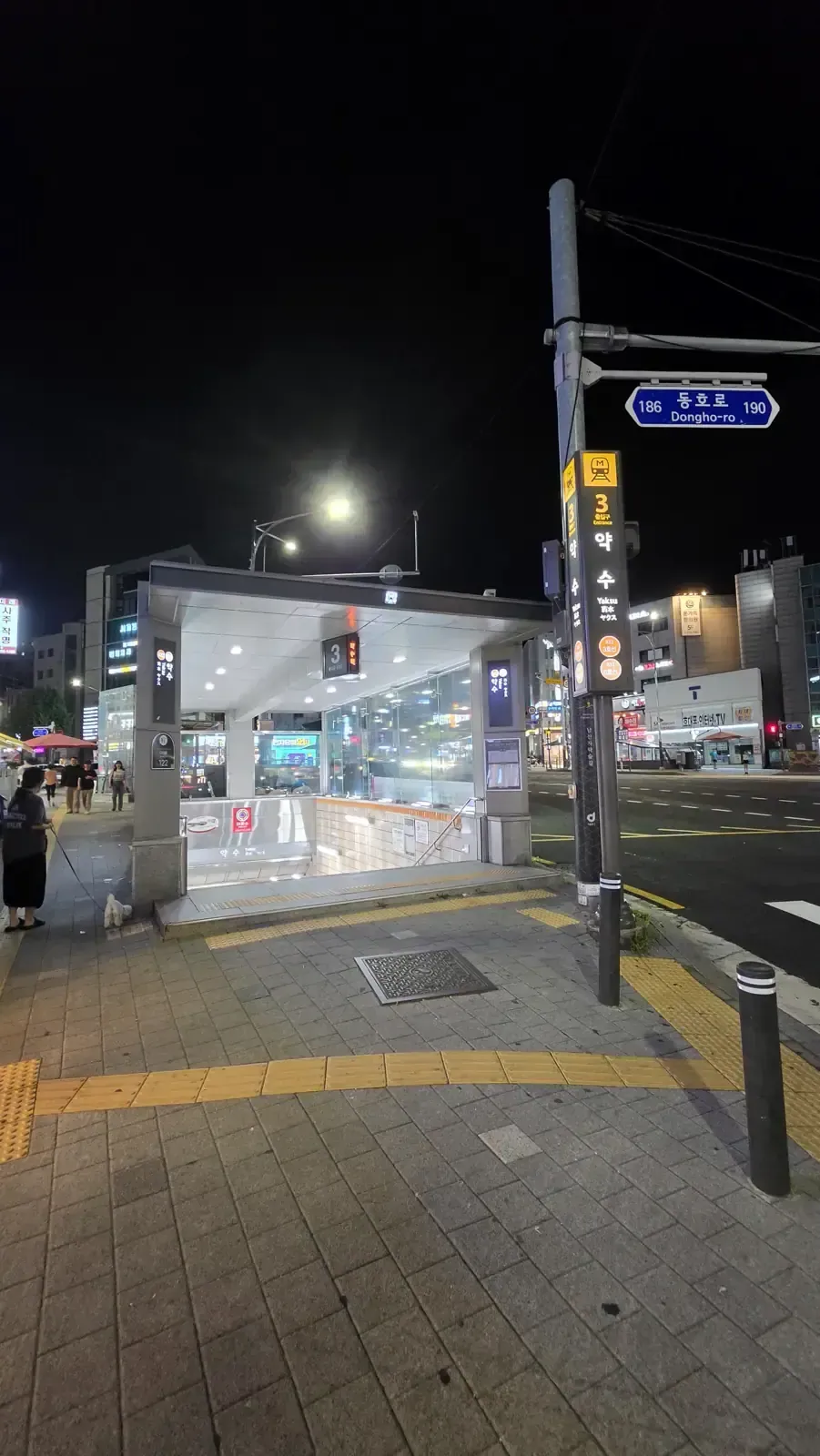
After midnight this is just a lit staircase to nowhere · ⓒ @BalliBalliSeoul
- The official English map and route planner live on
Seoul Metro’s Cyber Station
— good for orientation, though the map apps win for daily use.
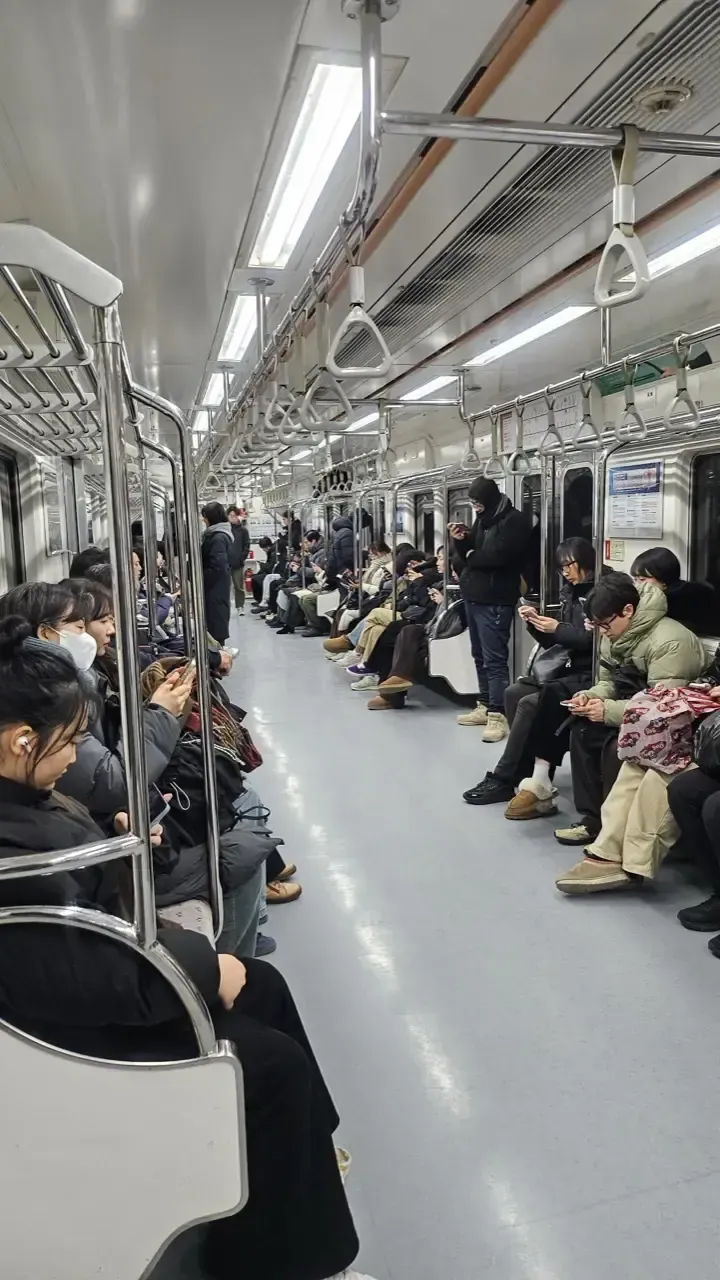
Seats full, aisle clear — this is a quiet carriage by Seoul standards · ⓒ @BalliBalliSeoul
- Etiquette in one line: let people off first, stand right on escalators (mostly), and the marked seats stay empty for those who need them.
- Rush hour is real: 7:30–9 AM and 6–7:30 PM turn Lines 2 and 9 into a full-contact sport. Shifting a commute by thirty minutes changes your quality of life more than most apartment upgrades.
Left something on board?
The line number matters here too: Seoul Metro’s lost property desks are split by line, so the number you call depends on which train you were on. Note the car-and-door marker — the 2-1 style figure on the platform floor — and the rest is in our lost property guide.
The Korean part
Where the subway meets Korean-only reality: choosing which line to live on — the question hiding inside every housing decision — deciphering service-change notices taped up in Korean, and the apps’ Korean-first corners. For the “which line should I live on for a commute to X” question specifically — that’s a five-minute answer for us, and we give it free through our anything-else concierge service. For fares, cards and the rest of the system, our Seoul transportation guide covers the mechanics.
Get it sorted
Planning where to live around a commute — or just lost at Sindorim? Message us on WhatsApp with your two anchor points, and we’ll tell you which lines and neighborhoods make your life easiest. Asking costs nothing — you pay only for the work you book.
Learn Line 2 first, respect Line 1’s branches, and find out if Line 9’s express stops near you. That’s ninety percent of Seoul subway mastery — the neon noodles sort themselves out from there.