Lost Something on the Seoul Subway? Read the Door Number
You get off the train, walk up the stairs, and your hand reaches for a bag that is not there. It is on a seat, heading for the end of the line.
The good news, and it is genuinely good: Seoul’s system recovers things at a rate that surprises people who have lost items in other big cities. The bad news is that the phone number you need depends on which line you were on, and almost nobody knows that until they need it.
First, before you do anything else: write down the door number
This is the part that decides whether you get your bag back, and it takes five seconds.
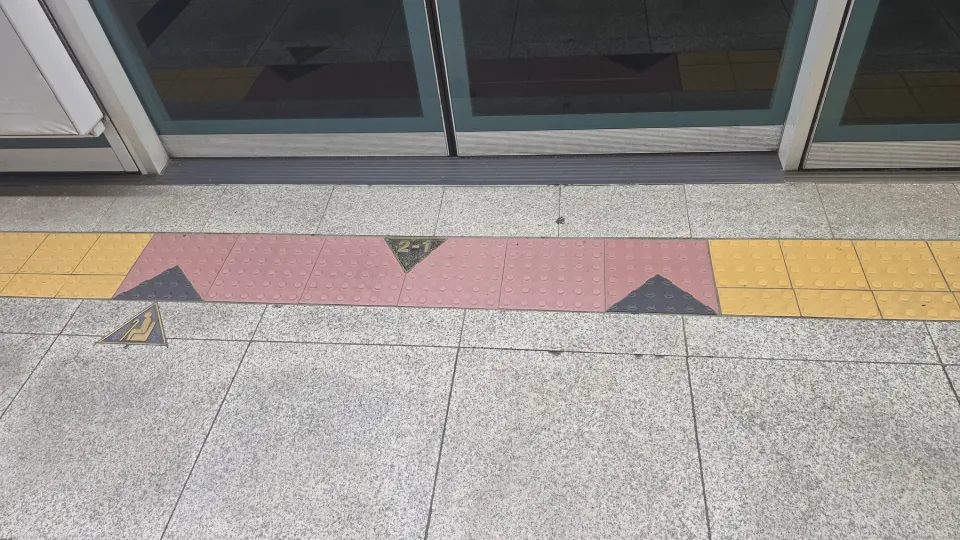
Every Seoul subway platform is marked with a car-and-door number — a small sign on the floor or the screen door reading something like 2-1. The first figure is the carriage, counting from the front of the train. The second is the door on that carriage.
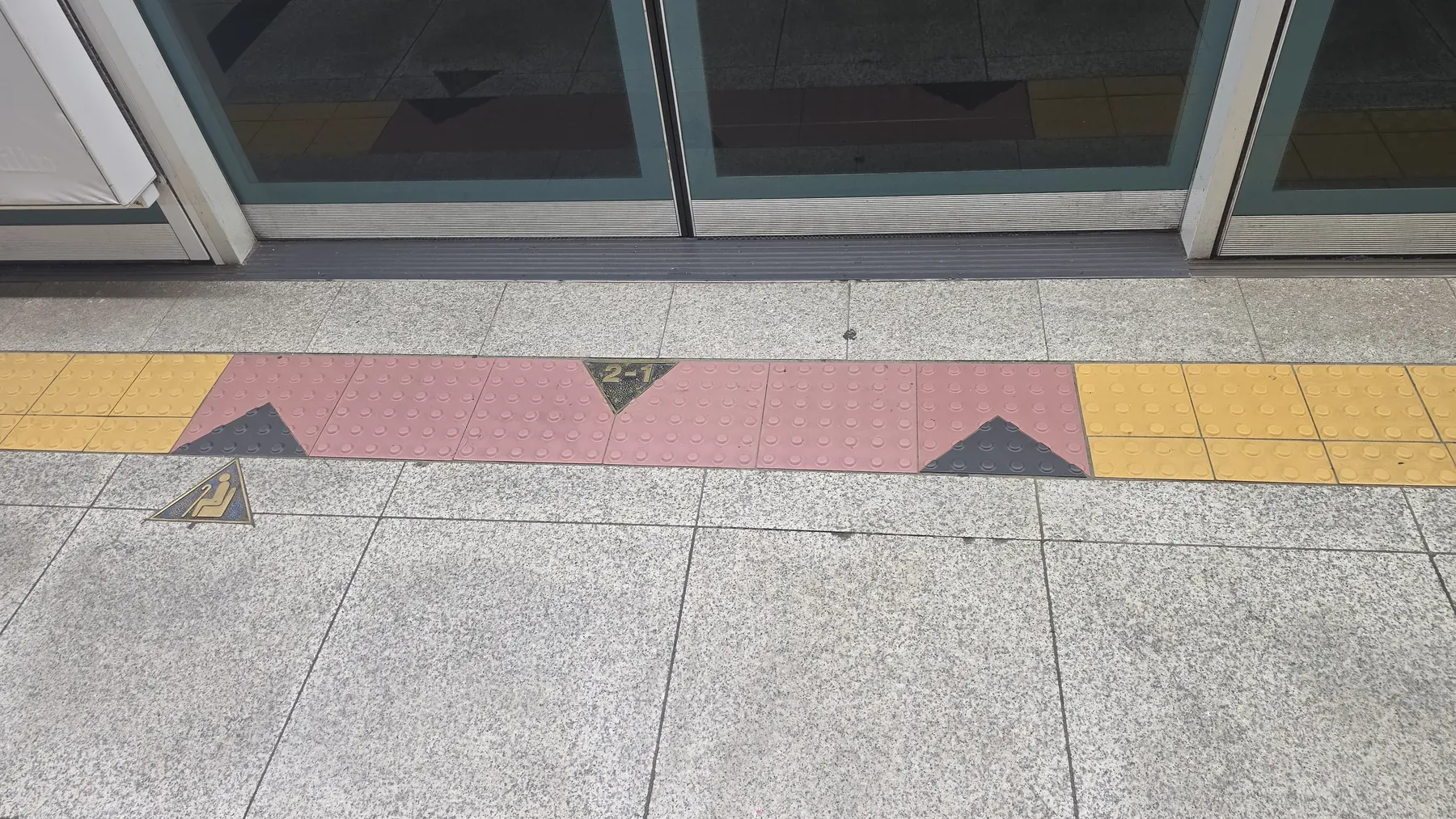
Floor marker, 2-1 — carriage two, door one · ⓒ @BalliBalliSeoul
The same number appears inside the train, on the panel above the doors, next to the station name:
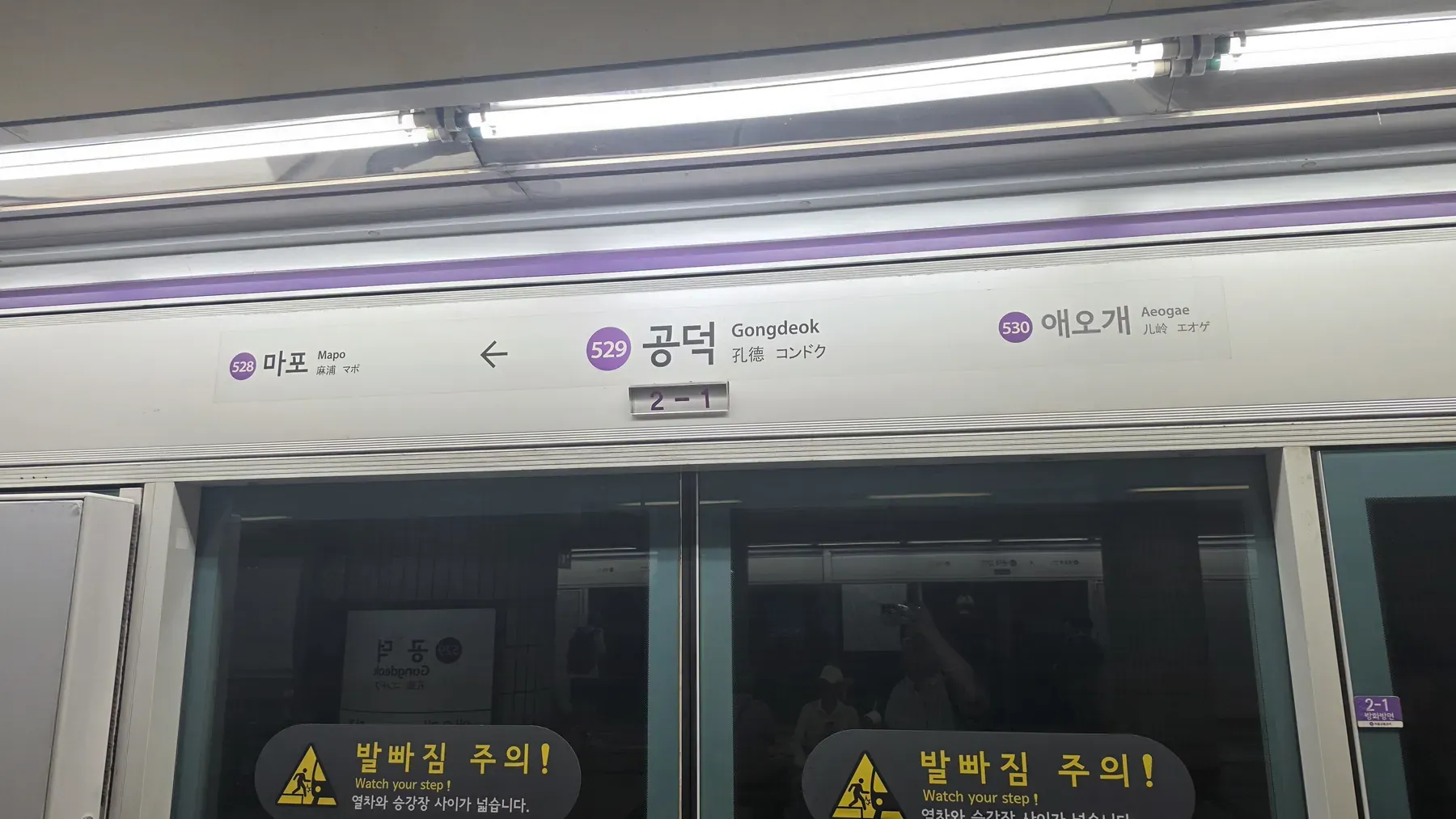
The same 2-1, above the doors — with the next stop and the line colour · ⓒ @BalliBalliSeoul
They run from roughly 1-1 to 10-4 — up to ten carriages, four doors each — so “somewhere on the train” becomes “carriage two, first door” the moment you can say it.
There is a second number, and it is even better
The 2-1 marker tells staff where on the platform you stood. There is another number that tells them exactly which carriage — the car’s own identification number, and every carriage in the country has one.
Four figures, usually, and it belongs to that physical carriage permanently. That matters because train sets get reversed and rearranged: “car two” depends on which end the train is facing, but the car number does not move.
There are exactly two places to find it inside the carriage, and once you know them you can read the number in about a second.
1. The ends of the carriage — a green circle beside the emergency instructions panel, reading 이 칸의 차량번호 (this car’s number) with the number in the middle. It’s the larger of the two and the easier one to spot from a distance.
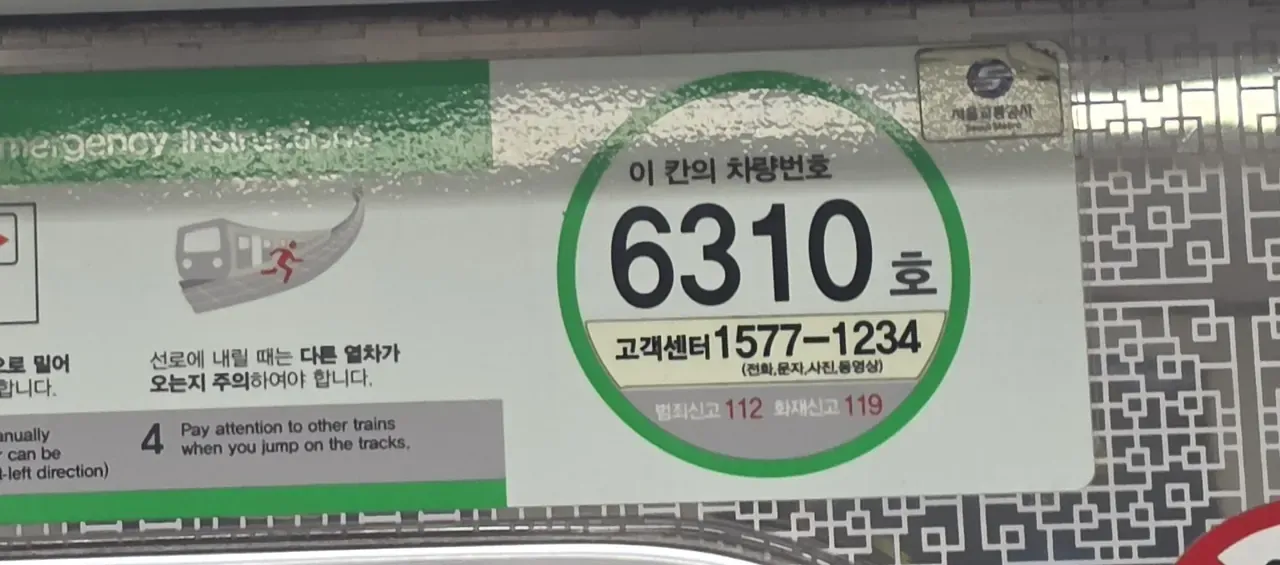
이 칸의 차량번호 — “this car’s number”, 6310 · ⓒ @BalliBalliSeoul
Two useful things ride along on that sticker: the Seoul Metro customer centre, 1577-1234, and reminders that crime is 112 and fire is 119.
2. Above every door — a small plate carrying the car number and a circled door number together, like 6310 ①.
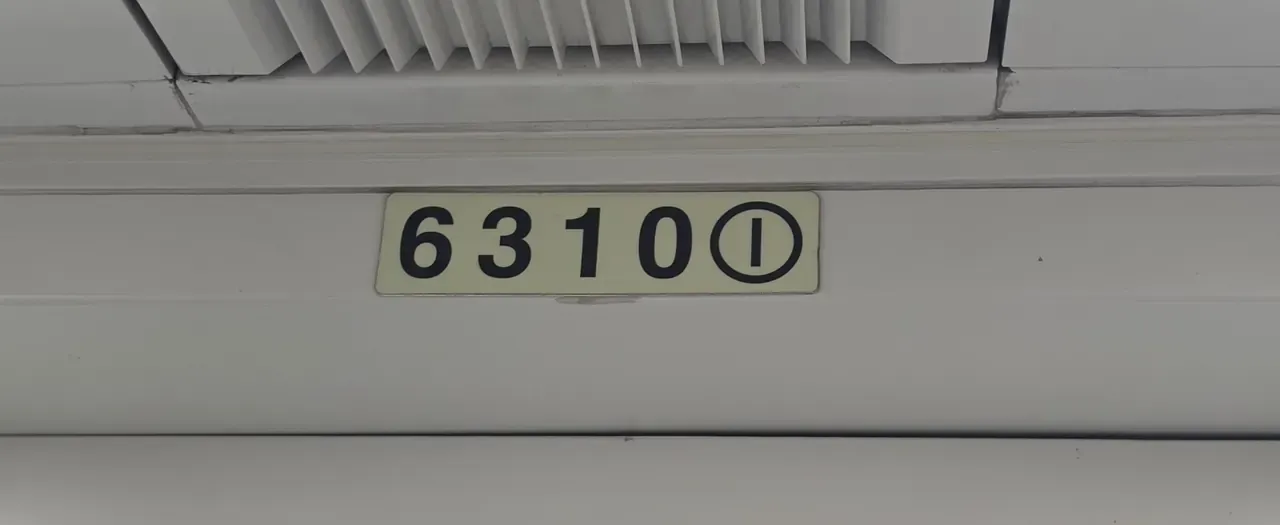
6310 ① — car number and door number on one plate · ⓒ @BalliBalliSeoul
That second one is the shortcut. One glance at the plate above the door gives you both numbers the lost property desk wants — which carriage, and which door of it. You don’t have to walk to the end of the car to get the full picture.
That combination narrows a whole line down to one carriage — and it is the single most useful thing you can hand the lost property desk.
Why it matters so much: staff recovering an item are looking at a ten-carriage train. A car number turns a search into a collection. Photograph the plate when you board, or just glance at it — a second’s habit, and worth it any time you are carrying something you would hate to lose.
Two other things worth noting the moment you realise:
- The station you boarded at, and the one you got off at — this brackets the time window
- Roughly what time, and the direction of travel
The lost property desk depends on your line
Here is the part nobody tells you. Seoul Metro does not run one lost property office. It runs four, split by line, each at a different station with its own number.
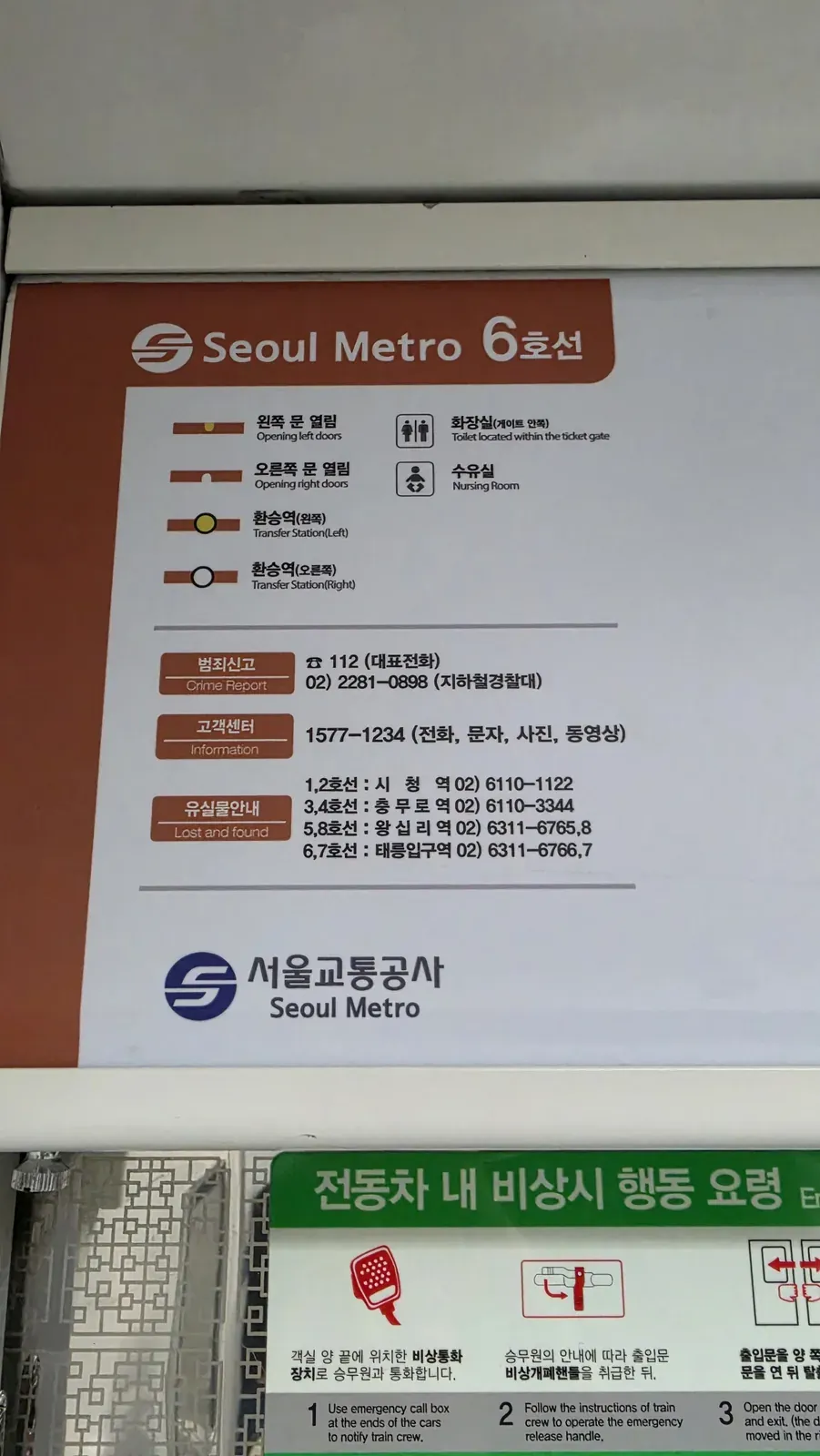
The panel above the door in every carriage — the numbers you actually need · ⓒ @BalliBalliSeoul
| Lines | Office at | Phone |
|---|---|---|
| 1, 2 | City Hall (시청) | 02-6110-1122 |
| 3, 4 | Chungmuro (충무로) | 02-6110-3344 |
| 5, 8 | Wangsimni (왕십리) | 02-6311-6765 / 6768 |
| 6, 7 | Taereung Entrance (태릉입구) | 02-6311-6766 / 6767 |
Two general numbers are worth having as well:
- Customer centre: 1577-1234 — and usefully, it takes text messages, photos and video, not only calls. If your spoken Korean is not up to a phone call, this is the route
- Police: 112 for anything stolen rather than mislaid. There is a dedicated subway police unit on 02-2281-0898
Line 9 and the outer stretches of Line 1 are run by different operators, so those are handled separately — ask at any station office and they will point you to the right desk.
What actually happens to a found item
Roughly, and it is worth knowing so you call the right place at the right time:
- Staff or a passenger hands it in at whichever station it surfaces — often the end of the line, because that is where the train empties and gets checked
- It sits at that station for a day or so
- Then it moves to the line’s lost property office — the ones in the table above
So the timing matters. Same day, ring the terminal station or the station where you got off. After that, ring the line office.
If it has moved on again, everything unclaimed in Korea ends up in
the national police lost property system, lost112.go.kr,
which is searchable — though in Korean.
Trains are not the subway
Worth separating, because people conflate them: KTX, ITX and the intercity trains are Korail, a different organisation with its own lost property process, and stations like Seoul Station host both.
If you left something on a KTX, you want Korail rather than the subway desks above, and the same discipline applies — coach number and seat number are the equivalent of the door number, and they are printed on your ticket. Which is the argument for not deleting the ticket from your phone the second you arrive.
Recovery rates on the intercity trains are good too. The pattern in traveller accounts is consistent: report it quickly, give the train number and seat, and staff will often put the item on a train back to you.
Realistically, what comes back
Bags, laptops, phones, umbrellas and coats turn up at a rate that genuinely surprises visitors. Cash is the exception everywhere in the world and Korea is not magic.
The single biggest factor is speed. An item reported within the hour, with a door number attached, is a very different search from one reported two days later with “it was a black backpack, on the green line, in the afternoon.”
The Korean part
The desks are staffed by people doing a practical job well, and
they are not language services. The call is in Korean, the
lost112 site is in Korean, and the description that finds your
bag — the make, the colour, what was inside — has to survive being
translated by whoever picks up.
Left something on a train and not sure who to call? Message us on WhatsApp with the line, the station and the door number if you have it — our anything-else concierge service will make the calls in Korean and tell you where your bag is. Asking costs nothing — you pay only for the work you book.
If you are still working out which line you were even on, the colour-coded line guide is the place to start, and the wider transport guide covers the rest of the network.
Get it sorted
The one-line version: note the car-and-door number when you board, call the office for your line rather than a general number, ring the terminal station the same day and the line office after that — and if it was a KTX, that is Korail and a different desk.