Seoul's Book Cafes: Go Even If You Can't Read Korean
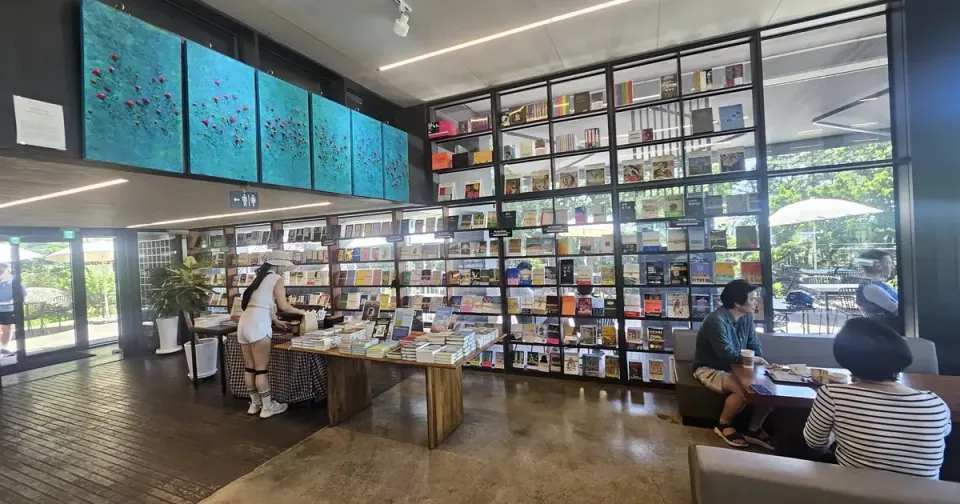
Let’s deal with the obvious objection first: you can’t read the books. Ninety-something percent of what’s on those shelves is in Korean, and no amount of enthusiasm changes that.
Go anyway. A Seoul book cafe is one of the best free-ish rooms in the city — quiet, cold in August, full of natural light, and run on the understanding that nobody is going to ask you to leave. What you do there just isn’t quite reading.
The format: a bookstore you’re allowed to sit in
The thing to understand is that this isn’t a cafe with a decorative shelf. It’s usually a working bookshop with a coffee counter inside it, and the seating is the point rather than an afterthought — sofas, long tables, window seats looking onto trees.
You buy a drink, you sit, and you can pull things off the shelf while you do. The unspoken deal is the same one that governs every cafe in this country: one americano buys you the table for as long as you want it, and staff will not hover.
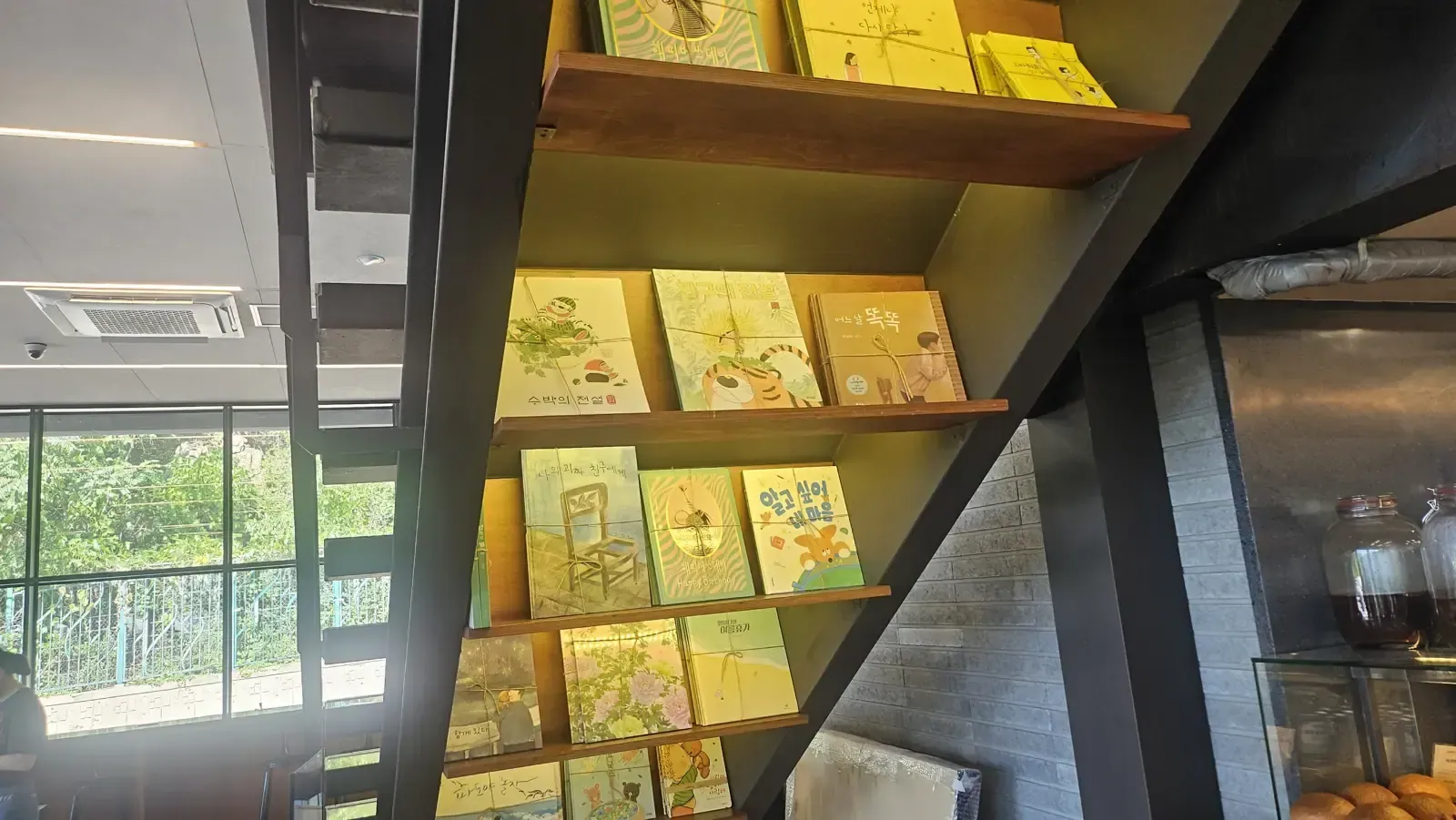
Even the underside of the stairs is shelving · ⓒ @BalliBalliSeoul
What’s actually there for you
More than you’d guess, once you stop looking for novels.
- Art, photography and design books. Entirely language-independent, and Korean publishers are very good at them. This is the single best reason to go.
- The English section. The big chains carry one — usually bestsellers, language-learning and a rotating literary shelf. Smaller independent shops may have a single case, or none.
- Stationery, which is half the shop. Korean bookstores sell pens, notebooks and desk objects at a level that turns sceptics into collectors. No Korean required to appreciate a good pen.
- Magazines, including imported ones, which are the easiest thing to browse over a coffee.
- Children’s books, which are ideal if you’re learning the language — large print, simple sentences, pictures doing half the work.
And occasionally something like this, which is genuinely aimed at you:
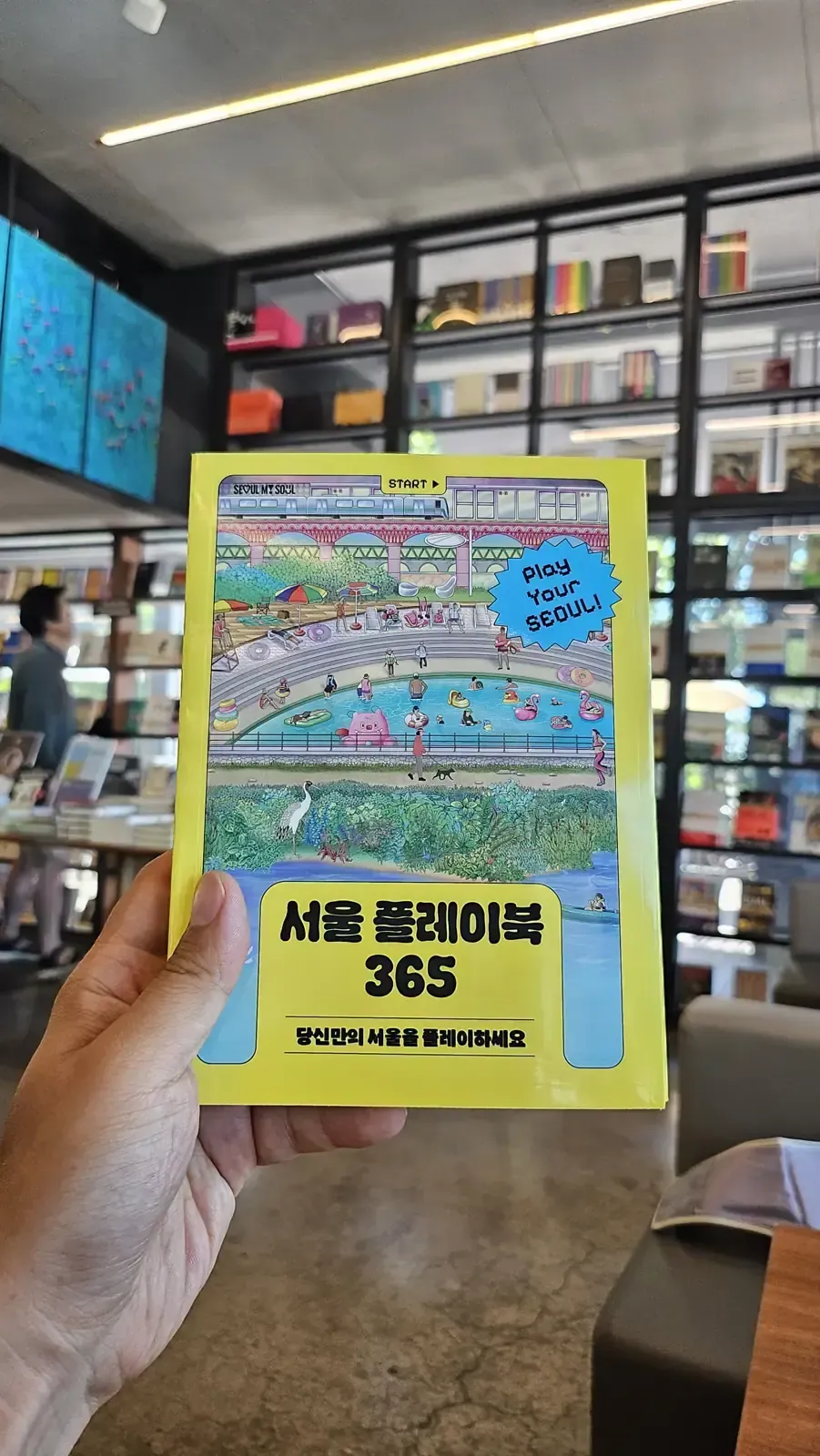
Seoul activity books turn up on the display table · ⓒ @BalliBalliSeoul
Guides and activity books about Seoul itself — the kind with maps, neighbourhood walks and things-to-do checklists — sit on the front tables, and a lot of them lean on illustration rather than text. Some carry English alongside the Korean. They’re worth a flip even if you only take the map.
The other kind: secondhand bookshops
At the opposite end of the spectrum from the glass-and-timber places is the 헌책방 (heon-chaekbang) — the secondhand bookshop, usually a narrow room with a shutter, stacked to the ceiling, run by someone who knows exactly where everything is despite all evidence to the contrary.
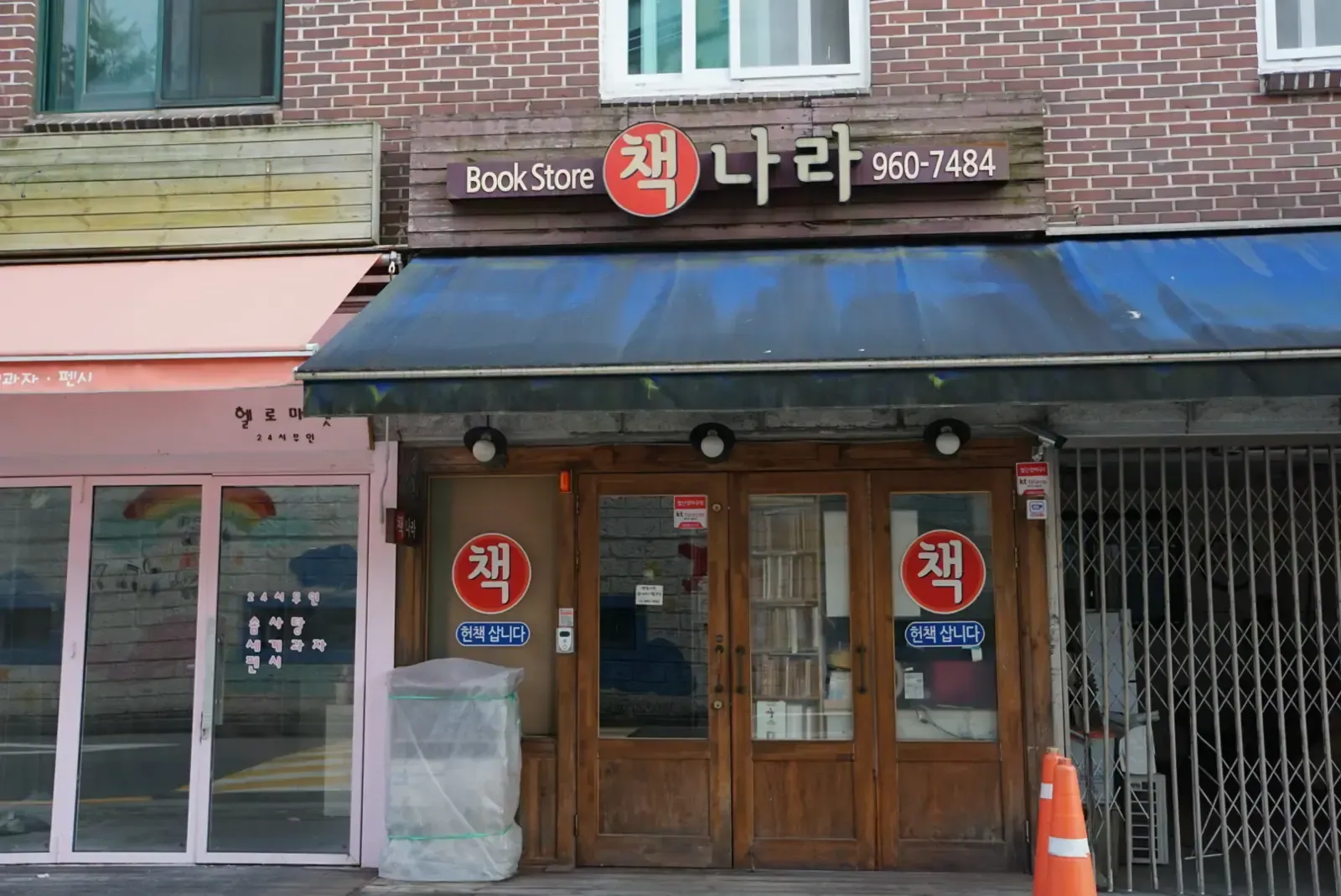
책 on the door means books — and 헌책 means used ones · ⓒ @BalliBalliSeoul
You will not be browsing these for English literature. Go for the atmosphere, the prices, and occasionally a genuinely good find in art or photography. Bring cash, expect no card reader, and don’t expect anyone to speak English — this is a pointing-and-smiling transaction and it works fine.
Clusters of them survive around older parts of the city; the flea market end of Dongmyo on Line 6 is the easiest one to combine with an afternoon of looking at other people’s old things.
Two words that get you there
Worth memorising, because they aren’t interchangeable and a map search will send you to different places:
- 책방 / 서점 — bookshop
- 북카페 — book cafe, the sit-down kind
Search either in Naver Map or KakaoMap and you’ll get what’s near you with opening hours attached. The big chain bookstores — the ones in basement floors of department stores and malls — are the reliable default if you want a guaranteed English shelf.
Why this is a genuinely useful room to know
Beyond the books, a book cafe solves problems that have nothing to do with reading:
- August. It’s air-conditioned, it’s free to enter, and one drink holds the seat. It belongs on the same list as malls and libraries when your flat is unbearable.
- Working. Fast Wi-Fi, outlets, and a noise level between a library and a normal cafe. If you want the paid, silent version of this, that’s a study cafe — one of the many Korean businesses that rent you a room by the hour.
- Killing two hours somewhere pleasant without spending real money, which is harder in Seoul than it sounds.
One honest note
Your phone already handles the books. Point a camera at a cover and it tells you the title; ask any AI what the book is about and it will tell you that too. We’re not going to pretend otherwise, and this is a good thing — the language barrier in a bookshop has genuinely been solved.
What still isn’t solved is everything that needs a person: a phone call in Korean, a shop that only ships to a Korean address, a form that wants identity verification you can’t complete. That’s the part we do — not reading words off a page.
The one-line version: go for the art books, the stationery, the air conditioning and the chair — and treat the Korean shelves as very good wallpaper. One drink, a whole afternoon, and nobody watching the clock.