Sushi vs Sashimi in Seoul: Go to the Fish Market
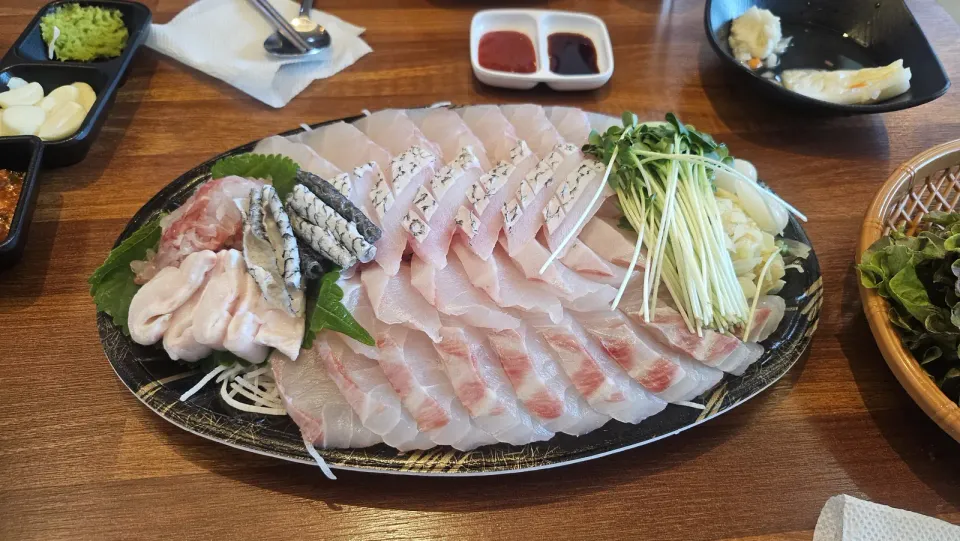
You searched for sushi in Seoul, and you will find it — Korea has plenty of good Japanese restaurants. But it is not what Koreans eat when they want raw fish, and it is not where the value is.
What they eat is hoe (회): raw fish, sliced thick, no rice underneath, eaten with a garlic-and-chilli dip and a lettuce leaf. And the best way to have it is not a restaurant at all. It’s a fish market, where you choose the fish alive and eat it fifteen minutes later.
Sushi, sashimi, hoe — the difference in one paragraph
- Sushi is rice. Vinegared rice, with fish on top or rolled inside. Japanese.
- Sashimi is fish without rice, sliced thin, usually eaten with soy sauce and wasabi.
- Hoe (회) is the Korean version of the second one — and it is its own thing. Cut thicker and chewier, prized for texture as much as flavour, and eaten with chogochujang (초고추장), a sweet-sour red chilli dip, as often as with soy sauce. It is usually wrapped in a perilla or lettuce leaf with garlic and green chilli.
If you order “sashimi” in Korea you will get hoe, and if you were expecting the delicate Japanese version, the thickness is the first surprise.
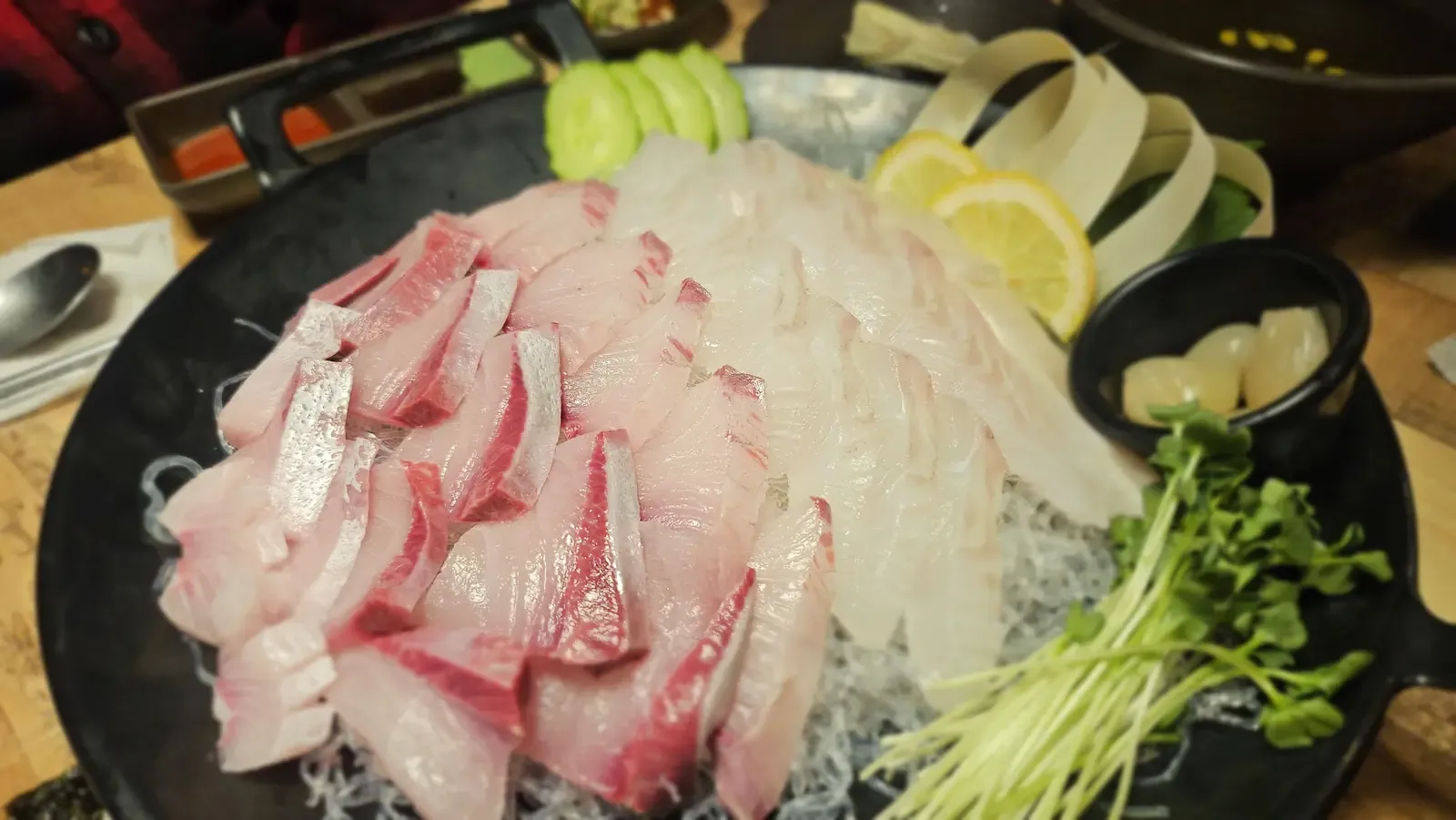
Thick cuts, no rice, and the fish is the whole point · ⓒ @BalliBalliSeoul
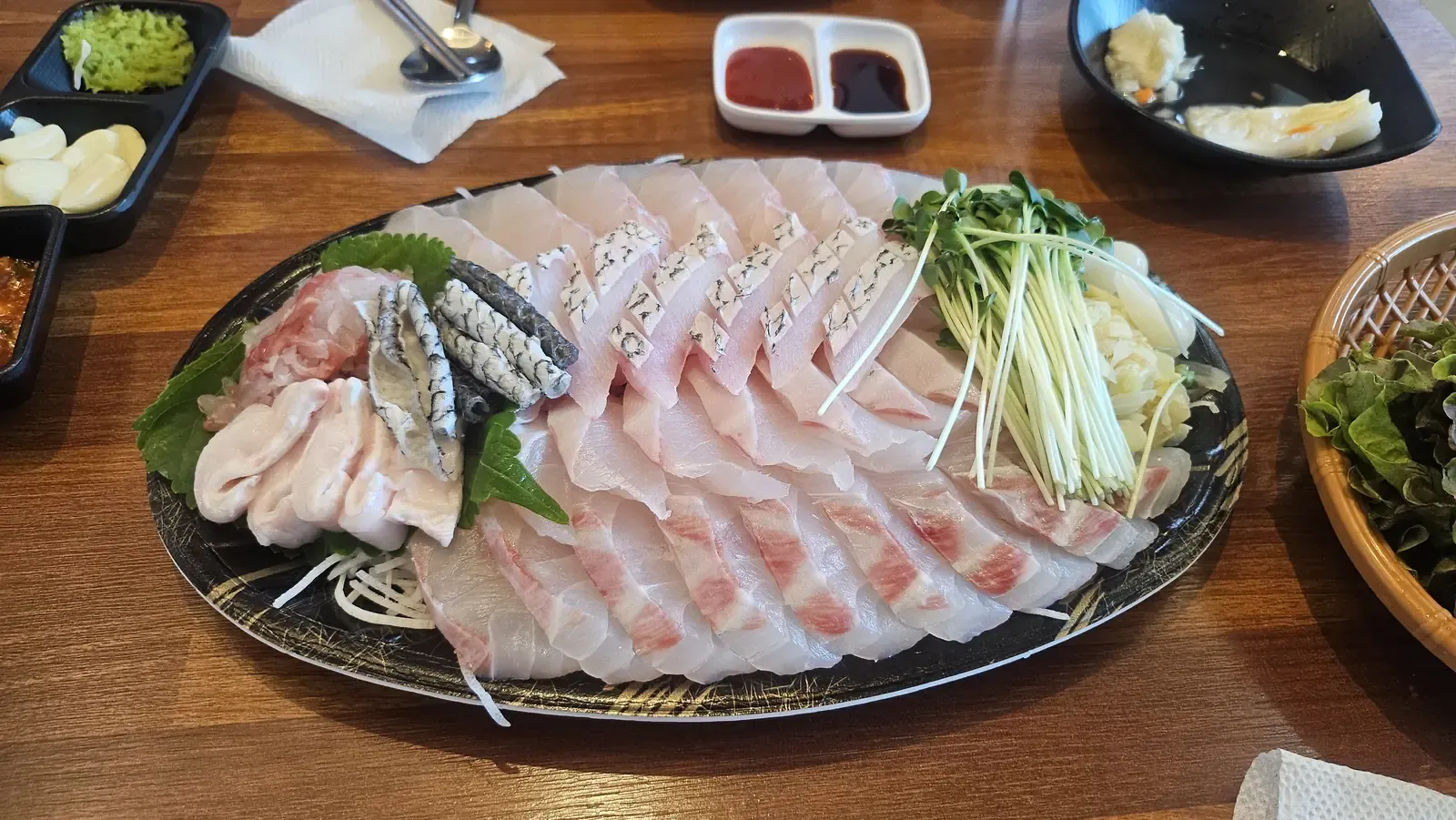
One platter, shared, with the dips and the leaves · ⓒ @BalliBalliSeoul
Which market: it depends where you’re sleeping
Seoul has two big wholesale fish markets that welcome the public, and the right one is simply the one nearer your bed. Nobody should cross the whole city for this.
| If you’re staying in… | Go to | Get off at |
|---|---|---|
| Songpa-gu or anywhere in eastern Seoul — Jamsil, Gangdong, Olympic Park | Garak Market (가락시장) | Garak Market Station, Line 3 or Line 8 |
| Central Seoul, Gangnam, Yeongdeungpo, Mapo | Noryangjin Fish Market (노량진 수산시장) | Noryangjin Station, Line 1 or Line 9 |
Both do the same thing. Noryangjin is the famous one, so it is busier and more used to tourists; Garak is enormous, more of a working market, and considerably closer if you are on the east side of the river.
Both are on the subway, which is the only sane way to arrive — the lines, decoded if you are still working out the colours.
How it actually works
This is the part that stops people at the door, because it does not look like a restaurant and there is no host to seat you.
1. Walk the aisles. Stalls run in numbered rows, each with tanks out front and a photo menu above. The fish are alive.
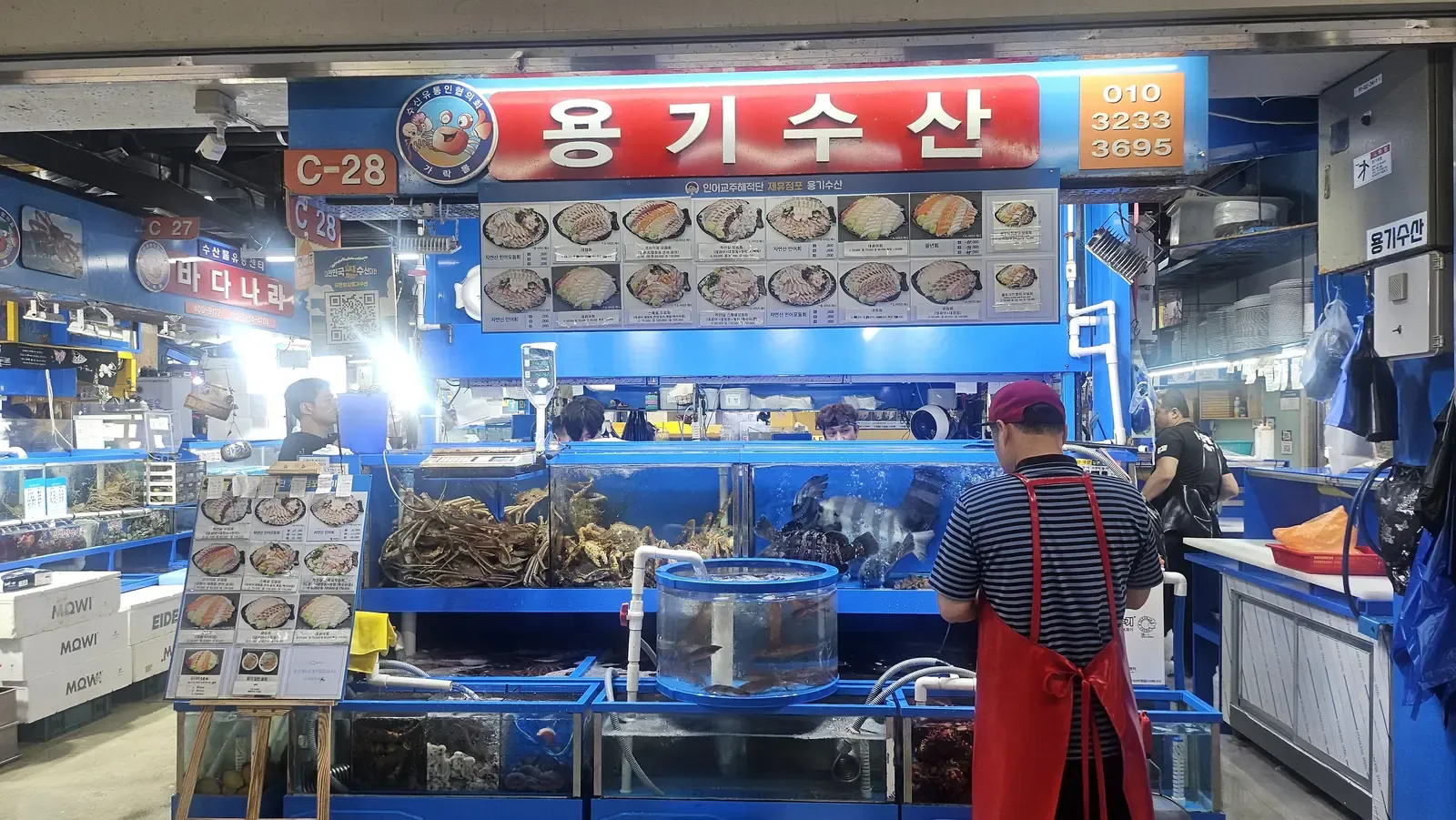
Tanks at the front, photo menu above — you can order by pointing · ⓒ @BalliBalliSeoul
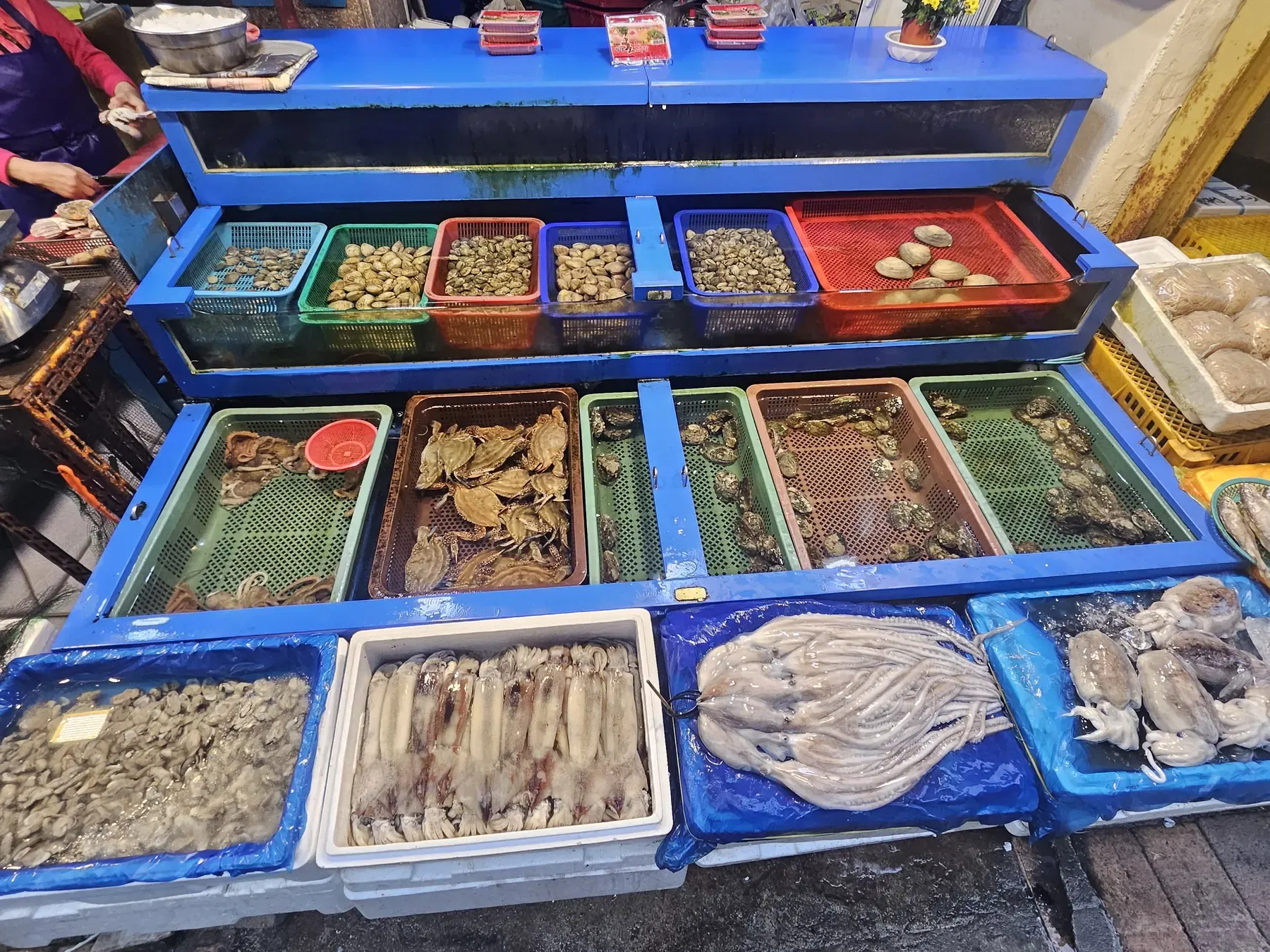
It is not only fish — shellfish and squid are sold the same way · ⓒ @BalliBalliSeoul
2. Point at what you want. The photo menus exist precisely because nobody expects you to name fish in Korean. Prices are usually given by platter size — 소 / 중 / 대 (small, medium, large) rather than per person, so tell them how many people are eating and let them size it.
One word worth knowing: 자연산 (jayeonsan) means wild-caught, as opposed to farmed, and it costs more. If a board distinguishes the two for the same fish, that’s what the difference is.
What it actually costs
Here is a real price board, photographed at a Seoul stall in August 2026. Mixed-platter sets (모듬회, modeum-hoe — several species on one plate) cluster tightly:
| Platter size | Typical mixed platter | Premium sets |
|---|---|---|
| 소 (small) | ₩60,000 | ₩70,000–75,000 |
| 중 (medium) | ₩80,000 | ₩90,000–95,000 |
| 대 (large) | ₩100,000 | ₩110,000 |
| 특대 (extra large) | ₩120,000–130,000 | ₩130,000–140,000 |
Now the part that makes those words mean something. The same board defines the sizes by the weight of fish you get:
| Size | Weight of fish |
|---|---|
| 소 | 500 g |
| 중 | 700 g |
| 대 | 900 g |
| 특대 | 1,100 g |
That is the single most useful thing on the wall, and almost nobody translates it. It turns “small/medium/large” from a guess into arithmetic: 500 g feeds two, 700 g feeds two hungry or three, 900 g feeds three to four, 1,100 g feeds four or five. Order by the gram count, not by the adjective.
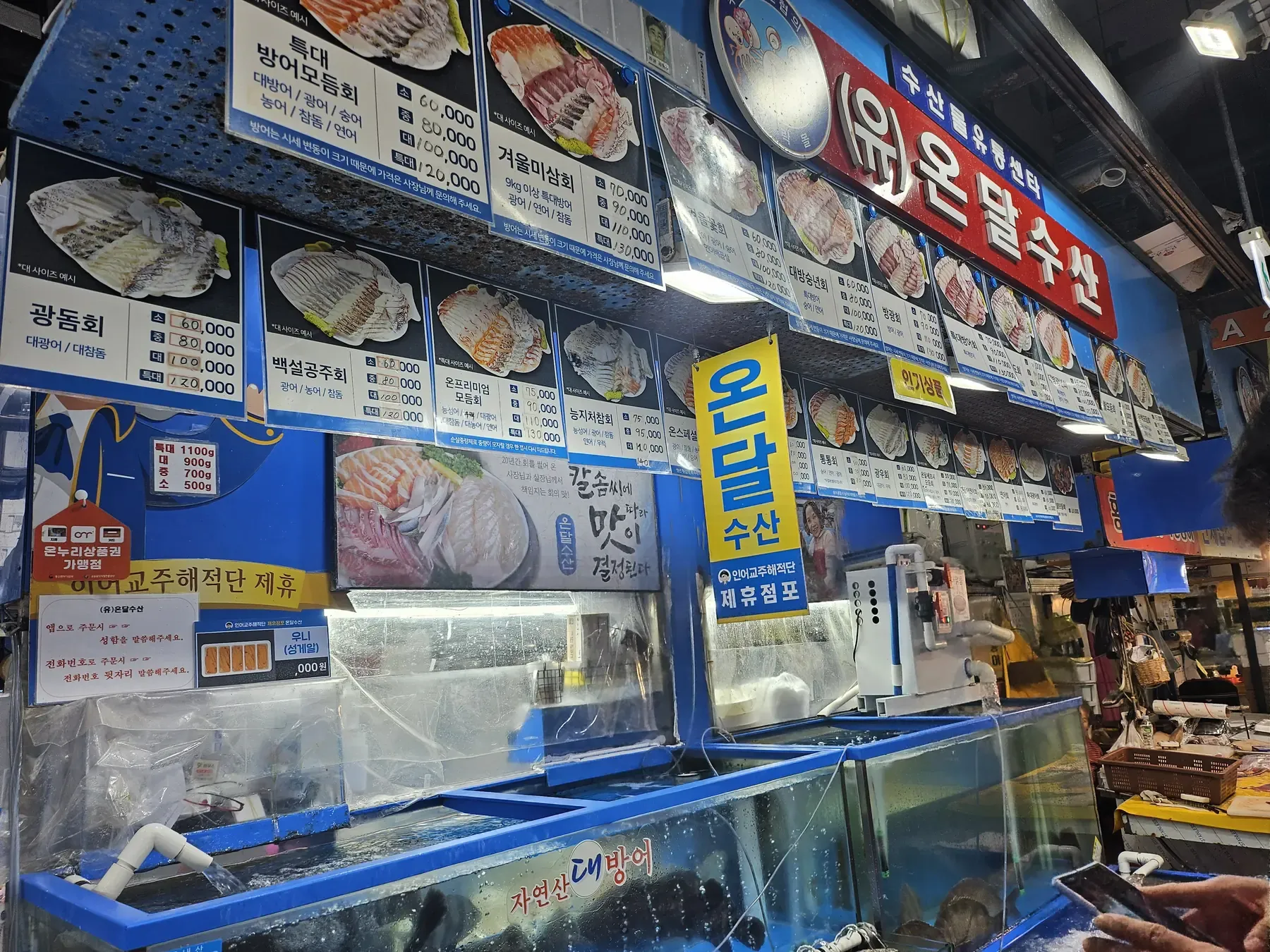
Prices by platter, sizes by gram — the blue circle is the key · ⓒ @BalliBalliSeoul
Two caveats the board itself gives you:
- Seasonal fish is market-priced. Next to the yellowtail sets, the sign says plainly that the price moves with the market and to ask the owner. Anything in season works this way — take the posted number as indicative, not fixed
- The platter is not the whole bill. Add the upstairs charge below, and drinks
Last verified: 2026-08-17.
3. Prices are negotiable-ish. This is a market. You will not haggle a stall down by half, but asking for a better price on a larger order is normal and nobody is offended.
4. They kill and slice it there, and then — the part visitors don’t expect — you take it upstairs. The markets have eating halls above or beside the stalls that plate your fish, give you the table, the dips, the side dishes and the drinks, and charge a separate seating or preparation fee per person. Budget for that on top of the fish; it is not a scam, it is how the system works.
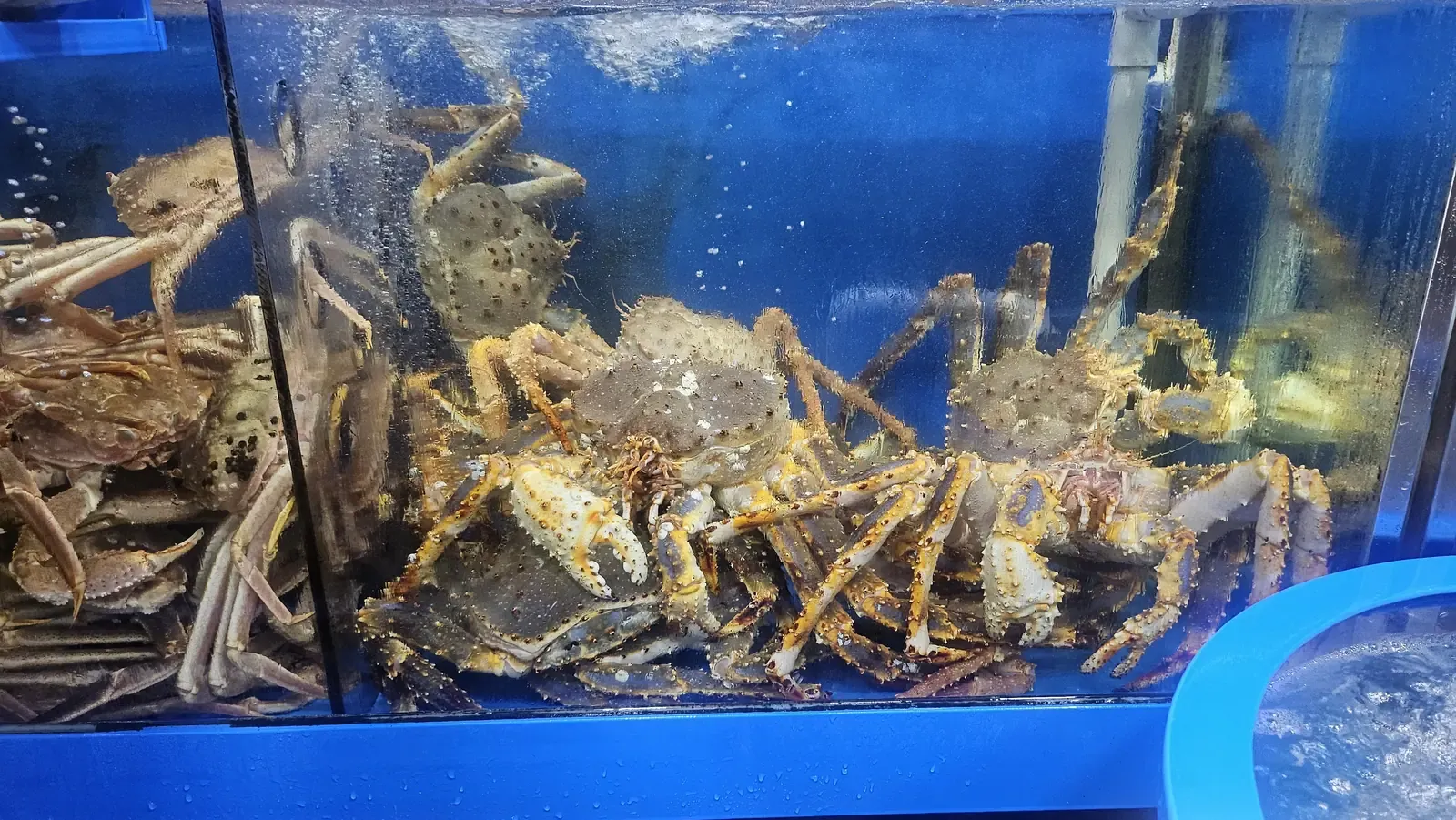
Crab is the other reason people come — priced by weight, live · ⓒ @BalliBalliSeoul
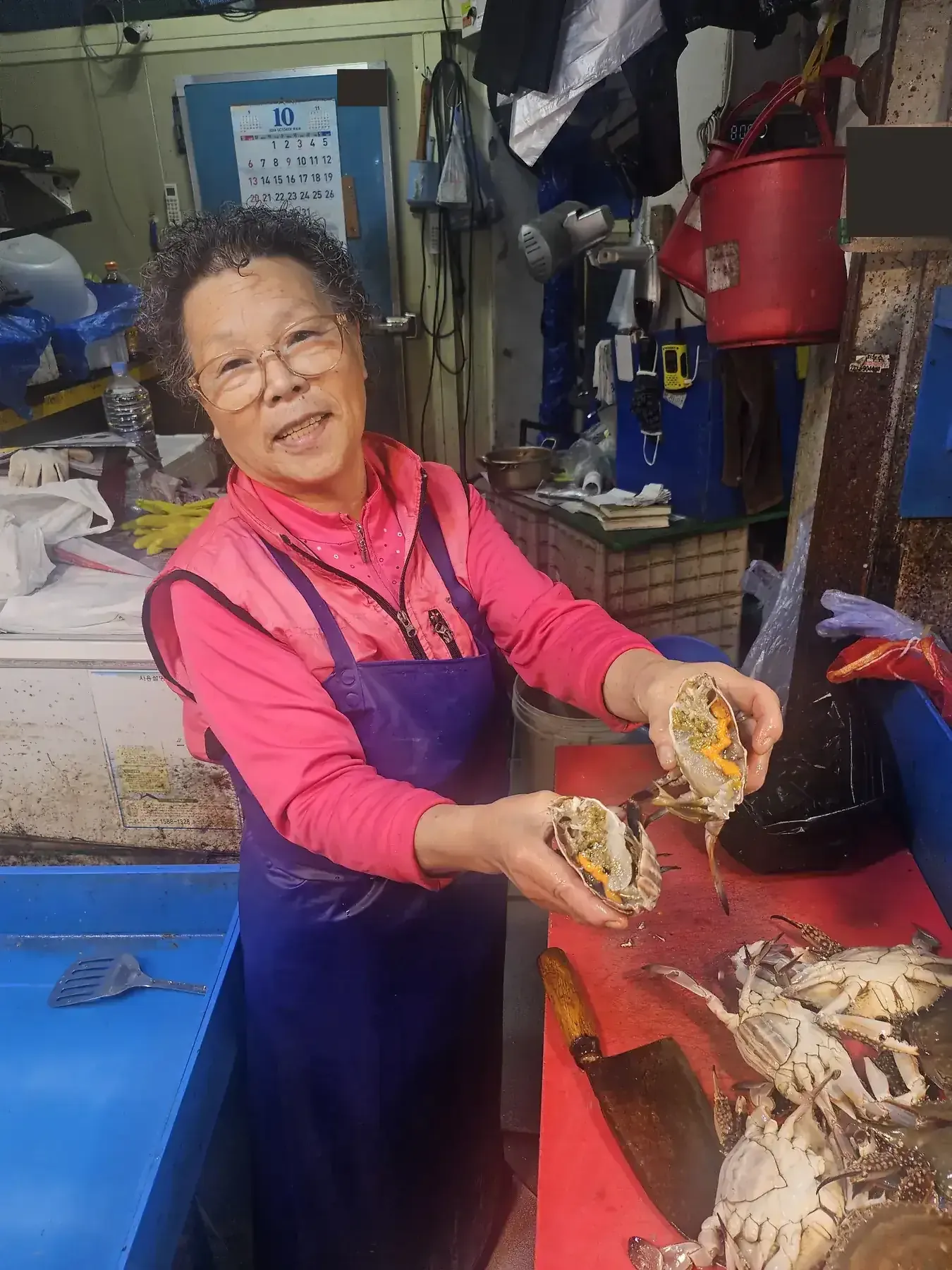
Ask, and you get shown. This is a market, not a shop · ⓒ @BalliBalliSeoul
What arrives with it
Order a platter and a whole meal materialises around it without being asked for. Expect:
- Side dishes (반찬) — free and refillable, as everywhere in Korea
- Leaves, garlic, green chilli, and both dips — the soy-wasabi and the red chogochujang
- Maeuntang (매운탕) at the end — a spicy stew made from the bones and head of the fish you just ate, usually for a small extra charge. Say yes. It is the point of the whole exercise for a lot of Koreans, and throwing that frame away is the actual waste.
If the “no server comes to your table” part is unfamiliar, the rest of the Korean restaurant system is in our guide.
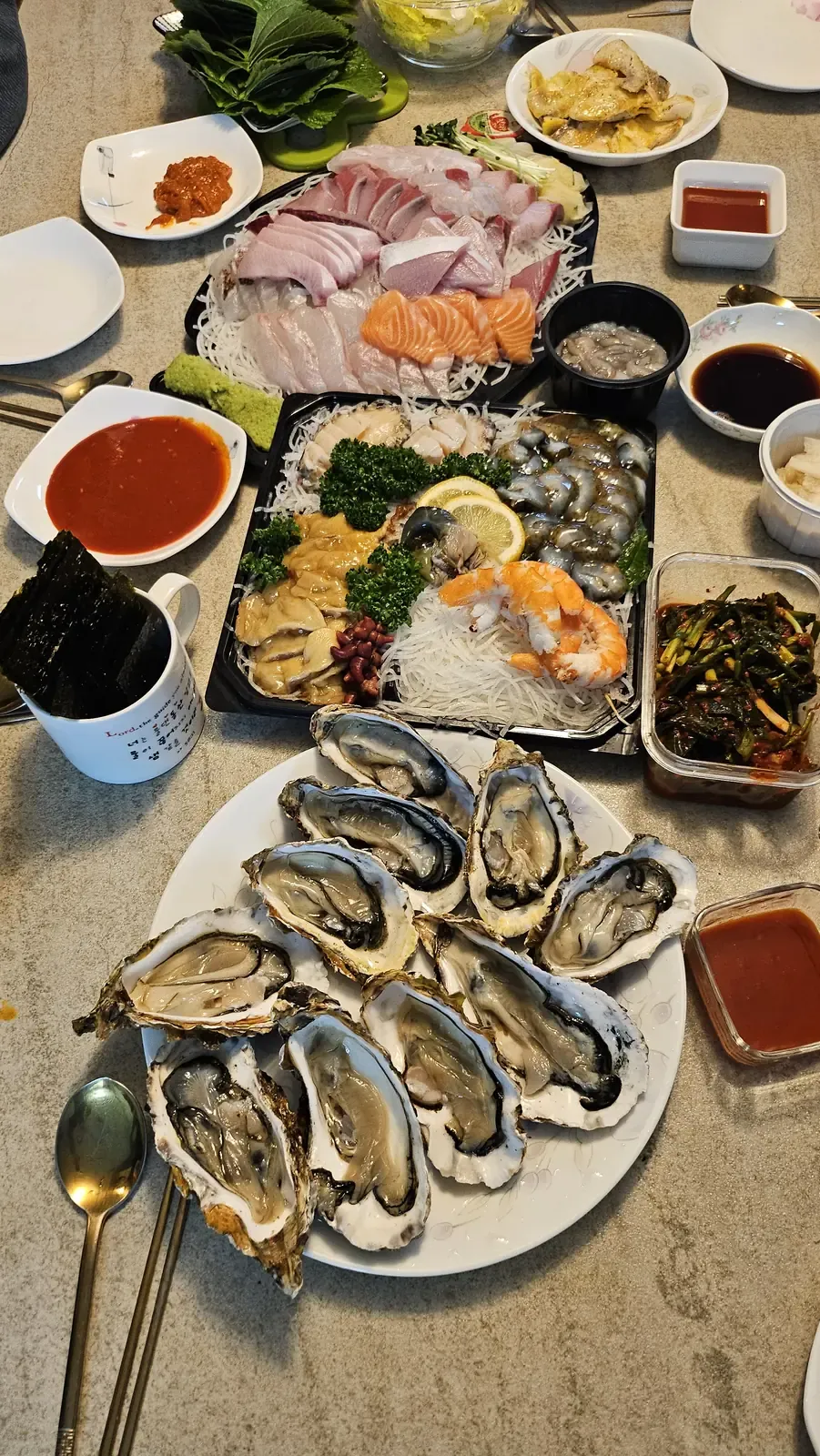
What one platter turns into once you sit down · ⓒ @BalliBalliSeoul
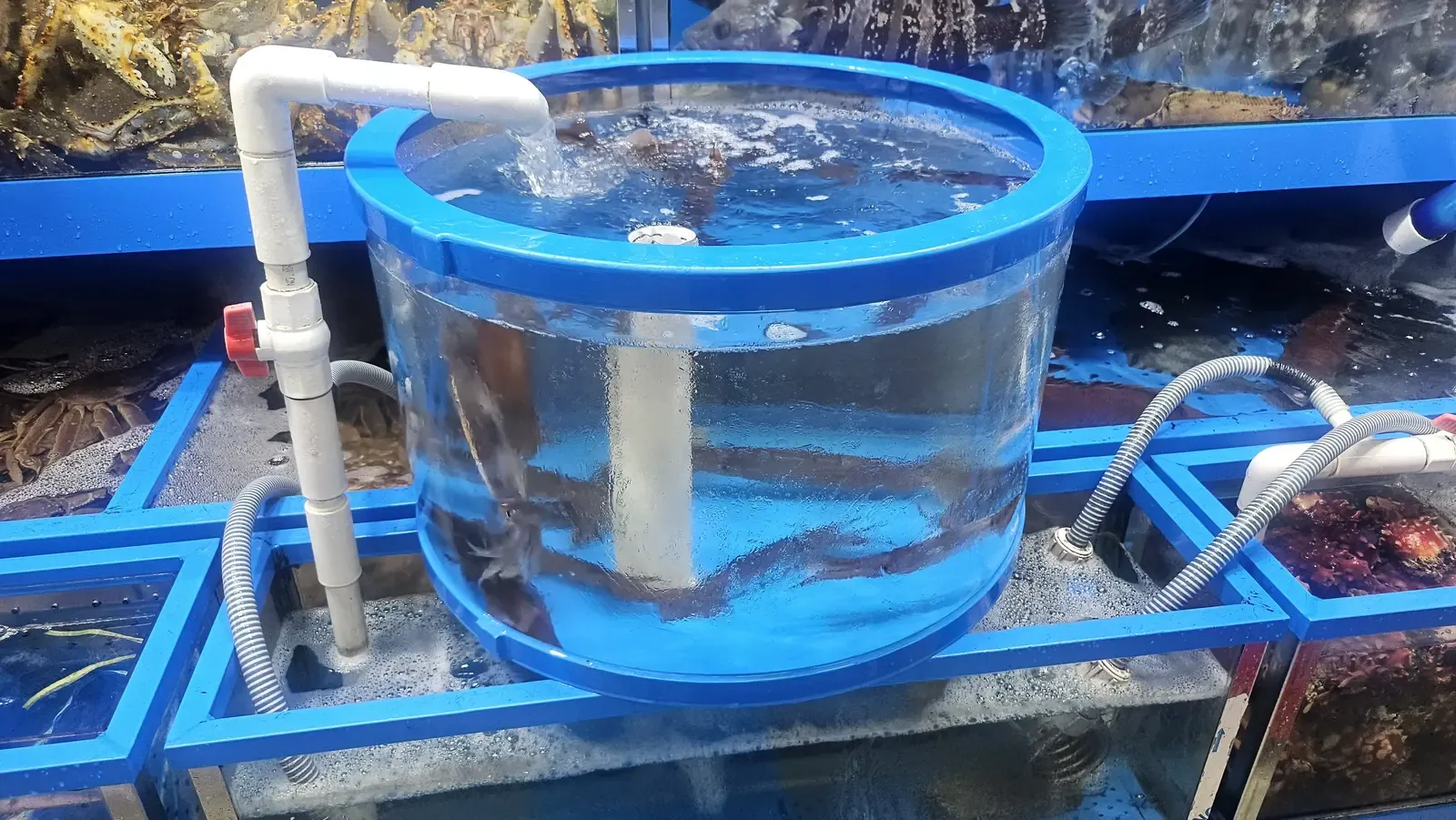
Everything is alive until you order it · ⓒ @BalliBalliSeoul
Practical
- Go for lunch or early evening. These are wholesale markets — the trading floor runs at hours that have nothing to do with dinner, and stalls thin out late.
- Wear shoes you don’t mind getting wet. Floors are hosed down constantly.
- Cash is not required but is smoother at small stalls.
- Two people can share one medium platter and still be full after the stew.
- Squeamish? Look away at step 4. The fish is alive when you choose it, and it is not hidden.
And if you actually did want sushi
Nothing above is an argument against sushi. Korea has a deep Japanese-restaurant scene, from conveyor-belt places to omakase counters where a chef hands you one piece at a time, and it is very good.
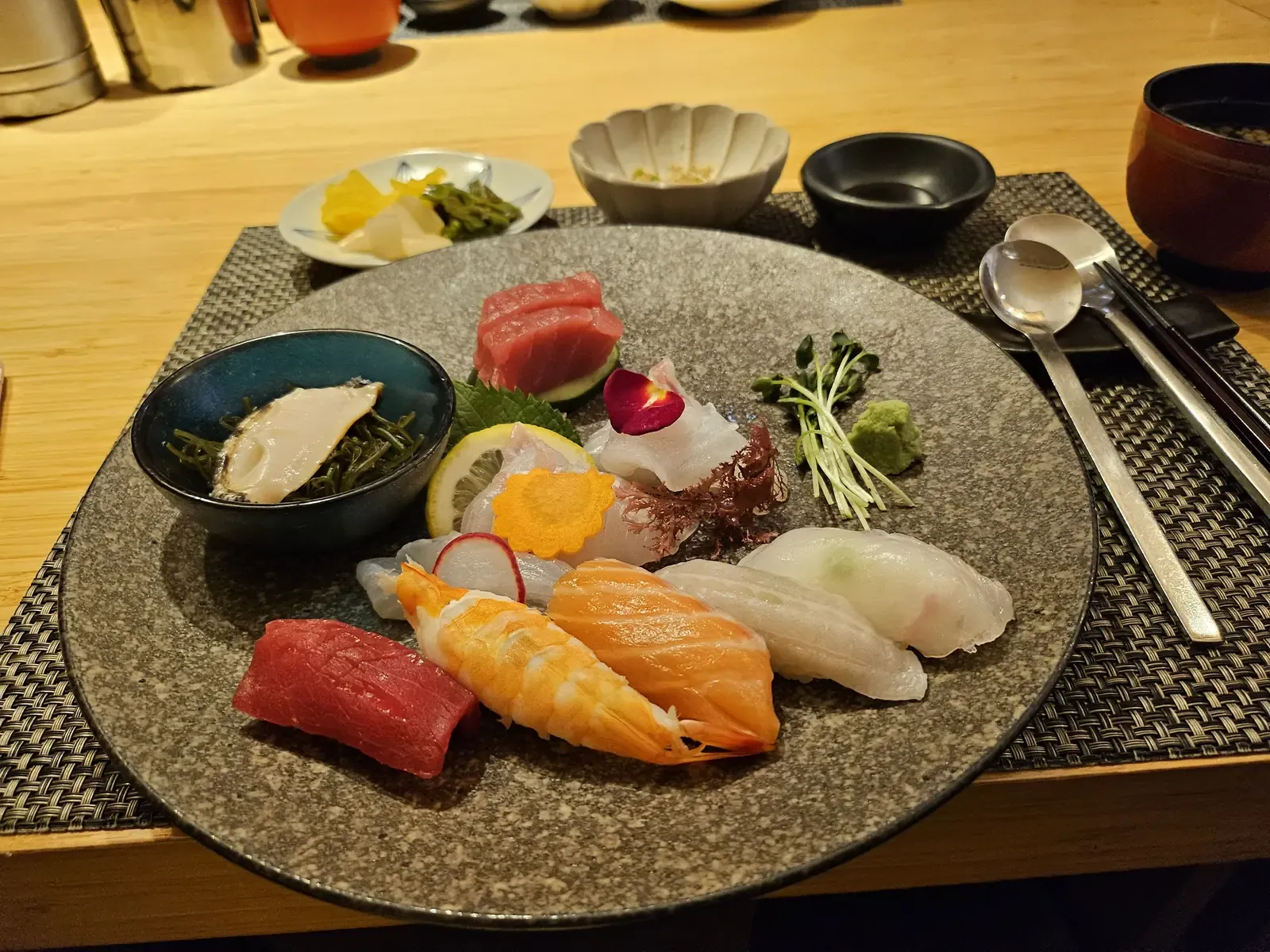
The other option, and a perfectly good one · ⓒ @BalliBalliSeoul
Just know you are buying a different product. A sushi counter sells craft — rice temperature, cure, cut, one piece at a time — and prices accordingly. A fish market sells freshness and volume, and hands you a kilogram of fish on a plate. Sitting down at a market stall is the cheaper hour of the two, by a wide margin.
Both are worth doing. If you only have one dinner in Seoul, the market is the one you cannot get at home.
The Korean part
Pointing works, and stallholders at both markets deal with foreign customers constantly. Where it gets harder is the middle: agreeing what you’re paying before the knife comes out, understanding what the upstairs fee covers, and being sure the “recommendation” you just accepted is the fish you wanted rather than the one they need to move.
Want to eat this without guessing at the numbers? Message us on WhatsApp — our anything-else concierge service will tell you which market is nearest you, what a fair price looks like for what you’re being offered, and translate the negotiation while you’re standing there. Asking costs nothing — you pay only for the work you book.
Get it sorted
The one-line version: skip the sushi counter, take the subway to whichever fish market is on your side of the city, point at a photo, give them a group size, expect a separate upstairs charge — and order the stew at the end.