Korea Runs on 220V: Will Your Appliances Survive?
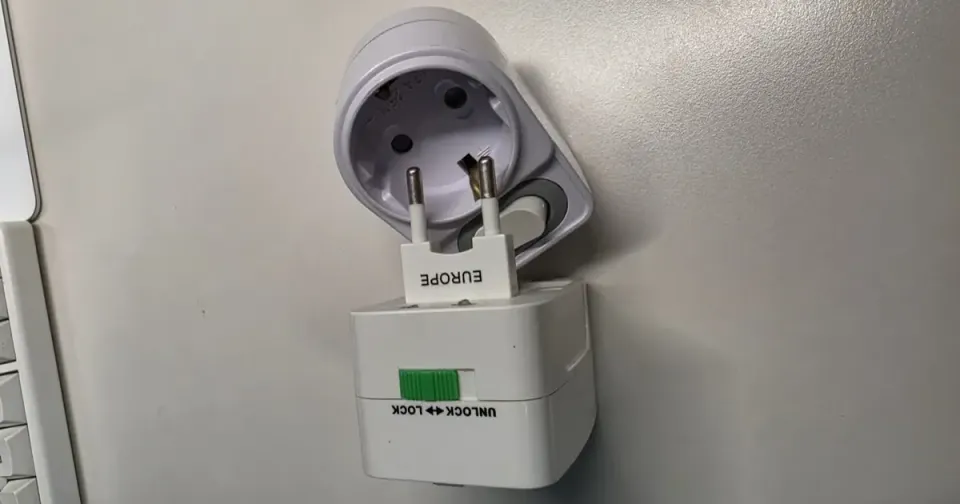
The question every American, Japanese and Taiwanese arrival asks within a week: can I plug my stuff in here? Korea runs on 220 volts, 60Hz, through round two-pin European-style sockets — and the answer for each device is printed on the device itself, in tiny letters almost nobody reads until something smells like burning. Here’s the two-minute literacy that saves your electronics.
The system
-
Voltage: 220V (the US, Japan and Taiwan run 100–120V; Europe and most of Asia run 220–240V — Europeans can mostly relax).
-
Frequency: 60Hz — usefully, the same as North America, so clocks and motors that survive the voltage won’t run at wrong speeds like they do in 50Hz Europe.
-
Plugs: round two-pin Type C/F (the standard European shapes). Your flat-pin plugs need a shape adapter at minimum.
What all this plugs into is a bill that does not rise in a straight line. Korean household electricity is charged in progressive tiers, which is why one heavy month costs far more than you would expect — worth reading before summer if you own an air conditioner: why the summer bill spikes, and what to do.
Here’s the socket you’ll be dealing with — recessed, round, and stamped with its rating (16A 250V):
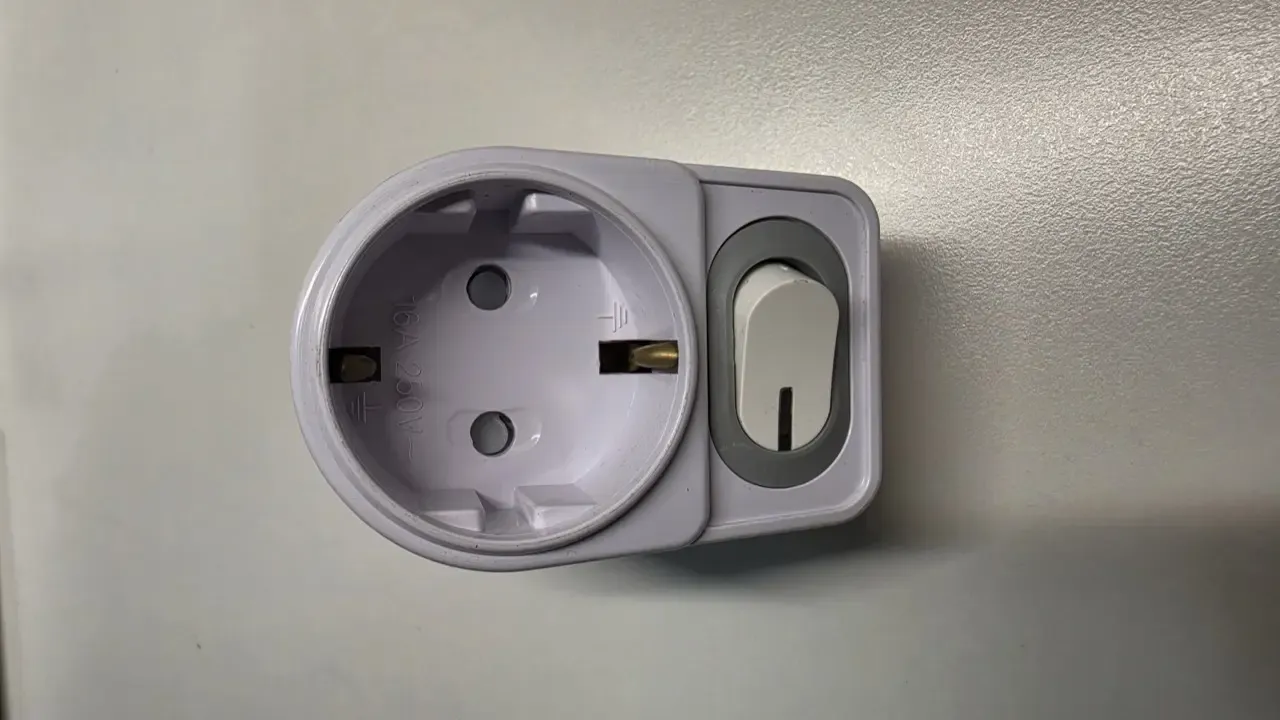
A standard Korean wall socket · ⓒ @BalliBalliSeoul
Read the label — the only rule that matters
Flip over any charger or appliance and find the INPUT line:
- “INPUT: 100–240V” → it just works. All you need is a ₩1,000–3,000 plug-shape adapter (Daiso sells bins of them). This covers virtually every modern laptop, phone and camera charger, and most electric shavers and toothbrush chargers — they’re built dual-voltage for exactly this reason.
- “INPUT: 120V” (or 100V, or 110V only) → plugging it into a Korean socket through a shape adapter sends it double the voltage it was built for. Best case, the fuse dies instantly; worst case, smoke, sparks, and a very memorable smell.
| What the INPUT line says | What you need | Cost |
|---|---|---|
| 100–240V (or 110–220V) | A plug-shape adapter | ₩1,000–3,000 |
| 220–240V | Nothing — plug it straight in | ₩0 |
| 120V only (or 100V / 110V) | A step-down transformer, or don’t | ₩30,000+ |
The shape adapter changes the pins, not the power. That sentence is the entire cause of every fried appliance story in every expat group — and it’s worth staring at the adapter itself for a second, because nothing on it warns you:
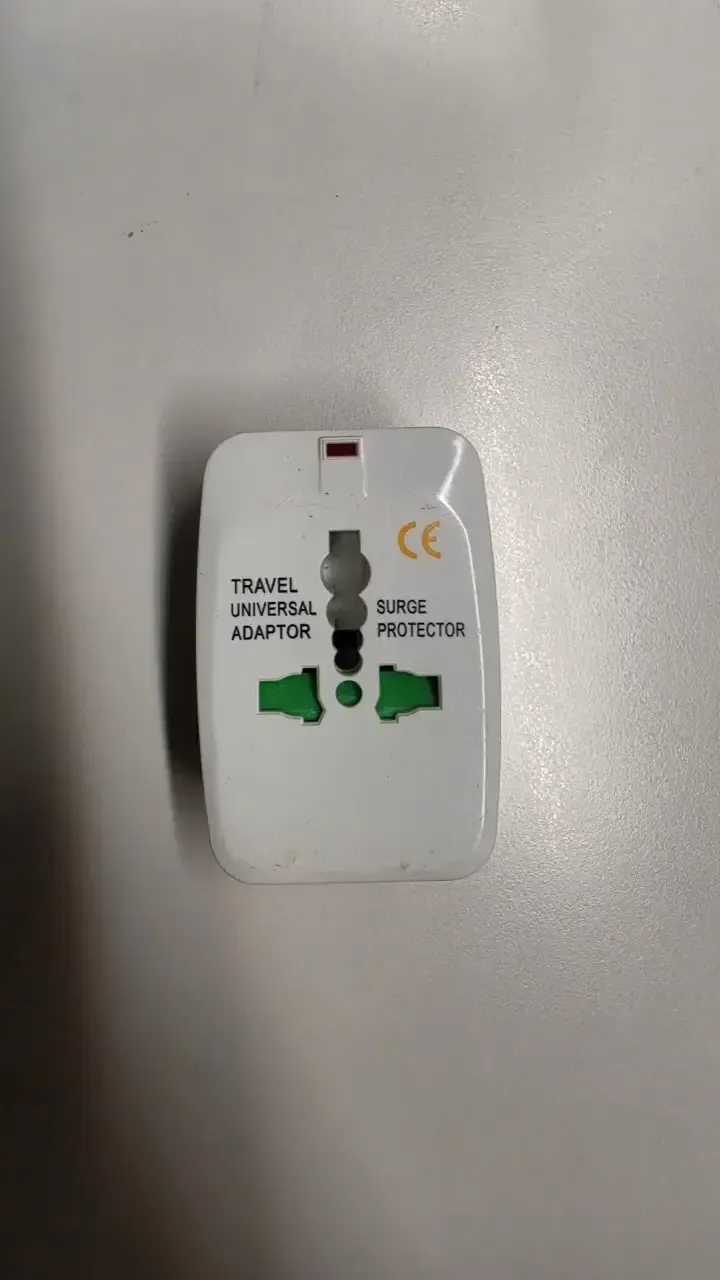
A universal adapter converts shape only — never voltage · ⓒ @BalliBalliSeoul
Note what that “universal” adapter is and isn’t. The EUROPE slider on the back is the module you push out for Korea; the front sockets accept flat US pins, UK pins, whatever you arrive with. “Surge protector” on the case is not voltage conversion — it’s a fuse, and it will not save a 120V hair dryer from 220V.
The hall of casualties
The devices that burn are predictable, because they’re the ones with heating elements and simple motors built for one voltage:
- Hair dryers, straighteners and curling irons — the classic victims (and the classic search: yes, your American hair dryer will die here). The rational move: buy a Korean one — decent dryers start cheap, and it ends the problem forever.
- Kitchen gadgets — blenders, coffee makers, rice cookers from home.
- Anything with “120V only” and a heating coil.
For the sentimental single-voltage device you must run, a step-down transformer (변압기) exists — sold online and at electronics marts, sized by watts. Buy comfortably above your device’s wattage, and accept that a transformer big enough for a hair dryer is a brick that costs more than a new hair dryer. For low-watt electronics it’s reasonable; for heat-making appliances it’s almost never worth it.
Japanese arrivals know the reverse of this game (Korea’s 220V vs Japan’s 100V): the same transformer logic applies, just more so.
And if something does die: a dead appliance is e-waste, not regular rubbish, and larger items need a disposal sticker — the rules are in our guide to throwing things away in Korea.
“But I read that Korea uses 110V”
You will find this on older forum posts and out-of-date packing lists, and it’s a genuine trap. Korea used to run 110V, and spent decades converting: the changeover was completed in the mid-2000s. Unless you are standing in a building that has not been rewired since then — vanishingly rare in housing you’d actually rent — every socket you meet is 220V.
If you see a flat two-pin socket somewhere, it isn’t a 110V survivor; it’s almost certainly a shape adapter someone left plugged in.
Things people ask about specifically
- Laptops, phones, cameras, tablets — dual-voltage, essentially always. Shape adapter, done.
- Game consoles — modern ones ship dual-voltage power supplies; check the brick. An old console bought abroad is more likely to be single-voltage.
- Electric toothbrushes and shavers — usually dual-voltage, and usually the cheapest thing to just re-buy if not.
- Medical devices (CPAP and similar) — check the label like anything else, but don’t improvise. If it’s single-voltage, buy a properly rated transformer with headroom rather than the cheapest brick on the marketplace.
- Hair dryers — see above. Buy Korean. This is not a fight worth having.
Setting up your desk and kitchen
Practical bits for the first week:
- Multi-tap power strips (멀티탭) are the Korean desk standard — buy locally so the sockets match, and plug your shape-adapted chargers into it: one adapter serves the strip, not every device.
- USB charging sidesteps everything — a Korean USB charger or powered strip charges your phones and gadgets natively.
- Check plugs when buying secondhand gear from departing expats — their US-plugged rice cooker plus adapter collection is how the problem propagates. Cheap replacements are a Coupang order or a Daiso run away — buying Korean usually beats adapting.
- Outlets are often sparse in older apartments; the multi-tap habit is universal for a reason.
The reverse trip, and other footnotes
Going the other way when you leave: a Korean 220V appliance in a 120V country doesn’t burn — it just underperforms or won’t start, which is its own disappointment (the beloved Korean rice cooker emigrating to America is a whole genre of forum question). Two more local footnotes: Korean sockets are recessed and grounded, so cheap unearthed shape adapters sit loose in them — the snugger grounded type is worth the extra thousand won — and you’ll notice Korean bathrooms often have no outlet at all (wet-room rules), which is why hair styling happens at desks here. Plan your morning routine’s geography accordingly.
The Korean part
The friction here is small but real: reading a transformer’s Korean spec sheet, picking the right wattage, warranty-claiming a half-burned device, or hunting the one adapter shape Daiso didn’t have. Through our anything-else concierge service we match the right transformer or replacement appliance to what you actually own and get it delivered — and if something already released its smoke, we’ll tell you honestly whether repair or replacement wins.
Get it sorted
Staring at a suitcase of chargers — or already smelled the smoke? Message us on WhatsApp with photos of the labels — we’ll tell you what works, what needs what, and order the missing pieces. Asking costs nothing — you pay only for the work you book.
The one-line version: read the INPUT label — 100–240V means a ₩2,000 adapter, 120V-only means leave it home or buy Korean. Your hair dryer already knows which one it is.