Working Out in Korea: Gyms, Pools and the Han River
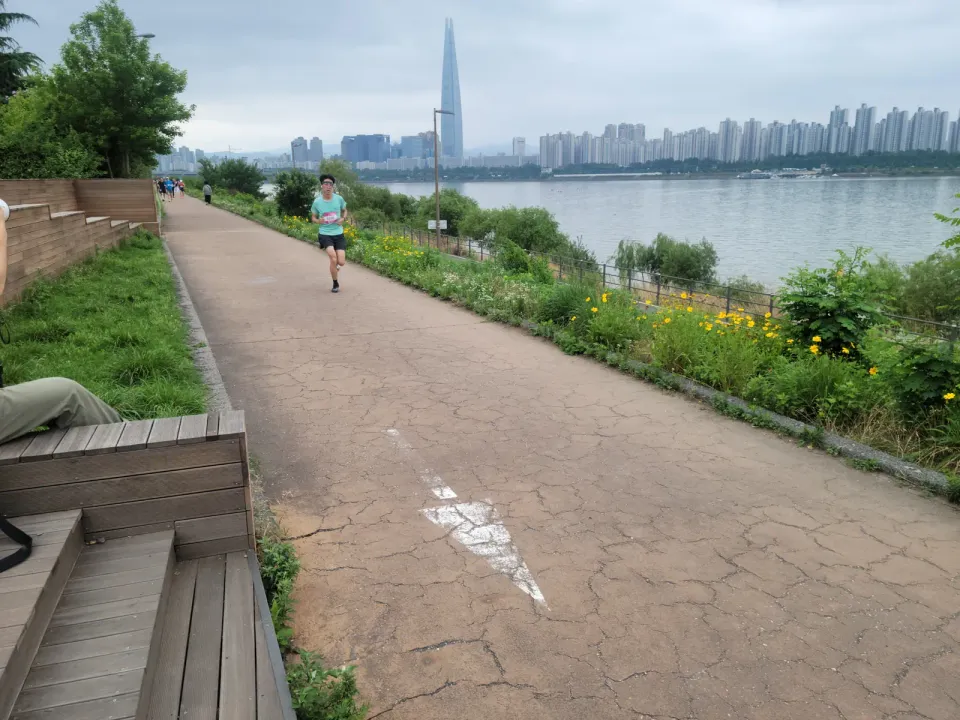
Staying fit in Seoul is cheap and easy — arguably easier than back home — but the system is organized differently: the best facilities are public, the gyms have contract quirks worth knowing, and the swimming pools have one rule nobody warns you about. Here’s the whole landscape, from free to fancy.
The Han River: Seoul’s free gym
The Han River parks — eleven of them lining both banks — are the city’s default fitness infrastructure. Running and cycling paths run unbroken for dozens of kilometers, free outdoor gym equipment clusters appear every few hundred meters, and basketball courts, soccer pitches and even fishing decks fill the space between. In summer, several parks open outdoor public pools for a few thousand won.
One detail that makes the running better than it sounds: on most stretches the running path, the bike lane and the road are three separate surfaces. You are not dodging cyclists, and cyclists are not dodging you.
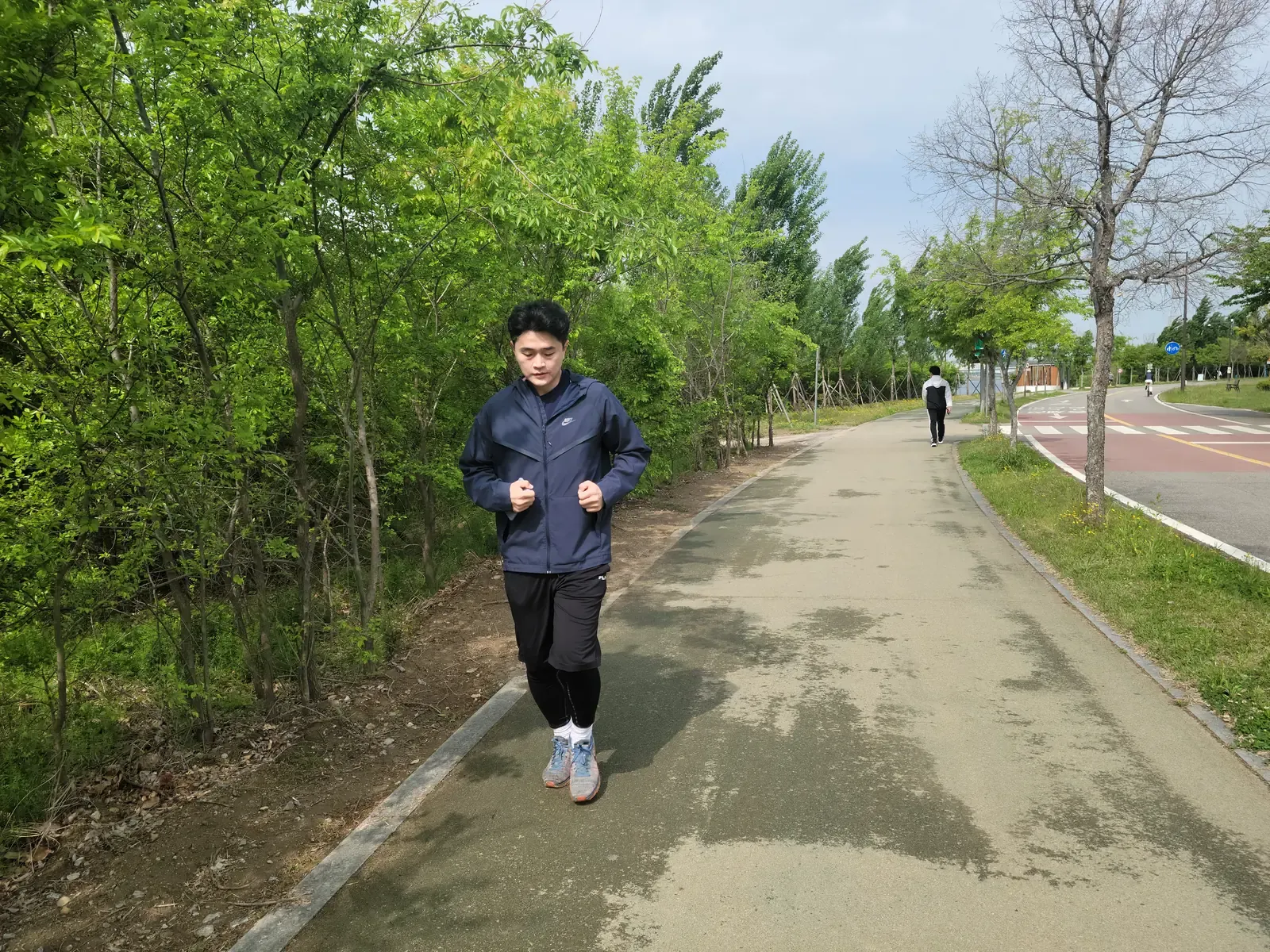
Running path, bike lane, road — kept apart · ⓒ @BalliBalliSeoul
Two upgrades make it even better. Ttareungyi (따릉이), Seoul’s public bike share, costs about ₩1,000 an hour through an app with English support — the river path to a distant park and back is the classic weekend ride. And the parks are where Korea’s running-crew culture lives; joining a crew (many are English-friendly) is a legitimate way to make friends here.
District sports centers: the best deal in the city
Every district runs public sports complexes (구민체육센터, plus larger ones like the Banpo sports complex) — and they’re the best price-to-quality ratio in Korean fitness: pools, gyms, indoor courts and running tracks at civil-servant prices. A swim session runs a few thousand won; the in-house gym costs a fraction of a private one.
The famous catch is swim lesson registration: monthly sign-ups for popular classes open online at a set hour and vanish like concert tickets, on Korean-only district websites. Free swim (자유수영) sessions — lane swimming without a lesson — are the low-drama alternative, just check the timetable.
And the one rule that catches every foreigner: swim caps are mandatory in Korean pools. No cap, no water, no exceptions — buy one at Daiso before your first visit. Lane etiquette is orderly (circle swimming, faster lanes toward the middle), and a pre-swim shower is expected.
Private gyms: read before you prepay
Neighborhood gyms (헬스장) start around ₩50,000–100,000 a month, with 24-hour budget chains at the low end. At the other end, a premium gym running coached group sessions can be ₩300,000 a month. Personal training (PT) is a big industry — sold in packages of sessions at ₩50,000–80,000 each — and the sales pitch will find you within minutes of your first visit. (Figures as of August 2026.)
The cheap headline price usually has a condition attached. That ₩60,000 a month on the window is often the rate for signing up for six months or a year, paid up front. The one-month price is higher, sometimes much higher, and it is the one you want as a newcomer.
That matters because long prepaid contracts are where consumer complaints concentrate. Gyms close, refund terms hide in Korean fine print, and mid-contract refunds are famously painful. The self-defense is simple — start monthly, even if it costs more, and only commit long once you have been going for a while. If you do sign a package, the refund clause is the paragraph worth translating properly (that is a two-minute job for us).
One thing you do not need to budget for: the locker you use while you train is free. Somewhere to put your clothes for the duration of a session comes with the membership, and nobody will charge you for it.
What costs extra is a locker you keep — a rented one where you leave your gym shoes and kit between visits, so you can turn up empty-handed. That runs roughly ₩10,000–30,000 a month and is entirely optional. Worth it only if you go often enough to resent carrying shoes across town.
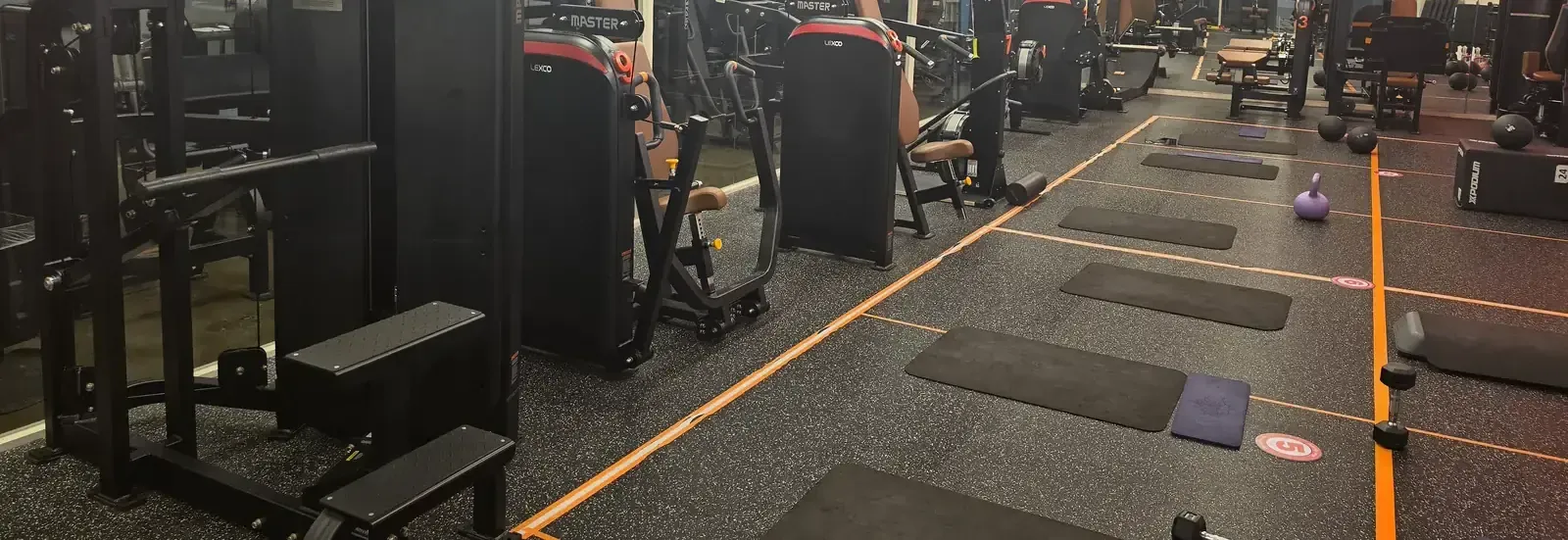
Machines down one side, marked-out training floor down the other · ⓒ @BalliBalliSeoul
English-speaking gyms and trainers cluster in Itaewon and Gangnam, and the boutique scene — CrossFit boxes, climbing gyms (Korea is in a full climbing boom), yoga and pilates studios — is everywhere, at prices above the neighborhood gym and below what you’d guess.
A note on gym culture
Small differences that add up.
Workout clothes and towels are often provided. Plenty of Korean gyms hand you a shirt and shorts to change into and a towel on the way out — it is worth asking, because it means you can walk in with nothing but shoes and it saves your laundry. Locker rooms carry everything from body scales to seated hair dryers, and stretching zones get used seriously.
Numbers on the floor are not decoration. If you see numbered circles stuck to the mats and matching numbers on the machines, you are looking at a gym that runs rotation classes — a coach sends the group from station to station, and the assignment changes every session. If you are there on your own membership, check whether a zone is booked for a class before you settle into it.
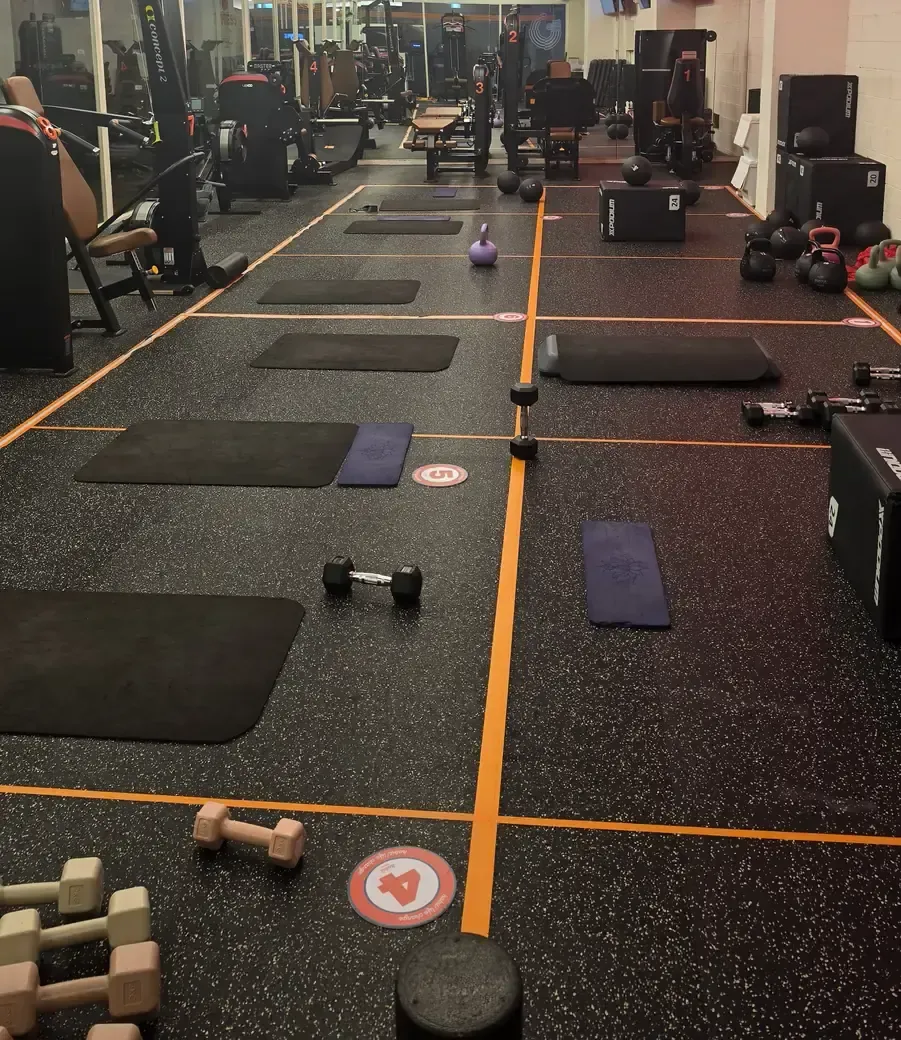
Numbered spots on the floor mean a class rotates through them · ⓒ @BalliBalliSeoul
Machines skew cardio-heavy at budget gyms; serious free-weight floors are a mid-tier-and-up feature, so check the squat rack situation on the tour if that is your thing. Deodorant culture is lighter here; nobody will say anything, but you will notice.
The rest of the menu
- Hiking — the actual national sport. Bukhansan is a real mountain inside city limits, free, with subway access to the trailheads.
- Public courts — tennis, futsal and basketball at river parks and sports complexes book through Seoul’s public reservation system — cheap, popular, and Korean-only.
- Winter: the district centers keep everything indoors, and ice rinks pop up (including the famous cheap one at City Hall plaza).
The Korean part
The pattern by now is familiar: the facilities are excellent and the gateways are in Korean — lesson registration race pages, court booking systems, gym contracts with buried refund clauses, even the sports center’s phone line. Through our anything-else concierge service we register you for the swim class before it sells out, book the courts, translate the gym contract before you sign, and find the English-friendly trainer near you. (Getting to any of it is the easy part — our transportation guide covers that.)
Get it sorted
Want in — pool class, court time, or a gym that won’t burn you? Message us on WhatsApp with what you’re after and your neighborhood — we’ll find it, register you, and check the fine print in Korean. Asking costs nothing — you pay only for the work you book.
Cheapest possible start, tonight: a swim cap from Daiso, a free-swim timetable, and a run on the river path. Total cost, about ₩3,000 — and you’ll understand immediately why Seoul people are outside at 10 PM.