How to Open a Bank Account in Korea as a Foreigner
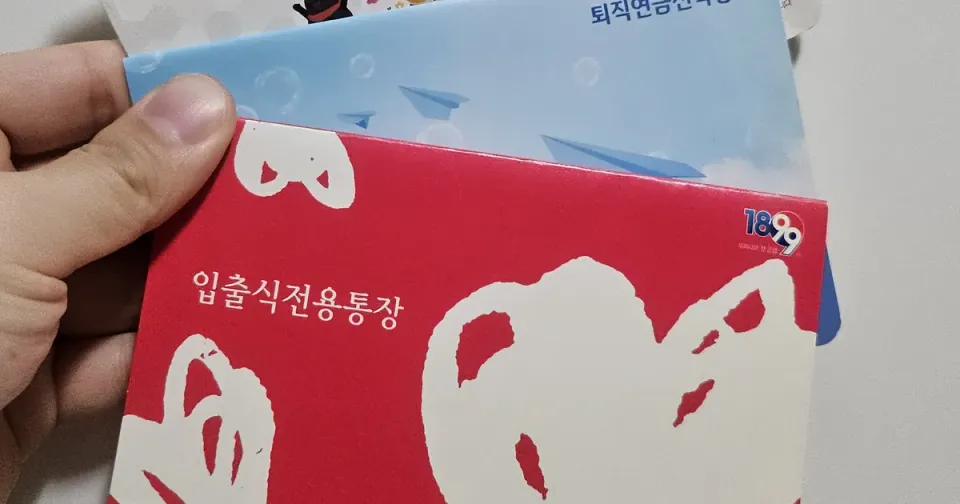
A Korean bank account is the hinge that everything else turns on. Your salary needs one. Your phone contract wants one. The shopping apps want to verify one. And you cannot get one on your first afternoon here, which catches almost everybody out.
Here is what it actually takes, and the one detail that surprises people even after the account is open.
What you need to bring
For a normal account, in practice:
- Your Alien Registration Card (외국인등록증, ARC) — this is the main gate. It arrives weeks after you apply, and until it does, most doors are shut
- Your passport
- A Korean phone number in your own name — needed for the banking app, one-time passwords and identity checks later
- Something showing why you are here — an employment contract, a certificate of enrolment, a lease. Not always asked for at the counter, but see the limit section below, where it matters a great deal
- An address you can state, matching your ARC if possible
Before the ARC arrives, some banks will open a restricted account on a passport alone, and some will not. It varies by bank and by branch, so it is worth asking rather than assuming — but do not build a plan on it.
Your visa decides how easy this is
Not every foreign resident is in the same position, and it is worth knowing which group you are in before you queue:
| Status | Where you stand |
|---|---|
| F-4, F-5, F-6 (overseas Korean, permanent, marriage) | Effectively the same as a Korean customer |
| Long-stay work and study — E-7, E-9, F-2, D-2 | Accounts open at most banks, with documents |
| D-4 (language study) | Often a limited account only, and more paperwork |
| Short stay — C-3 and similar | No ARC, so in practice no ordinary account |
The dividing line is the ARC, which is why the sequence below matters so much.
The chicken-and-egg, drawn out
This is the sequence that traps new arrivals, and it is worth seeing whole:
- Most services want a Korean phone number in your name
- A postpaid phone plan usually wants a bank account to bill
- The bank wants the ARC
- The ARC takes weeks
The way through is to start with a prepaid SIM, which needs neither, and treat the postpaid plan and the good bank account as things that arrive later. We laid the same chain out from the shopping side in the Coupang guide, where it stops people at checkout.
The limited account nobody warns you about
Here is the part that is genuinely surprising, and the reason people think their new account is broken.
New accounts in Korea are usually opened as a limited account (한도계좌, hando gyejwa) — fully working for receiving money, but with low daily caps on transfers and ATM withdrawals.
This is not aimed at foreigners. It is an anti-fraud measure, built after years of voice-phishing scams that ran through freshly opened accounts. Everybody gets it, Koreans included.
Money comes in fine — salary, transfers, refunds. Money goes out slowly, and the ceilings are lower than people expect:
| Channel | What to expect |
|---|---|
| Online banking and ATM | The tightest of the two — commonly in the region of a million won a day |
| At the counter, in branch | Higher, typically a few times that |
Do not plan against those figures, including ours. The exact caps differ by bank, by product and by customer, and they get revised. Ask the teller what yours are while you are still sitting there, and write the answer down — it is a thirty-second question that nobody thinks to ask at the time.
The shape of the problem is the part worth carrying away. Korean rental deposits run to tens of millions of won, and a deposit of that size does not fit through a daily online limit measured in single millions. Finding that out on the morning of the signing is a genuinely bad day.
If you know a large transfer is coming, deal with the limit first.
What this looks like in practice
We run a share house, so we watch this happen from the other side of the transfer. Tenant after tenant, independently, has asked to pay the deposit and the first month’s rent across two days — not because anyone suggested it, but because they hit the ceiling on day one and worked out the rest themselves.
Nobody negotiated it. They all arrived at the same workaround, which tells you how ordinary the limit is rather than how unlucky they were.
Three tenants moving in at the end of the same month, each owing ₩1,700,000 in deposit and first rent, paid like this:
| Day one | Day two | |
|---|---|---|
| Tenant A | ₩1,000,000 | ₩700,000 |
| Tenant B | ₩1,000,000 | ₩700,000 |
| Tenant C | ₩1,465,071 | ₩234,929 |
Look at the third row. The first two split along the obvious line — deposit one day, rent the next — which you could explain other ways. Nobody chooses ₩1,465,071. That is not a decision; that is where the ceiling was, and the remainder went the following morning.
An amount that does not round is the clearest evidence you will get that a limit exists.
Two things follow.
If you are paying, you have three options and it is worth picking before the day: split it across two or more days, pay at the counter in branch (the in-person cap is the higher one), or lift the limit in advance with the documents below. The first is easiest; the last is the only one that also solves the next large payment.
If you are being paid — a landlord, a share house, anyone taking a deposit — build the extra day into your expectations. A new arrival sending half today and half tomorrow is not hesitating and is not a warning sign. It is the anti-fraud system doing exactly what it was built to do.
Lifting the limit
You lift it by giving the bank a reason to believe you are a normal customer with normal reasons to move money. Typically that means bringing evidence of income or of settled life, such as:
- An employment contract or a certificate of employment (재직증명서)
- Payslips (급여명세서), or a few months of salary landing in the account
- A health insurance qualification certificate (건강보험 자격득실 확인서) — the one nobody thinks of, and one of the cleanest proofs that you are employed here
- A certificate of enrolment and tuition receipts if you are a student
- A lease, or utility bills in your name
- Sometimes simply time — an account used normally for a few months earns its limits back
Take the documents to the branch. This is a counter errand, not an app one.
Which bank
The large banks all handle foreign customers; they differ in how much of it happens in English.
- Hana (formerly KEB Hana) has the deepest history with foreign customers and foreign exchange, and is the most commonly recommended starting point
- Woori, Shinhan, KB Kookmin and NH are all widely used, and branches in areas with many foreign residents — Itaewon, around the universities, the industrial districts — are far more used to the paperwork than a random neighbourhood branch
- Pick the branch, not just the bank. A branch that opens foreign accounts weekly will do in twenty minutes what an unfamiliar branch turns into an afternoon
- The Seoul Global Center and the foreign workers’ support centres keep lists of branches used to foreign customers. Asking them first is faster than walking into three banks
Worth a look while you are choosing: several banks run accounts aimed at foreign customers with better terms on currency exchange and overseas remittance than their standard products. If you will be sending money home regularly, that difference compounds.
Two things changed in 2025
Both are recent enough that a lot of the advice circulating still predates them.
A mobile Alien Registration Card now works at the bank. Since March 2025, the digital version of your ARC is accepted for opening an account at a growing list of banks. The list started small and has been expanding, so ask your bank what it accepts today rather than working from a list.
Opening without visiting a branch is now possible for some long-stay residents, through the banks’ own apps. Toss Bank in particular has supported opening using the NFC chip in a biometric passport, which is unusual because it does not lean on a Korean phone number.
The general shape: internet-only banks — Kakao Bank, Toss Bank, K Bank — were historically hard or impossible for foreign residents, and that is loosening. F-4, F-5 and F-6 holders have had the easiest time of it. This is an area where the answer has genuinely changed, so it is worth asking rather than assuming.
The name-match trap
One failure mode is worth its own warning, because it defeats otherwise-correct people at the last step.
Your name on the ARC must match your name with the phone carrier exactly — spacing, middle names, the lot. Non-face-to-face identity verification compares the two strings, and “JOHN A SMITH” against “JOHN SMITH” is a failure, not a near-miss.
If remote opening keeps rejecting you and you cannot see why, this is the first thing to check.
Online banking, and the certificate
Once the account exists you will want the app, and there you meet Korea’s identity layer: a digital certificate (공동인증서 / 금융인증서) that signs transactions.
Two practical notes. Set it up at the branch while you are there — the staff do this all day and it is much faster than fighting the app alone. And a Korean phone number in your own name is doing a lot of work in this system; if the number is not yours, expect friction at every verification step.
Sending money home
Most people open the account partly for this. Two things worth knowing before you plan around it:
- Remittance abroad is documented. Depending on the amount and the reason, the bank will want to see what the money is and where it came from — an employment contract, a tax record
- Banks are not the cheapest route for small amounts. Dedicated remittance services usually beat them on rate and fee, though the bank is the one that will still be there when the sum is large
Small things that save a second trip
- Bring originals and photocopies of everything. Branches routinely want both, and a photocopier hunt mid-appointment is avoidable
- Go in the morning. Korean branches close early by international standards and the queue builds through the day
- Set up the app and the certificate while you are at the counter — the staff do this all day and it is far faster than fighting it alone afterwards
- Ask outright what your limits are and what would lift them. Written down, in the branch, before you leave
The Korean part
The account itself is not the hard part. What is hard is that this is a counter errand conducted in Korean, at a branch, during weekday banking hours, with documents whose names you have not learned yet — and where “come back with a different paper” costs you another morning off work.
About to go and open one? Message us on WhatsApp with your situation — visa type, whether you have the ARC yet, what you need the account to do. Our anything-else concierge service will tell you what to bring, and can come to the branch and translate so you do it once rather than twice. Asking costs nothing — you pay only for the work you book.
Get it sorted
The one-line version: you need the ARC, a Korean phone number and your passport; the account opens with a daily transfer limit that is normal rather than a fault — ask the teller what yours is; you lift it by taking proof of employment or address to the branch — and since 2025 a mobile ARC and remote opening have become real options, so check what your bank allows before you take a morning off.