How to Fix a Leaky Faucet in Korea (and Who Pays for It)
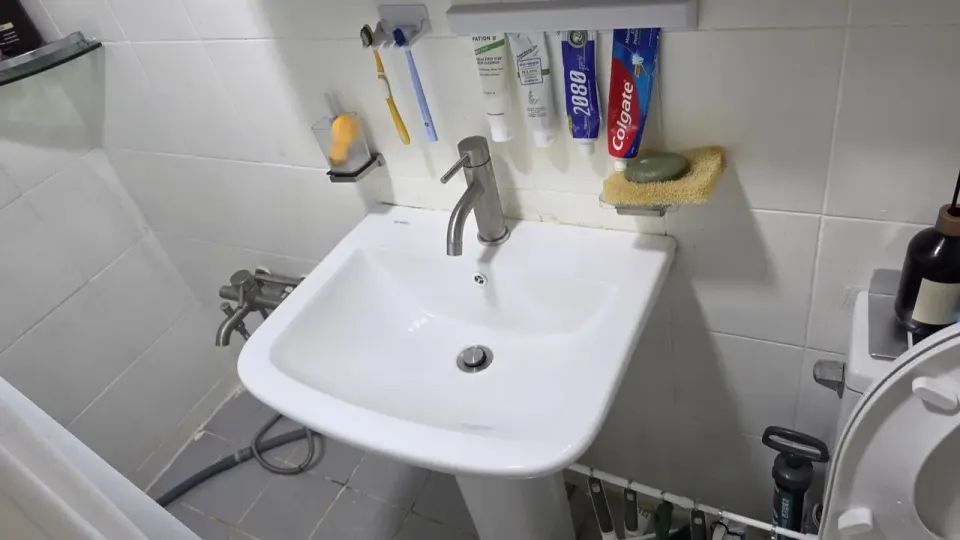
That drip from the bathroom faucet isn’t just annoying at 2 a.m. — in a country where every drop runs through a water meter you pay for, it’s a slow leak in your wallet too. The good news: in most Korean apartments this is a ₩10,000 part and twenty minutes, not a plumber visit. Here’s the repair, and — just as important in a rental — whose money actually fixes it.
Try this first
Know your faucet (it’s probably the standard one)
Nearly every Korean apartment kitchen and bathroom runs the same fixture: a single-lever mixer faucet (원홀 수전) — one handle, lift for water, swing for temperature. Inside it sits a ceramic cartridge (카트리지), and a worn cartridge is behind most drips from the spout and most handles that weep around the base. That cartridge is a standardized ~40mm part sold everywhere.
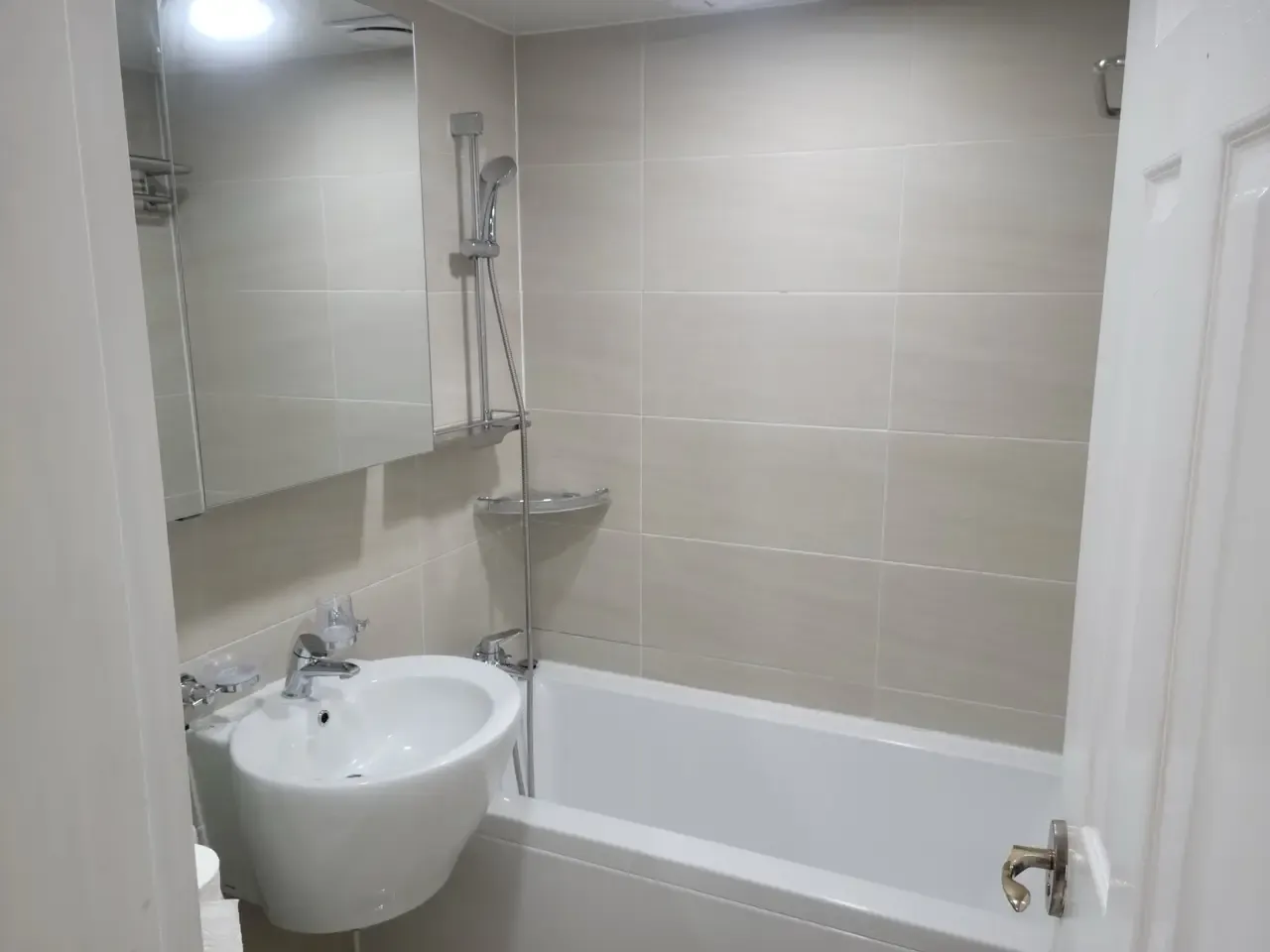
One basin faucet, one tub faucet — both the same design · ⓒ @BalliBalliSeoul
Most Korean bathrooms give you two of them: one on the basin, one feeding the tub and shower. Same mechanism, same cartridge logic, same fix — so whichever one is dripping, read on.
Shut the water first
Under the sink (or behind the toilet, for the bathroom basin) there’s a small chrome angle valve (앙카밸브) on each supply hose — turn both clockwise until snug. No angle valve, or it’s corroded stiff? Use the apartment’s main shutoff near the water meter (yours is in the hallway meter box in most buildings; the building office — 관리사무소 — can point to it). One real warning: don’t muscle a crusty old angle valve. They snap, and a snapped valve turns a drip into a flood. Stiff valve = stop here and get help.
Swap the cartridge
- Pry the small red/blue cap off the handle, undo the screw under it, and lift the handle off.
- Unscrew the chrome dome, pull the old cartridge, and note how it sits.
- Push the new one in the same orientation, reassemble, reopen the valves slowly.
Buy the part at any neighborhood hardware store (철물점 — bring the old cartridge or a photo, they’ll match it in seconds) or order it on Coupang by searching 수전 카트리지 — ₩5,000–15,000 (as of 2026). While you’re in there: a drip from the spout tip on an older two-handle faucet is usually just a worn rubber washer, and a sputtering spray is a clogged aerator (the mesh tip — unscrews by hand, rinse the grit out, done).
When to stop and call someone
- The leak is where the faucet meets the wall or the counter — that’s the seat or the plumbing behind it, not the cartridge, and overtightening makes it worse.
- Water shows up inside the sink cabinet or on the floor — supply hoses and connections, a different repair with real water-damage stakes. (While you’re under there, our clogged sink guide covers the drain side of that cabinet.)
- The valve won’t turn, or turns and water still runs — corroded valves need replacing before anything else can be fixed.
- The faucet body itself is cracked or wobbling loose — the fix is replacement, not parts.
What it costs in Seoul
Typical ranges, as of 2026 — final prices are always confirmed in the chat before work starts:
| Work | Typical cost |
|---|---|
| Cartridge, DIY (part only) | ₩5,000–15,000 |
| Pro visit: cartridge or washer swap | ₩40,000–70,000 |
| Full faucet replacement (part + labor) | ₩80,000–180,000, by fixture grade |
| Valve replacement / behind-the-wall issue | Quoted after on-site look |
A mid-range Korean faucet is honestly good — if yours is fifteen years old and dripping from two places, replacing it usually beats chasing parts.
The Korean part: who pays
Here’s the part that matters more than the wrench work. In Korean rentals, the split follows one principle: normal wear on the building’s fixtures is the landlord’s cost; damage you caused is yours. A faucet that dripped itself to death from age sits firmly on the landlord’s side — as does a corroded valve or a hose that gave out.
But the order of operations matters: photograph the leak and tell the landlord (or 관리사무소) before fixing anything. Fix first and ask later, and you’ve volunteered to pay. That notification conversation happens in Korean, which is exactly the wall we exist for — through our English-speaking plumbing service, we contact the landlord or building office for you, make the who-pays case with your photos, and if it lands on you anyway, arrange the repair with the price confirmed in the chat before anyone touches a wrench.
Get it sorted
Dripping faucet and not sure if it’s the ₩10,000 fix or the landlord’s problem? Send a photo and a 10-second video on WhatsApp — we’ll tell you which part it is, what it should cost, and who should be paying. Asking costs nothing — you pay only for the work you book.
And the one-line version: cartridge for drips, aerator for spray, photos before repairs, and never force a rusty valve. That covers nine dripping faucets out of ten.